
XPeng announced on Monday that it delivered 32,158 vehicles across its 60 markets in May, marking the fifth consecutive month in which the Chinese carmaker reports a year-over-year decline.
Deliveries were 1,367 units lower than in May 2025, when XPeng delivered 33,525 vehicles while operating in approximately 40 countries globally.
However, the figures have increased by 1,147 units from April’s 31,011 vehicles, extending the month-on-month recovery trend that began after the industry-wide sales and production slump — associated with the Chinese New Year holiday — in February.
The company founded and led by He Xiaopeng said late last month that it expects to deliver between 100,000 and 106,000 vehicles in the second quarter.
Having reached 63,169 vehicles in the first two months, the automaker needs to deliver between 36,831 and 42,831 vehicles in June to meet its quarterly guidance.
The numbers would represent year-over-year growth of roughly 6% to 24% from the 34,611 vehicles delivered in June 2025.
2026 Guidance
XPeng aims to deliver between 550,000 and 600,000 vehicles globally this year.
The guidance represents a 28.1% to 39.7% increase from the 429,445 vehicles delivered in 2025.
Full-year 2025 deliveries were 13% above the guidance issued last year — of 380,000 vehicles — which XPeng reached in November, one month ahead of schedule.
Through the first five months of 2026, the company has delivered 93,693 vehicles — below the 129,053 units registered in the same period last year.
With May’s result, the company has achieved 125,851 deliveries — still below the first four months of 2025 alone — representing between 21% and 23% of its full-year target.
To meet the low end of the guidance, XPeng would need to average approximately 60,600 deliveries per month over the remaining seven months.
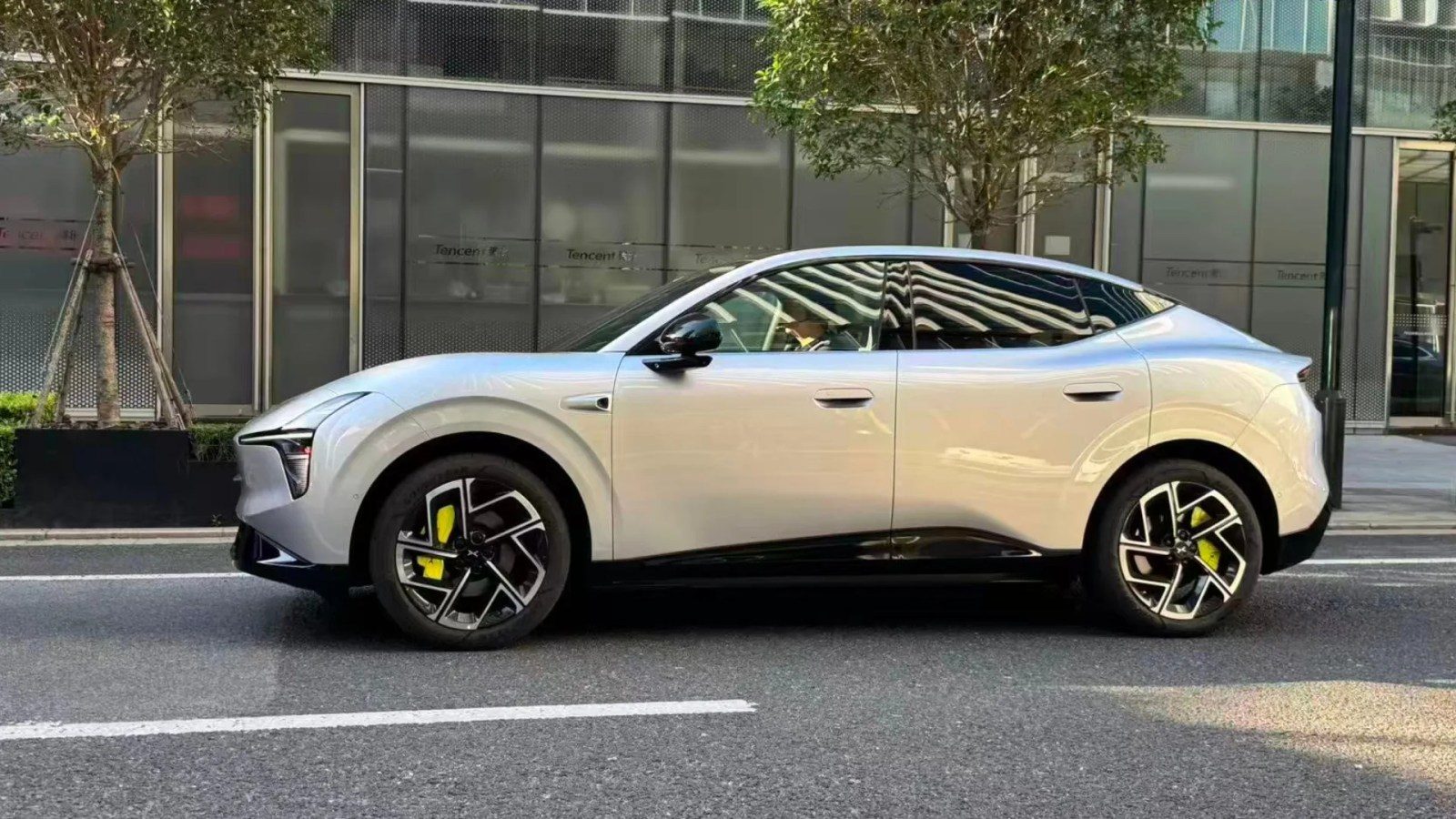
The company is counting on the launch of new models — including the recently launched GX flagship SUV and the upcoming Mona series SUV L03 — to drive demand upwards.
First-Quarter Results
The company reported a wider first-quarter net loss on May 28, as vehicle deliveries fell by a third between January and March.
Total revenue declined 17.6% to 13.03 billion yuan from a year earlier and dropped 41.4% from the fourth quarter. Vehicle sales fell 23.5% to 11.00 billion yuan.
In contrast to the volume decline, gross margin rose to 20.6% from 15.6% a year earlier, though it slipped from 21.3% in the fourth quarter.
Vehicle margin was 12.1%, up from 10.5% a year earlier and down from 13.0% in the fourth quarter.
GX Launch
XPeng officially launched the GX on May 20, pricing the six-seater between 279,800 and 359,800 yuan ($41,100–$52,900) before incentives — well below the 399,800-yuan pre-sale starting price announced in April.
For customers ordering the model before June 30, XPeng is offering a limited-time 10,000-yuan discount, bringing the effective entry price down to 269,800 yuan ($39,700) — a roughly 30% reduction from the original pre-sale price.
The promotional pricing positions the GX within striking distance of Nio‘s mass-market sub-brand Onvo and its L90 three-row electric SUV, which starts at 265,800 yuan.
XPeng’s GX secured 24,863 non-cancellable firm orders within the first 12 hours on sale — a result that founder and CEO He Xiaopeng said exceeded his own expectations.
More than 80% of those early orders were for flagship trims, while over half were for the pure electric versions.
The model drove the brand’s highest weekday showroom foot traffic of 2026 on its first full day of sales, according to VP of Marketing Alan Yu Tao, with first-day test drive volume outpacing every other model in the lineup.
According to XPeng, “within just 12 hours of launch, [the GX] received 24,863 firm orders, with the Ultra flagship version accounting for more than 80% of orders.”
Delivery wait times for the flagship BEV trim have stretched to 26-30 weeks — over half a year — while most other trims show a four-to-seven-week delivery window.
The extended-range AWD Ultra Flagship Edition faces a 14-to-16-week wait.
Deutsche Bank estimates that total May orders will have reached approximately 50,000 units — a 40% increase from April and 10% above the same month last year — driven primarily by the launch of the flagship GX SUV.
Overseas Markets
XPeng made a significant push to expand its manufacturing footprint outside China during May.
The company acquired a 90% controlling stake in a manufacturing entity under Indonesia’s Erajaya Group, deepening its localized production strategy in Southeast Asia’s largest auto market.
In Europe, XPeng’s Managing Director for the UK and Eastern Europe Elvis Cheng said on May 13 at the Financial Times Future of the Car summit that production capacity at the Magna Steyr plant in Austria is insufficient to meet growing European demand.
The executive confirmed that XPeng is in exploratory talks with its shareholder Volkswagen Group over potential European manufacturing — though the executive added that legacy European factories may not be suited to XPeng‘s next-generation vehicles.
The Graz facility currently assembles the G6, G9, and the recently added P7+ from semi-knockdown kits shipped from China. The SKD assembly model allows the company to avoid the European Commission’s additional countervailing duties on Chinese-built EVs.
XPeng is currently present in 28 European countries, supported by 290 retail outlets and over a dozen distribution partners.
The brand also unveiled plans to launch the Mona series in Europe in July, with the GX to follow in October — marking the brand’s first entry into the continent’s premium large SUV segment.
CEO He Xiaopeng also said XPeng plans to enter the Middle East as early as June, with additional markets to follow.
The brand delivered 45,008 vehicles internationally in 2025 — roughly 10% of total deliveries — and is targeting to double that figure this year, with a broader goal of one million annual overseas deliveries by 2030.
Autonomy Progress
The company rolled the first mass-produced robotaxi off the production line in Guangzhou on May 18 — the first time a Chinese carmaker has achieved mass production of a robotaxi through full-stack, in-house development.
The model is built on the same GX platform and shares the same Level 4-capable hardware, powered by four in-house Turing AI chips delivering 3,000 TOPS of effective computing power.
Pilot operations are targeted for the second half of 2026.
XPeng has positioned the GX as the consumer counterpart to its robotaxi platform, supporting the company’s second-generation VLA and VLM AI models.
Founder He Xiaopeng said on May 15 that he now believes an early form of fully autonomous driving — Level 5 — could appear by the end of the decade.
Days later, He said the carmaker aims to surpass Tesla‘s Full Self-Driving (FSD) capabilities in China by August, arguing that its technology is better adapted to local driving conditions.
The push into Physical AI extends beyond vehicles, however.
XPeng‘s humanoid robot program is in the final stretch before mass production, with the company targeting scale production of advanced humanoid robots as a strategic pillar — alongside its expansion of AI-defined vehicles and the bridging of L2+ assisted driving to L4 autonomous driving.
CICC Maintains Outperform Rating
XPeng‘s Hong Kong-listed shares rose over 6% on Monday to HK$67.80.
In US pre-market trading, the automaker’s stock climbed 4.5% to $17.19 — its highest level since mid-to-late April.
The stock price increase comes as China International Capital Corporation (CICC) — one of China’s largest investment banks — sent a new research note to clients ahead of May’s delivery results, maintaining its Outperform rating on XPeng.
The bank has a price target of HK$90 for the Hong Kong-listed shares and US$23 for the US-listed stock.
Based on the firm’s sum-of-the-parts valuation, those targets imply approximately 36% and 40% upside from current levels, respectively.
XPeng‘s first-quarter 2026 results came in line with CICC’s expectations.
Despite the decline in volume, CICC noted that XPeng‘s product mix improved.
The firm expects exports to increase quarter by quarter as the automaker now operates three production bases overseas.
CICC lowered its 2026 non-GAAP net profit forecast by 25% to 2.3 billion yuan, citing increased investment in AI-related businesses and rising chip costs.