
Chinese carmaker XPeng is in exploratory talks with its shareholder Volkswagen Group over potential European manufacturing, as production capacity at its Magna Steyr plant in Austria falls short of growing demand on the continent.
The remarks were made by XPeng’s Managing Director for the UK and Eastern Europe, Elvis Cheng, at the Financial Times Future of the Car summit in London on Wednesday, where EV was in attendance.
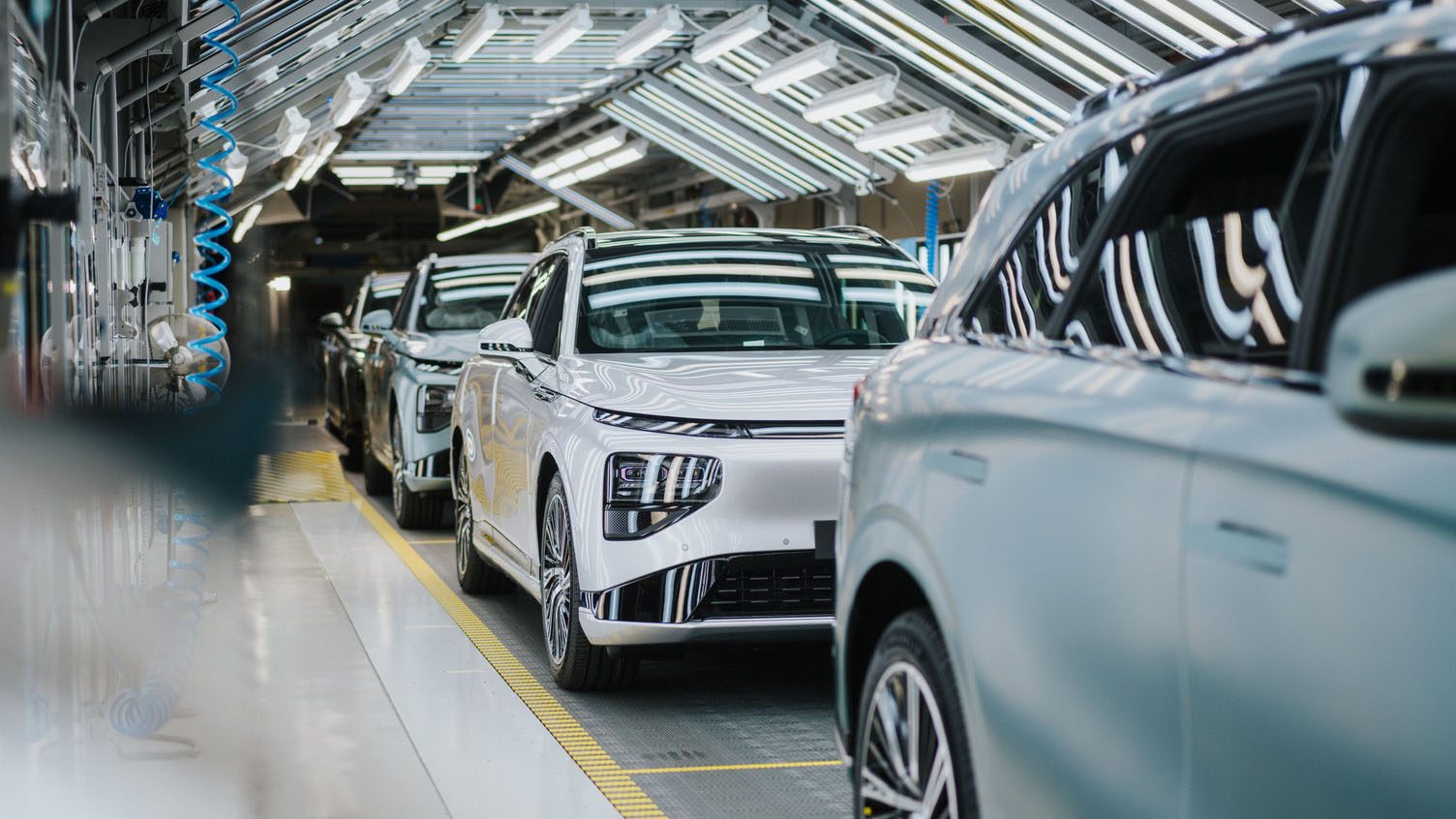
XPeng‘s European operation has scaled rapidly since assembly began at Magna Steyr’s Graz facility in September 2025, with several new markets added over the last few months.
Currently, the brand assembles the G6 and G9 SUVs, with the P7+ sedan being the latest addition.
The SKD assembly model allows the company to avoid the European Commission’s additional countervailing duties on Chinese-built EVs, which were imposed in October 2024.
XPeng faces a 20.7% surcharge on top of the standard 10% import duty on finished vehicles — a combined rate of over 30% that makes local assembly essential to the brand’s pricing strategy in Europe.
Magna Assembly
The plant currently assembles the G6 and G9 SUVs from semi-knockdown kits shipped from China, with the P7+ sedan completing trial production in January and entering series production in April.
According to Cheng, market demand has already outstripped what the Graz plant can produce — so XPeng is now actively exploring options for a second European manufacturing location.
“There is a kind of limit on the production capacity in this factory,” the executive noted. “That’s why we also explore the possibility or the opportunity we can work with other kind of manufacturers in Europe, maybe in some other countries.”
The Chinese automaker is “looking for a potential location” as the current scenario is not enough for XPeng to produce enough vehicles to be delivered to customers in Europe.
While Magna’s Graz facility is one of Europe’s most established multi-brand assembly plants — having built vehicles for Mercedes-Benz, BMW, Jaguar Land Rover and Toyota — its production volumes have been declining since last year.
European Sales
Magna officials have said that XPeng sold over 20,000 vehicles in Europe during 2025, with the majority manufactured at the Graz plant.
Data shared by official registration organizations showed that the company delivered 22,787 vehicles across European markets last year, a 126% year-on-year increase.
XPeng is targeting a doubling of overseas sales in 2026 as part of its broader goal of delivering between 550,000 and 600,000 vehicles globally.
Partnering with VW
Questioned whether XPeng would consider using Volkswagen‘s spare capacity in Europe — or even acquiring one of the German automaker’s plants — given that VW has openly said it is in discussions with other carmakers, Cheng acknowledged the existing relationship but pointed to compatibility challenges.
“We have a partnership with Volkswagen, they are our shareholder,” the executive noted, explaining that the “our current collaboration is mainly in China, which is about providing our software and electric platform to Volkswagen with a new product they are launching in China.”
Still, Cheng noted that the company is “also discussing with them to see if there is any possibility we can find a location here in Europe.”
He suggested, however, that legacy European factories may not be suited to XPeng‘s next-generation vehicles.
“We think not all the factories can really satisfy the requirements of our latest product or future product,” Cheng warned, as they are “a little bit, I would say, old compared to what we have going to bring to Europe.”
According to him, XPeng is also considering finding a new location for production in the continent.
“So that’s why, not only with Volkswagen, but we are also looking for another possibility to find a new location. Maybe we are going to build one in Europe. That’s also a possibility for us,” the executive added.
European Manufacturing
Cheng’s comments at the summit came alongside remarks from executives of other automakers that highlighted the broader theme of European manufacturing overcapacity and the opportunities it creates for Chinese brands.
BYD Executive VP Stella Li told Bloomberg on the sidelines of the event that the company is in discussions with Stellantis and other European automakers about acquiring underutilized factories across the continent, including plants in Italy.
The Chinese giant is “looking for any available plant in Europe” to utilize spare capacity, and would prefer to operate acquired facilities independently rather than through joint ventures.
The contrast between XPeng‘s capacity constraints and the surplus of idle European factories was underscored by Volkswagen brand CEO Thomas Schäfer, who also spoke at the summit.
Schäfer confirmed that defense-sector partnerships are among the active solutions VW is pursuing for underutilized German plants, framing the approach as part of a doctrine that treats outright closures as a last resort.
The Osnabrück plant — currently producing the T-Roc Cabriolet — is in advanced talks with Israel’s Rafael Advanced Defense Systems for conversion into an Iron Dome component manufacturing facility.
XPeng is now present in 28 European countries, supported by 290 retail outlets and over a dozen distribution partners.
The brand is planning to launch four new models in Europe in 2026, including the X9 MPV and the Mona series.
Elvis Cheng confirmed on Wednesday that the entry-level Mona series will debut with two models on the continent.
Cheng has been with XPeng since January 2021 and has overseen the brand’s expansion across the Nordics, Benelux and, more recently, the UK and Eastern Europe.