
XPeng reported a wider first-quarter net loss on Thursday as vehicle deliveries fell by a third, though the Chinese EV maker guided to a steep sequential recovery in the current quarter.
Net loss widened to 1.78 billion yuan in the quarter from 660 million yuan a year earlier, reversing a 380 million yuan profit in the fourth quarter.
Deliveries fell 33.3% to 62,682 vehicles from 94,008 a year earlier.
The results missed Wall Street expectations on both lines.
Non-GAAP loss per ADS of 1.76 yuan came in 1.07 yuan wider than the consensus of a 0.69-yuan loss, while revenue of 13.03 billion yuan fell short of the 13.95 billion yuan consensus, a miss of about 6.6%.
Revenue Falls, Margins Hold
Total revenue declined 17.6% to 13.03 billion yuan from a year earlier, and dropped 41.4% from the fourth quarter. Vehicle sales fell 23.5% to 11.00 billion yuan.
In contrast to the volume decline, margins improved year-over-year. Gross margin rose to 20.6% from 15.6% a year earlier, though it slipped from 21.3% in the fourth quarter.
Vehicle margin, the gross profit on vehicle sales as a share of vehicle revenue, was 12.1%, up from 10.5% a year earlier and down from 13.0% in the fourth quarter.
On a non-GAAP basis, which excludes share-based compensation and a fair-value adjustment tied to contingent consideration, the net loss was 1.69 billion yuan, against a 430 million yuan loss a year earlier.
Loss per ADS was 1.87 yuan, with each ADS representing two Class A ordinary shares.
Cash and Network
XPeng held a cash position of 42.09 billion yuan as of March 31, down from 47.66 billion yuan at the end of December.
Its sales network reached 733 stores across 256 cities, while its self-operated charging network grew to 3,455 stations, including 2,398 ultra-fast charging stations.
A Strong Second-Quarter Outlook
XPeng guided for second-quarter deliveries of 100,000 to 106,000 vehicles, a sequential increase of about 60% to 69% and a year-over-year change ranging from a 3.1% decline to a 2.7% gain.
It expects total revenue of 19.60 billion yuan to 20.80 billion yuan, up roughly 7% to 14% from a year earlier and 50% to 60% above the first quarter.
The guidance points to a sharp rebound from a first quarter dragged down by seasonal weakness around the Chinese New Year holiday and a model lineup in transition.
For the full year, XPeng is targeting deliveries of 550,000 to 600,000 vehicles, a 28.1% to 39.7% increase over the 429,445 it delivered in 2025.
The company beat its prior-year target of 380,000 by 13%, reaching that figure in November, a month ahead of schedule.
The GX as the Catalyst
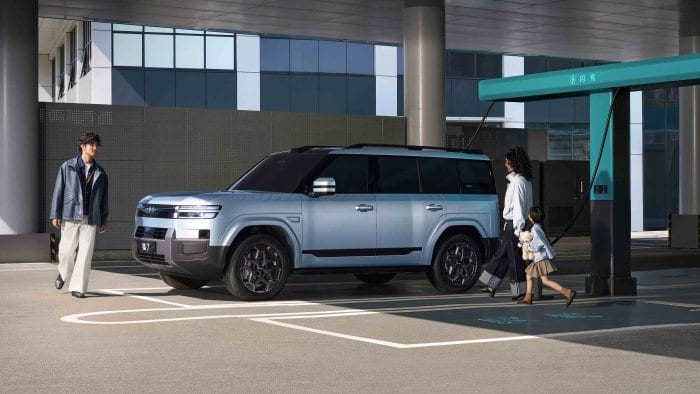
The rebound hinges in large part on the GX, the six-seat SUV XPeng launched on May 20.
The company priced the model between 279,800 and 359,800 yuan before incentives, with the entry trim set 30% below the 399,800-yuan pre-sale price announced in April.
A limited-time 10,000-yuan discount for customers ordering before June 30 cuts the effective entry price to 269,800 yuan, about a third below the original pre-sale level.
That positions the GX within striking distance of the L90 three-row SUV from Nio‘s mass-market sub-brand Onvo, which starts at 265,800 yuan.
The GX drew 24,863 non-cancellable firm orders in its first 12 hours on sale, a result He said exceeded his own expectations. More than 80% of those early orders were for flagship trims, and over half were for the pure-electric versions.
Deutsche Bank estimates total May orders reached approximately 50,000 units, a 40% increase from April and 10% above the same month last year, driven primarily by the GX launch.
Four New Models and the AI Push
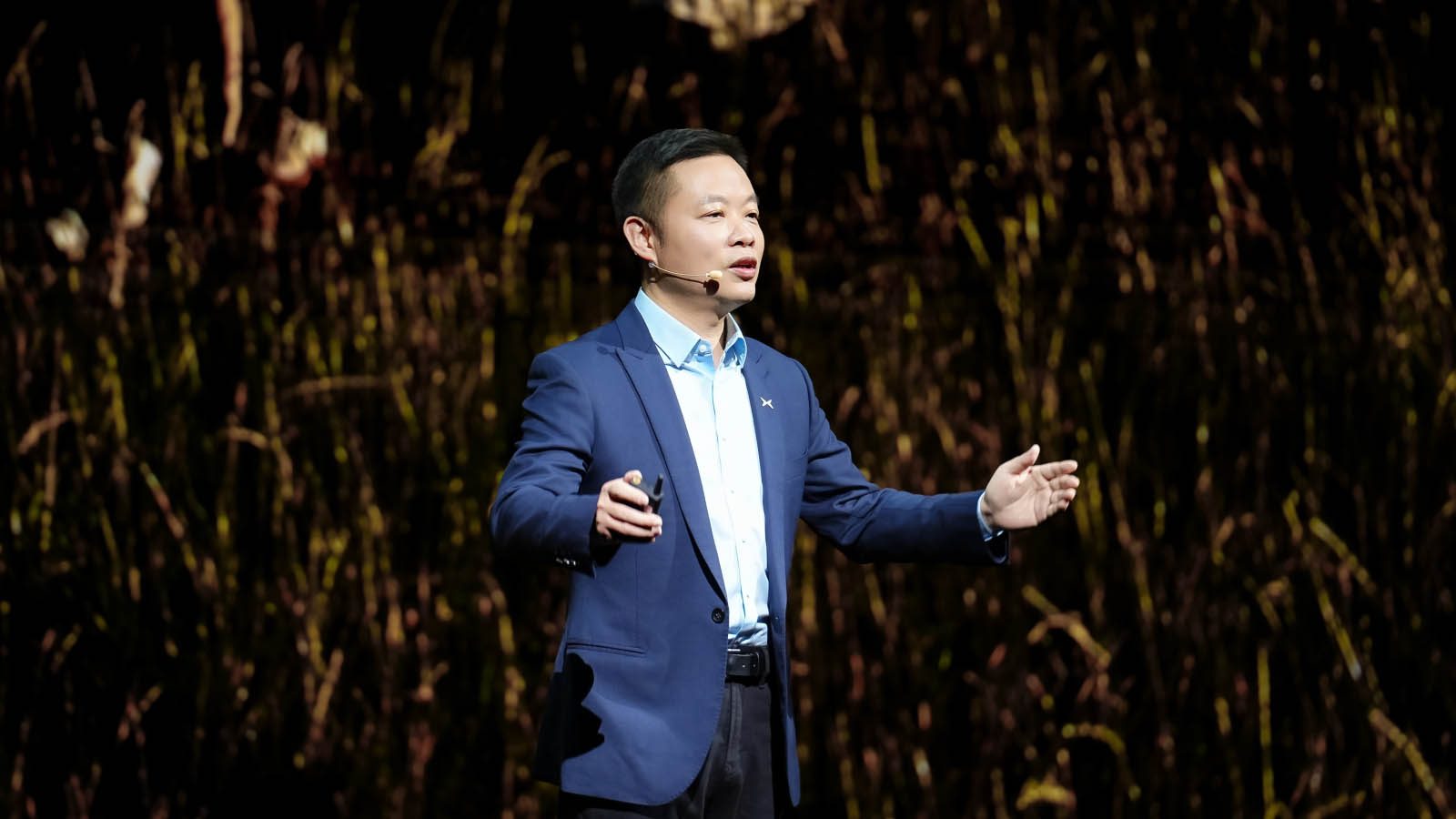
Founder and CEO He Xiaopeng framed the year around new product and a broader technology strategy.
“Kickstarted by the successful launch of the GX, XPeng will deliver four new models this year, positioning us for a robust sales growth trajectory,” he said.
He added that the company is focused on reaching mass production of robotaxis and humanoid robots this year, describing an effort to “transform physical AI technologies into new growth drivers for revenue and profit.”