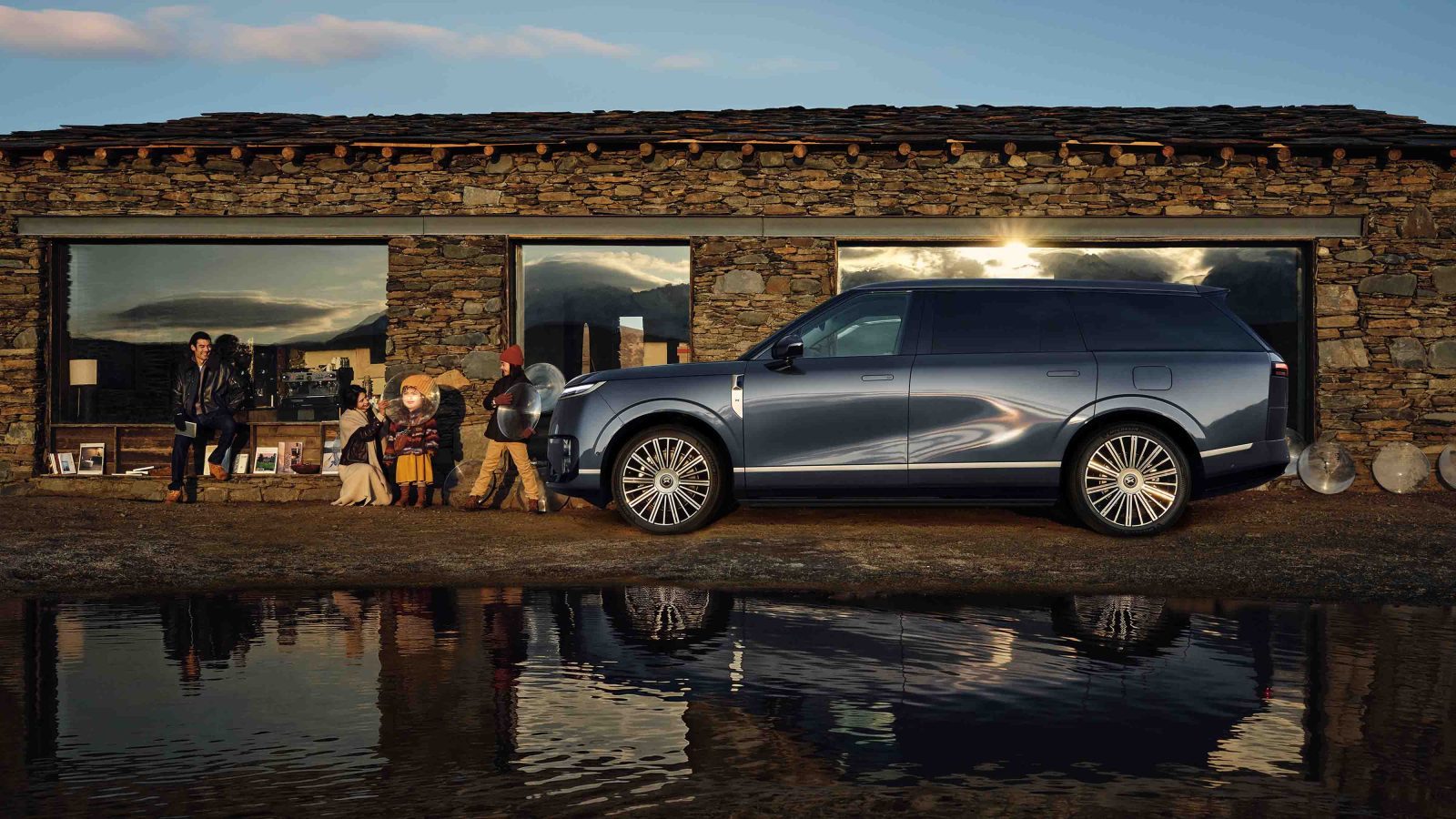

Chinese automaker XPeng officially launched the GX on Wednesday, its new flagship SUV and the most expensive model in the brand’s lineup.
The six-seat vehicle is priced between 279,800 and 359,800 yuan ($41,100–$52,900) before incentives and is offered in both battery electric (BEV) and extended-range versions (EREV).
For customers ordering the vehicle before June 30, the company is offering with a limited-time 10,000-yuan discount — bringing the effective range to 269,800–349,800 yuan ($39,700–$51,400).
With the GX, XPeng is entering one of the most competitive segments in China’s new energy vehicle market.
Over the past year, automakers have rushed to launch premium six-seat SUVs priced between 300,000 and 500,000 yuan ($44,100–$73,500).
The wave began last summer with the launches of the fully electric Onvo L90, the Li Auto i8, and Tesla’s three-row Model Y L.
The GX promotional pricing nearly undercuts Onvo L90’s starting price of 265,800 yuan ($39,100) with the battery included.
The model is available from 179,800 yuan under Nio’s battery-subscription plan, in which customers acquire the vehicle while leasing the battery separately for a monthly fee.
Both the Li Auto i8 and Tesla‘s six-seat model are priced at around 339,000 yuan ($49,800).
In the hybrid segment, the GX competes with Geely-backed Zeekr brand’s recently launched 9X and 8X SUVs.
The recently launched Zeekr 8X, which is available as both a five- and six-seater, with a limited-time starting price set at 329,800 yuan — equivalent to $48,500.
Nio’s third-generation ES8 has been the large SUV’s breakout performer, securing more than 100,000 firm orders after its 2025 launch. The model’s starting price is 416,800 yuan — with the 102-kWh battery included.
Even at its effective starting price of 279,800 yuan, the GX undercuts most of its direct competitors.
XPeng is also planning to bring the GX to Europe as early as October — marking the brand’s first entry into the continent’s premium large SUV segment.
Launch Benefits
Besides the 10,000-yuan promotion, XPeng is offering customers who pay a 5,000-yuan deposit before June 30 a package of limited-time incentives.
Buyers can choose between a financing benefit — with options including two-year zero-interest or three-to-five-year low-interest terms — or a charging card providing 1,000 kWh per year for four years.
Trade-in customers receive an additional 10,000 yuan off for same-brand trade-ins or 5,000 yuan for other brands.
Repeat XPeng buyers get a charging card worth 1,500 kWh per year for six years.
Powertrain and Specs
The EREV lineup includes four all-wheel-drive (AWD) trims spanning 279,800 to 349,800 yuan after the 10,000-yuan discount.
The extended-range version uses a 1.5-liter range extender, delivering up to 430 km of pure electric range and over 1,585 km of combined range on the CLTC cycle.
The BEV side offers four trims between 269,800 and 349,800 yuan. Prices include the promotion.
The pure electric version is built on an 800V silicon carbide platform, offers up to 750 km of CLTC range, and supports 5C ultra-fast charging.
All models come standard with dual-chamber air suspension and CDC adaptive damping.
The GX measures 5,265 mm long, 1,999 mm wide, and 1,800 mm tall, with a 3,115-mm wheelbase.
It rides on 22-inch ultra-wide staggered tires and achieves a drag coefficient of 0.255 through design features including a clamshell hood, an integrated clamshell tailgate, and flush side windows.
Five exterior colors are available — Everest White, Polar Black, Fjord Grey, Danxia Red, and Desert Gold — alongside three interior options.
With six passengers aboard, the GX can still fit six 24-inch suitcases, according to the company.
Folded flat, cargo expands to 1,748 liters. The rear trunk offers 673 liters, and the BEV version adds a 109-liter front trunk.
Autonomous Driving and Safety
The brand positions the GX as the consumer counterpart to its robotaxi platform.
XPeng rolled the first mass-produced robotaxi off the production line in Guangzhou on Monday, built on the same GX platform.
Both vehicles share the same Level 4-capable hardware, powered by four in-house Turing AI chips delivering 3,000 TOPS of effective computing power.
The GX uses a pure-vision system without LiDAR and supports XPeng‘s second-generation VLA and VLM AI models.
A driver monitoring system can detect abnormalities, automatically pull over, and select safer emergency stopping zones.
The body uses a 16,000-ton front-and-rear integrated die-casting structure and comes equipped with 11 airbags.
The chassis features steer-by-wire and rear-wheel steering, allowing the 5.2-meter SUV to achieve a turning radius of 5.4 meters.
Delivery and Stock Pressures
The GX arrives at a critical moment for XPeng.
The Guangzhou-based automaker delivered 62,682 vehicles in the first quarter — a 33.3% plunge from a year ago and the first year-over-year quarterly decline since mid-2023.
April’s 31,011 units represented a 7.5% year-over-year decrease, extending the decline that began in January when reduced government incentives and the Chinese New Year holiday weighed on industry-wide demand.
Through the first four months of 2026, XPeng has delivered 93,693 vehicles — well below the 129,053 registered in the same period last year.
The company is targeting 550,000 to 600,000 deliveries for the full year, a 28% to 40% increase from the 429,445 vehicles delivered in 2025.
To meet the low end of that guidance, XPeng would need to average roughly 57,000 units per month over the remaining eight months.
The stock has reflected the pressure.
XPeng‘s US-listed shares reached a new fifteen-month low on Monday at $14.91 before closing the session at $15.06.
The losses extended to $14.72 earlier on Wednesday. As of press time, however, the stock had recovered to $15.01.
The company is scheduled to report first-quarter earnings next week, on May 28.