
US-listed shares of China’s auto stocks rose sharply in pre-market trading on Wednesday, mirroring a broad rally in Hong Kong after Beijing signaled it would accelerate the drafting of a national plan for the smart, connected new energy vehicle industry.
Li Auto led the move, climbing over 5% to $13.90 in the first minutes of pre-market trading in New York. XPeng followed with gains over 3% — at $13.14 — while Nio rose over 2.7% to $4.81.
The gains extended a rally that began in China earlier on Wednesday. Li Auto‘s Hong Kong-listed shares closed 10.2% higher at HK$54.75.
During the trading session, the shares jumped as high as HK$55.60 — the stock’s highest level in more than a month.
XPeng closed 4.0% higher at HK$51.55, while Nio‘s shares jumped 3.62% to HK$38.32.
Catalysts
The catalyst was a statement from the Director-General of the First Equipment Industry Department at the Ministry of Industry and Information Technology (MIIT), Guo Shougang.
According to a Xinhua report published on Tuesday, the MIIT plans to accelerate development of the country’s smart, connected new energy vehicle (NEV) sector under its upcoming 15th Five-Year Plan.
Guo said the plan will prioritize breakthroughs in core technologies, the development of international standards, and expanded pilot programs for vehicle-road-cloud integration.
He also highlighted rapid adoption of advanced driver-assistance systems in China.
Year to date, 70.5% of passenger vehicles are equipped with Level 2 driving assistance, while 34.2% of new passenger vehicles feature Navigation-on-Autopilot (NOA) capabilities.
The rollout of the country’s first Level 3 conditionally autonomous vehicles has also begun in designated areas.
China has issued more than 20,000 testing and demonstration licenses for smart connected vehicles, opened over 57,000 kilometers of roads for testing, and accumulated more than 220 million kilometers of autonomous driving test mileage.
Li Auto Leads Gains
Li Auto posted the largest single-day gain among the trio on both exchanges.
The Beijing-headquartered carmaker closed Tuesday’s US session 4.7% up at $13.21 already. Pre-market trading pushed the stock a further 5.24% to $13.90.
Li Auto‘s stock has been under sustained pressure this year.
The shares have fallen 50.1% over the past twelve months, weighed by declining deliveries and a collapse in vehicle margin to 6.1% in the first quarter.
Since the beginning of 2026, the stock retracted 22.0%. The share value sits well below its 52-week high of $31.10.
June deliveries fell 15% month over month to 30,895, the weakest month of the quarter, capping a first-half total of 193,472 vehicles that represented a 5.1% year-over-year decline — making Li Auto the only major startup to post negative growth between January and June.
The company is targeting approximately 490,000 deliveries for 2026, implying a 20% increase from last year’s 406,343 units.
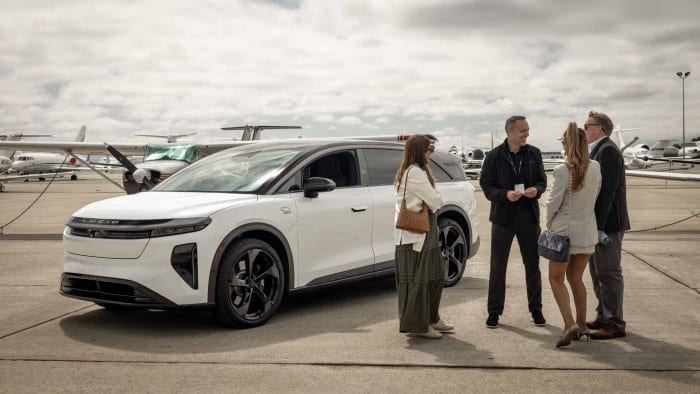
Li Auto launched the all-new L9 Livis in May and the redesigned L8 in late June, and began deliveries of the refreshed L6 last week — three consecutive model updates that the company is betting can reverse the downward delivery trajectory into the second half.
The company also announced plans to enter Europe later this year with the fully electric i6 SUV, alongside expansion into the Middle East and Central Asia.
Earnings are scheduled for August 27. Analysts project continued losses, with a trailing EPS of negative $0.28.
XPeng Rebounds
XPeng‘s US-listed shares rose 3.3% in pre-market to $13.14, after closing Tuesday’s regular session at $12.71 — flat on the day.
The Hong Kong-listed shares outperformed, climbing 4.0% to HK$51.55.
The Guangzhou-based automaker has staged a partial recovery since hitting a 16-month low of $11.77 in June, though the stock remains down 29.5% over the past twelve months.
Year-to-date, the share value has dropped 37.3%.
The 52-week range spans $11.77 to $28.24, placing the current price near the bottom of that band.
XPeng delivered 40,126 vehicles in June, its strongest month of 2026, after the launch of the GX flagship SUV helped reverse a streak of four consecutive year-over-year delivery declines.
The brand debuted the Mona L03 SUV globally on July 16.
European registrations tripled in June ahead of the L03 launch on the continent, and overseas shipments hit a record for the third consecutive month.
XPeng is scheduled to report second-quarter earnings.
The MIIT’s emphasis on NOA adoption and autonomous-driving standards carries particular weight for XPeng, which has invested 7 billion yuan in AI-related spending in 2026 and is developing proprietary chips, foundation models and VLA autonomous-driving systems.
Nio’s Position
Nio‘s US-listed shares climbed nearly 3% in pre-market to $4.81, extending Tuesday’s 1.3% gain.
The Hong Kong-listed stock closed 3.6% higher at HK$38.32.
Year to date, Nio‘s US-listed shares are down 8.2%. Compared to the exact same period a year ago, however, the stock is up 3.8%.
The shares are currently trading near the lower end of its 52-week range of $4.37 to $8.02.
Earlier this month, Goldman Sachs upgraded the stock to Buy, pointing to roughly 294,000 new orders accumulated through mid-July — a pace the bank argued the market had failed to price.
Macquarie also upgraded Nio to Outperform and lifted its volume forecast by 7% to 451,000 vehicles for the year.
Nio Inc. delivered 107,658 vehicles in the second quarter, falling just short of its 110,000-to-115,000 guidance range.
The core Nio brand delivered 21,908 units in June, up 50.1% year over year, driven largely by the third-generation ES8 SUV.
The model has surpassed 130,000 cumulative deliveries and carries a gross margin of approximately 20%.
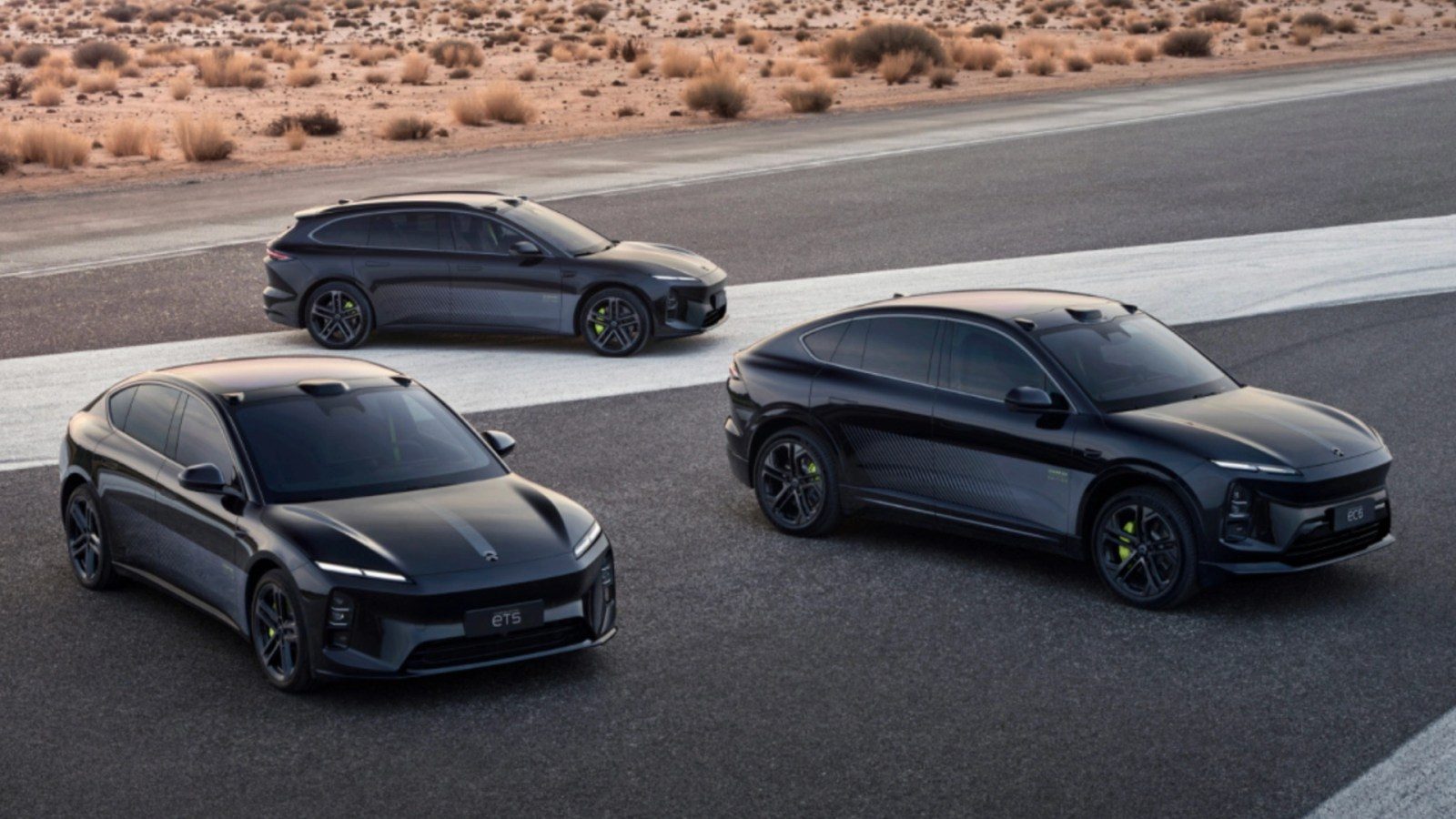
Nio began deliveries of a five-seat ES8 variant earlier this month at a starting price of 382,800 yuan ($56,300), targeting a segment founder and CEO William Li has described as roughly three times the size of the three-row category.
The group is targeting 40% to 50% annual sales growth for 2026, which would translate to approximately 456,000 to 489,000 vehicles.