
XPeng is positioning Australia as one of the first overseas markets for its Land Aircraft Carrier flying car, pitching the eVTOL at the brand’s relaunch event in Melbourne.
The company’s Vice Chairman and President Brian Gu said earlier this week that short-range electric flights should be seen as a recreational product rather than an urban transport solution.
The Melbourne event marked XPeng‘s formal reset in the country after the collapse of its exclusive distribution arrangement with former dealer TrueEV — which left the brand with just 200 registrations in the first four months of the year and a Federal Court lawsuit still pending.
Gu told attendees that leisure travel — not urban commuting — would make the product commercially viable in Australia, pointing to national parks, lakes and remote scenic areas as the settings where short-range electric flight could gain traction without the regulatory burden of operating over populated areas.
“Imagine there are flying camps and flying parks in outskirts of the city, near national parks, on a lake, across the river,” Gu said at the event, according to EV Central.
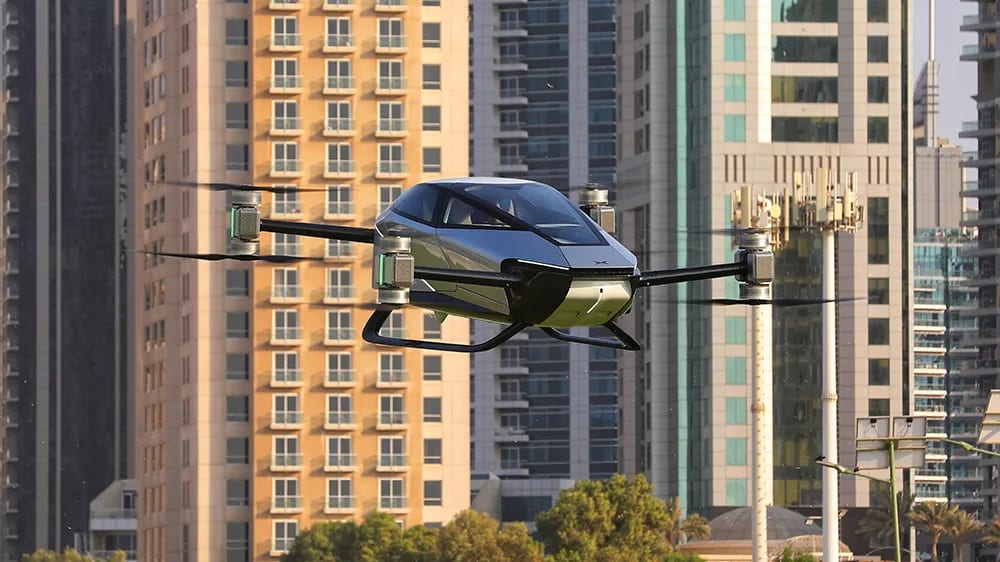
The Land Aircraft Carrier is a two-part system that pairs a six-wheeled road-going carrier vehicle with a two-seat electric vertical takeoff and landing (eVTOL) drone module that deploys automatically from the rear.
The drone component carries two passengers for up to 20 minutes per charge and is designed to fly within geo-fenced zones rather than open airspace.
XPeng has accumulated more than 7,000 pre-orders for the product worldwide, including early bookings from Australia, though a country-level breakdown has not been disclosed.
XPeng founder and CEO He Xiaopeng confirmed the global figure during the Beijing Auto Show in April.
Leisure, Not Air Taxi
Gu argued that XPeng‘s comparatively short timeline to market stems directly from the decision to avoid flying over cities entirely, setting the Land Aircraft Carrier apart from the point-to-point air taxi services pursued by Western eVTOL developers such as Joby Aviation and Archer Aviation.
“It’s not intended to fly inside the city over people’s heads,” Gu stated, noting that “we think this is actually much easier to implement than air taxi.”
XPeng envisions owners driving the carrier vehicle during the week and heading to a designated flying park on the weekend, a use case that sits closer to recreational aviation than to urban air mobility.
According to Brian Gu, the licensing structure the company is seeking would resemble a sporting license — similar to the permits required for hang gliders or powered parachutes — rather than a full pilot’s license.
The aircraft is operated with a single joystick rather than the multi-switch cockpit layout of a conventional helicopter, a design XPeng says lowers the barrier to entry for non-pilots.
Chinese pricing guidance places the Land Aircraft Carrier at under 2 million yuan ($296,000), while Australian pricing estimates have not yet been determined.
CAAC Fast-Track
Australian availability hinges on Chinese type certification being granted first.
Aridge cleared a significant domestic hurdle earlier this month when China’s Civil Aviation Administration placed the subsidiary on its inaugural fast-track list for manned eVTOL airworthiness certification.
The company was one out of the four selected for simplified certification procedures, priority processing, and mutual recognition of phased test results.
The CAAC accepted the Production Certificate application for the flying module in mid-May 2025, roughly a year after accepting the Type Certificate application.
Inclusion on the compliance list allows Aridge to carry over phased test results rather than repeating them in subsequent certification rounds, compressing the timeline toward commercial deployment.
Once Chinese certification is secured, XPeng says it will pursue international partnerships and engage with local regulators.
In Australia, that process could represent a significant hurdle — the country’s Civil Aviation Safety Authority has no established pathway for certifying modular flying car systems of this type.
Production
Aridge produced the first flying unit of the Land Aircraft Carrier at its dedicated Guangzhou factory in November 2025.
The facility spans roughly 120,000 square meters and sits alongside XPeng‘s electric vehicle production plant.
Initial annual production capacity stands at 5,000 units, expanding to 10,000 at full output — a rate Aridge says translates to one aircraft every 30 minutes.
Aridge originated in 2013, was formally established in 2020 and rebranded from XPeng AeroHT to Aridge in October 2025.
The unit has raised about $1 billion in equity financing and is actively preparing for an initial public offering in Hong Kong.
Beyond Australia, Aridge has been expanding its international presence.
XPeng secured 600 pre-orders for the Land Aircraft Carrier through a deal with the Almana Group in Qatar in late 2025, and Aridge obtained a manned flight permit in the United Arab Emirates in September 2025 — the first overseas manned flight authorization for a Chinese flying car company.
The Land Aircraft Carrier made its European debut alongside XPeng‘s L03 launch event in Munich last week.
Swedish safety supplier Autoliv signed a strategic cooperation agreement with the subsidiary to develop safety solutions for eVTOL vehicles.
Australian Market
XPeng entered Australia in late 2024 through TrueEV, a third-party distributor appointed as the brand’s sole importer, distributor and retailer.
However, and according to a report by Chinese media outlet Yicai, TrueEV ran into funding problems and failed to fulfill orders for more than 450 vehicles.
TrueEV disputed XPeng‘s characterization, saying the automaker began taking steps to circumvent its exclusive distribution arrangements from early 2025, according to a statement sent to CnEVPost.
The two sides are contesting the matter in Australia’s Federal Court, with the next hearing set for October.
XPeng has since hired Hidesuke Takesue, formerly chief operating officer of Great Wall Motor‘s Australian unit, to lead a factory-backed operation and shifted its local model from exclusive distribution to a mix of direct sales and multiple dealers.
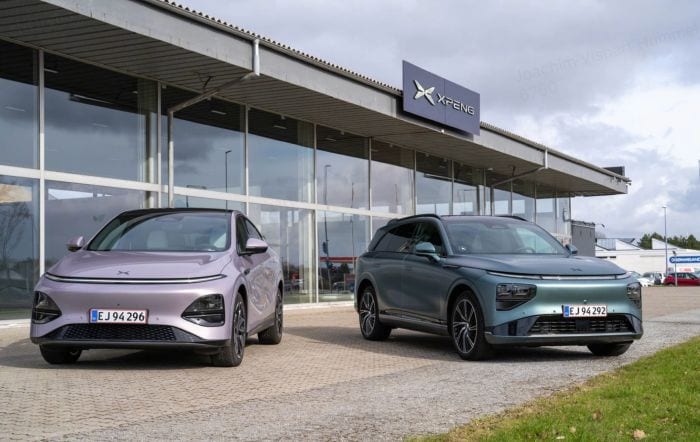
At the Melbourne event, XPeng announced plans to bring five new models to Australia over the next six months, open three flagship experience centers and establish 50 sales outlets.
Pre-orders for the X9 MPV opened at A$89,900 ($63,000). The right-hand-drive Mona L03 sedan also made its local debut, with the global launch of the model earlier this month.
XPeng‘s Turing AI driver assistance system is scheduled to arrive in Australia in 2027.