Canada’s import quota for Chinese-built electric vehicles passed the 40% mark at the end of July, with new government data showing the first hybrid vehicles entering the country under the framework agreed between Ottawa and Beijing in January.
A Global Affairs Canada utilization report executed on the last day of July shows 9,813 vehicles imported under the 24,500-unit first window that runs from March 1 to August 31, equal to 40.1% of the available allocation.
Some 14,687 permits remain with one month left before the window closes.
July finished as the busiest month since the program opened, with 5,682 vehicles cleared — well ahead of May’s 3,510, when Tesla moved first with Shanghai-built Model 3 sedans, and June’s 621.
The month alone accounts for 57.9% of all utilization recorded to date.
Pace Cooled Sharply
The full-month figure also reveals a pronounced deceleration inside July itself.
A previous report executed on July 17 had shown 9,235 vehicles imported, with 5,104 of them arriving in the first 17 days of the month.
The new data means only 578 additional vehicles entered between July 18 and July 31 — a fraction of the roughly 300-per-day pace recorded earlier in the month.
The slowdown suggests the mid-July surge reflected the arrival of a concentrated shipment cycle rather than a sustained acceleration.
At the late-July rate, the first window would close far below its ceiling.
Filling the remaining 14,687 permits in August would require 2.6 times July’s record volume, an outcome no month so far has come close to supporting.
If August instead matches July’s 5,682 units, the window would end at roughly 15,500 vehicles, or 63.2% of the cap.
The Largest Category
The July 31 report breaks utilization into four tariff classifications, one more than any previous edition.
Electric passenger cars with a customs value of C$35,000 or less remain the largest bucket at 4,928 vehicles, after adding 4,463 units in July alone.
The category did not exist in the data before June, when 465 vehicles first appeared under the classification.
Electric passenger cars declared above C$35,000 total 4,582, built from May’s 3,510, June’s 135 and July’s 937.
Electric SUVs and passenger vans above C$35,000 account for 44 vehicles.
The value thresholds refer to the customs value declared at import, not the retail price paid by Canadian buyers.
That distinction matters because the Shanghai-built Model 3 Premium RWD retails at C$39,490 in Canada, meaning vehicles landing under the C$35,000 customs line can still reach showrooms well above that figure.
Global Affairs Canada does not identify importers in its utilization reports, so the split between Tesla and other manufacturers cannot be confirmed from the official data.
The growth of the sub-C$35,000 category carries a policy echo: none of the first-year quota is reserved for lower-priced vehicles, with a 10% affordability requirement only taking effect in the 2027 quota year before rising to 50% by 2030.
First Hybrid Line Appears
The most notable addition to the July 31 report is a new tariff line entirely.
Some 259 vehicles entered in July under HS code 8703409090, covering non-plug-in hybrid SUVs and passenger vans with a spark-ignition engine and a customs value above C$35,000.
No conventional hybrids had appeared in any prior utilization report, and their arrival confirms in practice what the framework allowed on paper — the quota covers battery-electric, plug-in hybrid and hybrid vehicles alike.
The government data does not name the importer, and no automaker has publicly confirmed shipping conventional hybrids to Canada under the quota.
Chery has been staging vehicles from its Omoda & Jaecoo export brand in the Toronto area since April, when four vehicles from the two marques were photographed near the Don Valley Parkway, and the company’s global lineup includes hybrid variants of several SUVs.
The hybrid line also accounted for a large share of the late-July flow.
Of the 578 vehicles added after July 17, the 259 hybrids represent 44.8%, alongside 271 additional sub-C$35,000 passenger cars, 29 higher-value passenger cars and 19 SUVs and vans.
The Second Window
Under Notice to Importers Serial No. 1162, any first-window permits left unused on August 31 carry over into the second six-month period, which runs from September 1 through February 28, 2027 and starts with its own 24,500-vehicle base.
If August volumes track recent weeks, the second window could open with an available allocation approaching 34,000 vehicles, and materially more if the late-July lull persists.
How that volume is distributed remains the open question.
Global Affairs Canada ran a public consultation from April 7 on whether to replace the first-come, first-served system with per-manufacturer allocations for the second window, including questions on under-utilization penalties, allocation transfers and whether Canadian pricing should factor into the design.
A new notice governing the September-onward period is due before the second window opens, and had not been published as of Friday.
The stakes of that decision have grown since the spring, when Ottawa officials were reported to be weighing caps on individual automakers after Tesla claimed an early double-digit share of the allocation.
With the first window now on track to close undersubscribed, the concern has partly inverted — the consultation asked how the government can incentivize utilization, not just restrain it.
Chinese Brands
The quota’s second half will also overlap with the expected retail arrival of Chinese brands.
BYD is assembling a Canadian retail network through Dealer Solutions Mergers & Acquisitions, the Markham, Ontario consultancy whose chief executive Farid Ahmad has said the automaker is targeting about 20 dealerships in its first year, starting in the Greater Toronto Area before expanding to Vancouver, Montreal and Calgary.
The company has announced no launch date and no Canadian pricing.
BYD told Global News in May that it had not finalized plans to introduce passenger vehicles to the market, after widely circulated launch details attributed to executive VP Stella Li were traced to an imposter social media account and retracted by outlets that had carried them.
Li’s actual on-record position dates to March, when she told Bloomberg that BYD is studying Canada for a wholly-owned manufacturing plant but rejected Ottawa’s joint-venture condition, saying “I don’t think a JV will work.”
Earlier this year, BYD, Chery and Geely told Joly they were willing to explore joint ventures.
Chery is also working toward consumer sales, with certification and dealer agreements still in progress, and state-owned Dongfeng showcased six EVs at Montreal’s Old Port on July 14 ahead of a targeted 2027 entry with two sub-C$35,000 models.
XPeng has given its Canada position directly to EV.
Answering a question from EV at the L03’s global launch in Munich, head of global business Alex Tang said the country’s “door is open” and that the company had kept close contact with Canadian officials and local partners while weighing when to enter.
The executive framed any move as a long-term undertaking rather than shipping a handful of cars under the quota.
Polestar offers the clearest preview of second-window demand.
The Geely-owned brand reopened Canadian orders for the China-built Polestar 2 in June at C$69,900, with first imports slated for September — meaning its volume will draw on the carry-over allocation from the window’s opening day.
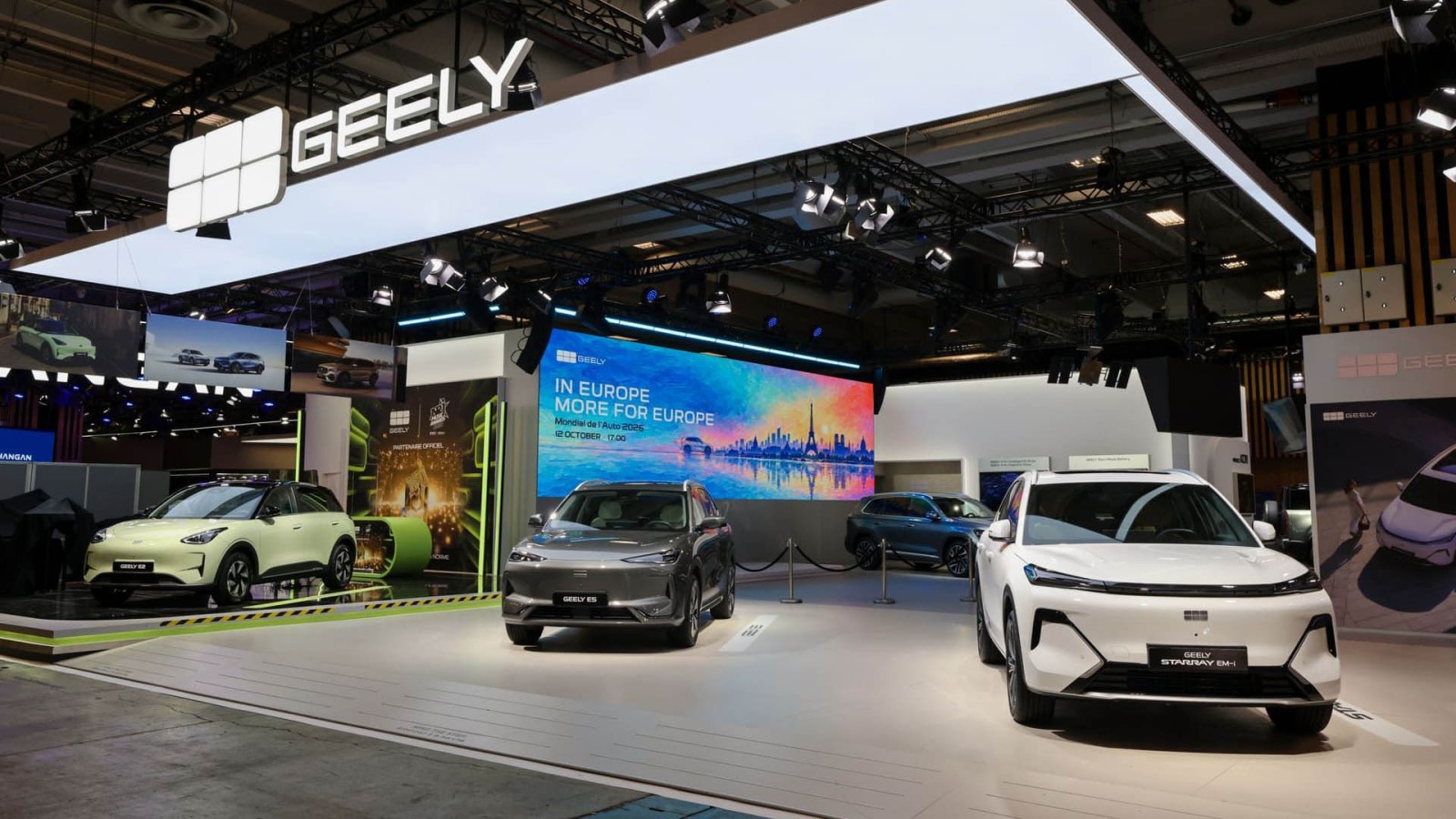
Geely has already used the framework once, landing the first batch of roughly 20 Wuhan-built Lotus EVs in early July through its Lotus brand.
Industry Minister Mélanie Joly visited China from June 14 to 23 and said three major Chinese automakers were open to building EVs in Canada through local joint ventures.
The quota framework itself dates to the January agreement between Carney and President Xi Jinping, which repealed the 100% surtax imposed in October 2024 and replaced it with a 6.1% most-favoured-nation tariff inside an annual ceiling of 49,000 vehicles, rising 6.5% per year to roughly 70,000 by 2030.