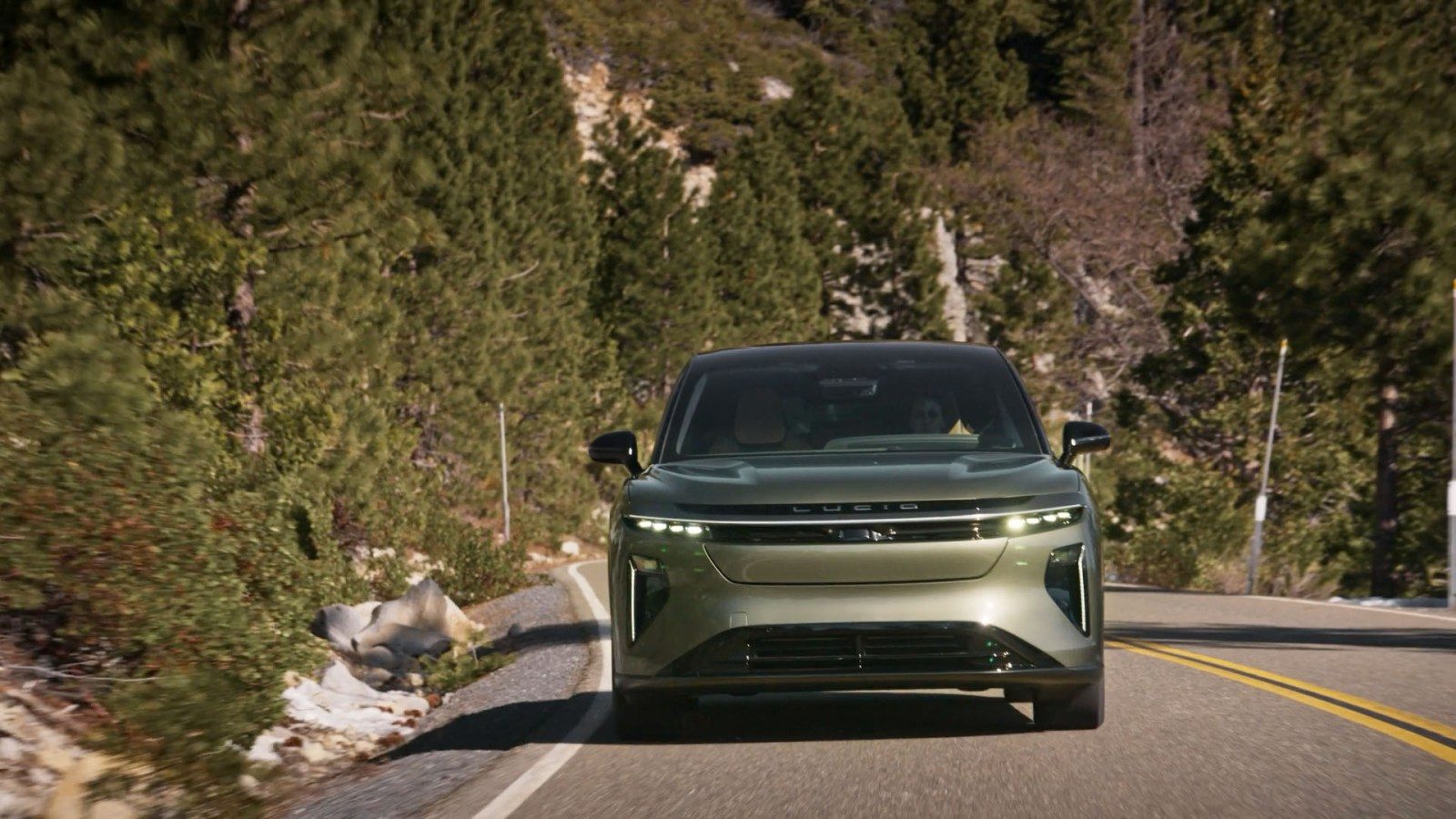

Cantor Fitzgerald now expects Lucid to deliver 15,499 vehicles in 2026 — fewer than the 15,841 the company managed last year, and a target that would mark the first annual delivery decline in the EV maker’s history.
The new estimate, contained in a note to clients on Wednesday obtained by PriceTarget, cuts the firm’s delivery model by 30.5% from the 22,295 vehicles it published only two days before the earnings report.
The production model fell harder after the management recalled on Tuesday that it cut the second production shift at the Arizona plant.
Cantor now expects 15,048 vehicles built this year, down 39.9% from its prior 25,050 and roughly 40% below the 25,000-to-27,000 guidance Lucid itself suspended in May.
The firm kept its Neutral rating and $8 price target unchanged. The stock was trading 7.5% lower during Wednesday’s pre-market session at $7.20.
Five Weeks of Whiplash
The revision closes a stretch in which Cantor’s calls moved the stock in both directions.
In late June, the firm forecast Lucid would deliver 5,170 vehicles in the second quarter, topping consensus — a call that helped fuel a 23% two-day rally in the shares.
The actual number came in at 3,953, a shortfall of nearly a quarter, which the firm absorbed in early July by holding its rating while calling production “in-line”.
The Sunday-night model of 22,295 deliveries followed, requiring Lucid to more than double its first-half pace.
Wednesday’s note abandons that arithmetic entirely, with the analysts writing that the reduction reflects management’s comments and that “we want to remain conservative.”
What Management Said
The trigger sits in Lucid’s own second-half framing, delivered alongside a quarterly net loss that nearly doubled to $1.03 billion.
The company issued no new production outlook, and chief executive Silvio Napoli warned that Wall Street’s numbers sit too high, telling analysts on the call that consensus rests on “operating models that no longer reflect the figures we anticipate today.”
Third- and fourth-quarter production were previewed to come below the second quarter’s 4,774 units as the Arizona plant runs a single shift through year-end, and deliveries above production as existing inventory converts to sales.
Cantor expects the new full-year outlook once the business review concludes — the firm anticipates the third quarter — with 2027 guidance and mid-term targets at the year-end results.
Applied to the first half’s 10,274 vehicles built and 7,046 delivered, Cantor’s full-year model implies second-half production of just 4,774 units.
The figures represent exactly one quarter’s worth at the second-quarter rate, or roughly half that pace sustained over six months — alongside 8,453 deliveries, according to EV calculations.
The delivery side of that model asks strikingly little: 8,453 in the second half is just 20.0% above the first, where the abandoned consensus demanded the pace more than double — a downgrade from acceleration to the “more moderate” seasonal growth Napoli described.
The 3,679-vehicle gap between the two would come out of the stockpile: since January 2025, the company has built 28,114 vehicles against 22,887 delivered, an accumulated surplus of 5,227 units.
The first half that anchors those projections split into two troubled quarters: 3,093 deliveries in the first, throttled by a 29-day halt in Gravity handovers over a seat-supplier defect, then 3,953 in the second as production was intentionally cut to 4,774 units.
The first-half delivery growth came in at 9.8%, against the 55% pace that carried 2025.
Early second-half demand signals give the conservatism cover: an estimated 860 US sales in July, down from both June and a year earlier despite 0% financing on both models.
Even production held at the second-quarter rate through year-end plus the entire surplus tops out near 21,800 deliveries — short of the 21,859 that Visible Alpha consensus carried into the print.
The Cosmos Catalyst
The rating held at Neutral because the firm’s thesis has shifted from this year’s volume to next year’s factory.
Cantor called the AMP-2 plant in Saudi Arabia — which Lucid said has completed construction and entered its industrialization phase, with initial production targeted for early 2027 and a designed annual capacity of roughly 155,000 vehicles once complete.
The firm sees it as the most material catalyst ahead, ahead of the Midsize ramp the company now targets for the second half of 2027.
Cantor models fewer than 3,500 Midsize deliveries next year, and cut its 2027 delivery estimate to 31,350 vehicles from 53,200 — a 41.1% reduction that halves the growth story once attached to the 50,000-vehicle Saudi government order the note flags as a Midsize-led opportunity.
Finance chief Taoufiq Boussaid reaffirmed on the call that Riyadh has “committed to purchase more than 4,000 vehicles during 2026 and annually through 2032.”
The Saudi Government deliveries reached a new record in the second quarter, at 1,080 units — per EV calculations based on the SEC filings.
Cantor’s 2026 revenue estimate falls to $1.53 billion from $1.96 billion, and the firm models a capital raise in the third quarter of 2027.