
Saudi-backed EV maker Lucid reported a second-quarter net loss of $1.03 billion, 91.8% wider than a year earlier, and paired the numbers with a company-wide “Operational Reset.”
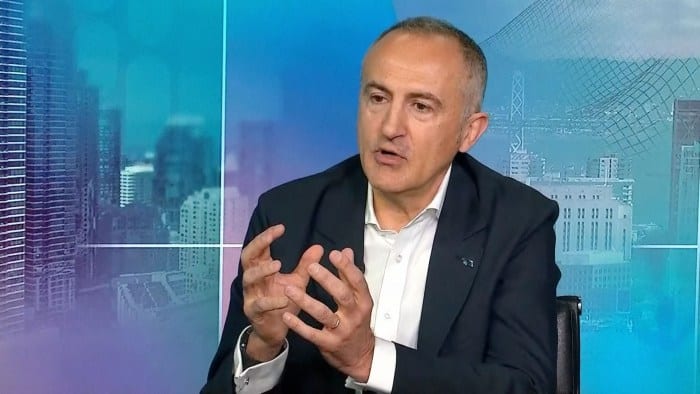
The transformation program under new chief executive Silvio Napoli targets $1.4 billion in cash-flow improvements this year, built around a phrase that will define his tenure’s opening: “potential is not performance.”
The company reported an adjusted loss of $2.78 per share, compared with analysts’ average estimate of a $2.36 loss. Revenue rose 56.2% to $405.3 million but fell short of the $422.3 million analysts had expected.
Revenue rose on 3,953 deliveries, up 19.5% from a year earlier.
Production of 4,774 vehicles, up 23.6%, was — in the company’s own framing — “intentionally reduced to lower inventory and free up cash,” and the inventory line duly fell $90.2 million in the quarter to $1.38 billion, the first decline in the balance-sheet item that has defined Lucid’s year.
The quarter closed with $3.0 billion in total liquidity and a runway the company says extends “well into 2027.”
The loss side carried every structural problem forward at greater scale.
The gross loss reached $426.7 million — a margin of negative 105.3%, essentially unchanged from a year earlier despite the revenue growth.
The figures included $299.3 million of inventory and firm-purchase-commitment write-downs, the second consecutive nine-figure impairment and larger than the first quarter’s $228.3 million, consistent with the model-year-2026 stock EV‘s drone flyovers showed filling dealer lots.
Adjusted EBITDA worsened to negative $901.1 million from negative $780.6 million in the first quarter.
Free cash flow ran negative $1.48 billion — $2.91 billion for the half — though on a per-delivery basis the burn eased to roughly $373,000 a vehicle from the first quarter’s $466,000.
Workforce reduction charges of $33.7 million booked the June restructuring, taking the half’s total to $71.6 million.
The Reset
The program Napoli announced reorganizes the company around three priorities — “Cash & Cost, Customer & Quality, Culture & Team” — and four “must-win” projects: the $1.4 billion savings plan, the robotaxi program, the AMP-2 plant in Saudi Arabia, and the Midsize program.
The savings arithmetic: $600 million to $800 million from inventory, roughly $500 million from capital expenditures and about $200 million from operating expenses, the last including approximately $158 million in annualized savings from June’s US workforce reduction.
The structure changes are concrete — the number of direct reports to the chief executive is being halved, and the forward-looking statements disclose a measure the release’s body does not: the elimination of the second production shift at AMP-1 in Arizona.
Service wait times, a running sore the company’s new customer chief was hired to address, are targeted to fall by one third this year.
Chairman Turqi Alnowaiser supplied the board’s endorsement — “the Board stands firmly behind their actions” — language that reads deliberately, three weeks after a July in which the company’s solvency became a market question and Napoli personally rejected bankruptcy claims.
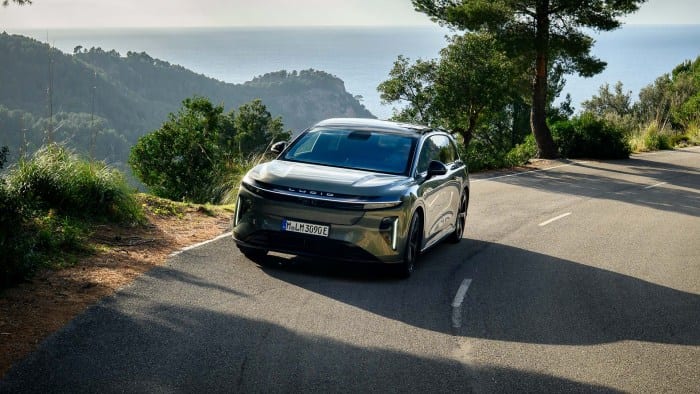
The robotaxi program gains an organizational identity: “Lucid Technologies,” a dedicated business unit combining AI, driver-assistance and digital capabilities, will house the Uber-Nuro work, now supported by a fleet of nearly 100 vehicles testing across the San Francisco Bay Area and Houston, with production-validation Gravity vehicles being delivered to Nuro.
The Midsize program — the release does not use the name Cosmos — is described as advancing through validation, durability testing, crash certification, battery-pack manufacturing validation and cold-weather testing in New Zealand, with no production date attached.
The Balance Sheet Beneath It
The quarter’s capital movements were the largest in the company’s history outside its listing: $292.5 million from the underwritten common offering, $200 million from Uber’s subscription, $550 million of Series C preferred issued to the Public Investment Fund’s affiliate, and $500 million drawn from the PIF term loan — roughly $1.55 billion of net financing inflows in three months.
Shares outstanding rose to 394,070,176 from 330,144,583 at March 31 — 63.9 million new shares, 19.4% dilution in a single quarter — and the per-share loss of $3.30 must be read against that larger denominator.
Even so, stockholders’ equity fell to negative $1.06 billion, tripling the first quarter’s negative $351.4 million in the deficit’s second quarter of existence, as the accumulated deficit crossed $17 billion to $17.67 billion.
The preferred stack grew to $2.91 billion across three series, with the new Series C — the April $550 million — already carrying a liquidation preference of $566.9 million, and quarterly preferred accretion more than doubling to $224.4 million: the widening wedge between the net loss and the $1.26 billion attributable to common stockholders.
One revenue detail deserves its own sentence: $96.2 million of the quarter’s revenue — 23.7% of the total, up from 11.7% a year earlier — came from a related party, the deepening commercial as well as financial dependence on Riyadh.
The release contains no annual production or delivery guidance.
On the July questions — the AlixPartners engagement the company confirmed while rejecting EV‘s reported scenarios — the release says nothing directly, though the forward-looking statements reference “the outcome of Lucid’s broader business review, which remains underway,” and the $1.4 billion plan is described as “the initial output” of that review.
The 5:30 p.m. ET call, Napoli’s first and departing chief financial officer Taoufiq Boussaid’s last, carries the remaining questions.