
Cantor Fitzgerald expects Lucid to deliver 5,170 vehicles in the second quarter, a sharp rebound from a recall-hit start to the year, even as the luxury EV maker swaps chief executives and cuts roughly 18% of its US workforce.
Analyst Andres Sheppard set the estimate in a note to clients on Monday, keeping a Neutral rating and $8 price target on the stock.
The figure sits above the Visible Alpha consensus of 4,618 and well ahead of the 3,093 vehicles Lucid delivered in the first quarter, when a 29-day halt to Gravity deliveries gutted the period.
On production, Cantor models fewer than 5,000 vehicles, leaving production below deliveries as Lucid draws down inventory built before the recall.
PriceTarget first obtained the research note.
Lucid is scheduled to report second-quarter deliveries in early July and full financial results in August.
A Rebound Off a Recall-Hit Quarter
Sheppard’s call points to a quarter that recovers much of the ground lost over the opening three months of the year.
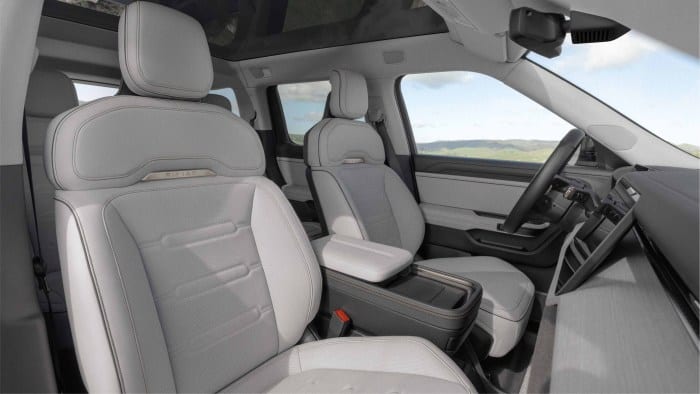
Deliveries cratered to 3,093 in the first quarter, down from 5,345 in the final quarter of 2025, after a near-total recall of Gravity vehicles tied to a second-row-seat supplier defect halted handovers for 29 days.
The 5,170 estimate would lift volumes back toward that earlier pace, and the gap between Cantor’s number and the lower Visible Alpha consensus reflects how much of the rebound the firm attributes to delayed Gravity units finally reaching buyers.
Production below 5,000 would invert the first quarter, when Lucid built 5,500 vehicles but shipped barely half, stranding finished cars awaiting the recall fix.
Management has described the Gravity as supply-constrained rather than demand-constrained, a claim the second-quarter delivery pace will help test.
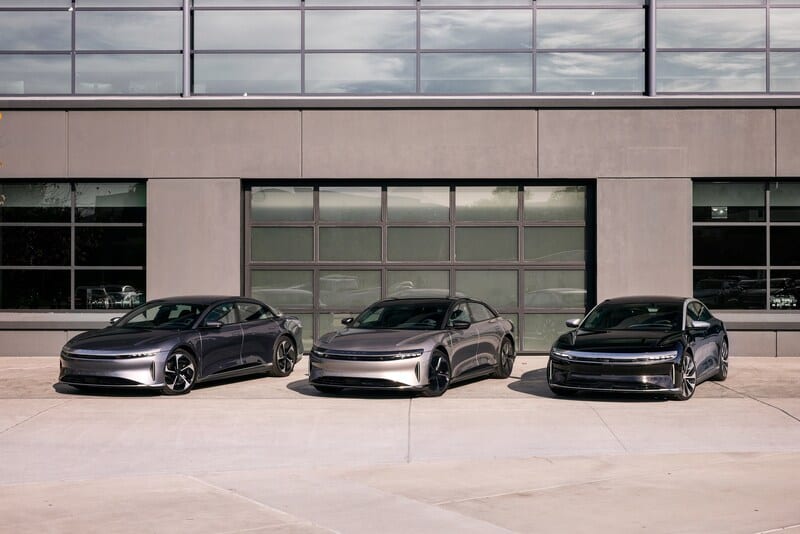
The Gravity SUV, priced from $79,900, and the Air sedan, which starts near $70,000, account for all of Lucid‘s current volume, leaving the quarter heavily dependent on how quickly recalled units returned to the road.
Guidance in Limbo
Lucid entered the year guiding to production of 25,000 to 27,000 vehicles and capital spending of $1.2 billion to $1.4 billion.
Both targets are now in question after the company suspended its production guidance at its first-quarter earnings call, promising an update during the second quarter.
Sheppard expects management to deliver that revised outlook this quarter, making the figures around the July delivery report and the August earnings call the most consequential in months.
The maker posted a net loss of $1.028 billion in the first quarter on revenue of $282.5 million, and closed the period with about $700 million in cash.
A trio of capital raises since then — $550 million from a Saudi Public Investment Fund affiliate, $200 million from Uberand a $300 million stock offering — lifted total liquidity back toward $4.7 billion, though the cash burn keeps financing in view.
Cantor cut its price target to $8 from $14 after the first quarter, citing weaker production expectations and a more cautious read on delivery growth.
Lucid shares traded at $5.85 in Monday’s pre-market session, down about 1.1%, leaving the $8 target implying roughly 37% upside.
The stock had surged more than 15% on Friday to close at $5.92, clawing back much of a June slide to an all-time low of $4.47, as investors weighed a week of deep job cuts against signs the Cosmos remained on track for year-end production.
Even after that rally, Lucid sat down about 44% for the year and roughly 72% over twelve months.
Leadership Overhaul
The delivery preview lands in the middle of the deepest management shake-up of Lucid‘s short history as a public company.
Silvio Napoli, formerly chairman and chief executive of Switzerland’s Schindler Group, took over as CEO on June 1, ending a roughly 14-month interim stretch under Marc Winterhoff.
Three weeks later, on June 22, the company said Winterhoff had departed as chief operating officer as it scrapped the role, the latest in a run of senior exits that has turned over much of the team built under founder Peter Rawlinson.
The same day, the company began cutting about 18% of its US workforce, a reduction affecting 705 jobs at its Arizona plant and targeting roughly $158 million in annual savings.
The move follows a 12% cut ordered in February and, for the first time, reaches hourly production staff alongside an entire shift at the Arizona plant.
Napoli has framed his early priorities around execution and cost, telling staff his focus would fall on “cost competitiveness and streamlining” the organization.
Winterhoff’s exit marked roughly the fifteenth departure of a senior executive since October 2023, by EV‘s count, an exodus that has reshaped almost the entire senior team.
Saudi Arabia’s Public Investment Fund, which holds about 56.8% of Lucid and has repeatedly bankrolled the struggling maker, remains the financial backstop, even as its growing exposure raises the stakes for management to deliver on this year’s defining targets while narrowing losses.
Chief among those targets is the Cosmos, whose launch and start of production anchor Lucid‘s 2026 plan, the milestone the fund is counting on alongside steady gains on cost and efficiency under Napoli.
A European restructuring now under review, which could strip out up to 40% of the company’s staff there, stands as the clearest sign of that cost push.
Catalysts Into 2027
Cantor flagged a run of potential catalysts over the next twelve months, weighted toward late 2026 and 2027.
The firm expects the commercial launch of a robotaxi service with Uber and Nuro in the fourth quarter, the first revenue from a partnership that has expanded to about 35,000 vehicles and drawn $500 million in total Uber investment.
Hands-free highway and city driving autonomy is slated for the second half of this year, ahead of a DreamDrive Pro subscription that Cantor pencils in for the first half of 2027.
Completion of the AMP-2 plant in Saudi Arabia is expected between the fourth quarter and the first half of 2027, the site where Lucid plans to build its midsize models.
The midsize program, led by the sub-$50,000 Cosmos, is due to launch around the end of 2026 or early 2027, the lineup management views as its path into higher volumes.
Lucid recently hired a 30-year Ford manufacturing veteran to run the Saudi plant, a sign the cheapest model in its lineup is nearing production, even as management cautions that the midsize will not lift 2026 volumes and that the 2027 ramp is what counts.
Lucid reports second-quarter deliveries in early July, the first read on whether the Gravity rebound Cantor expects has arrived.
Earnings follow in August, when Napoli is expected to set fresh production and spending targets and detail the cost program now under way.