Waymo extended its Los Angeles robotaxi service south along the coast on Tuesday, adding Torrance, El Segundo and Manhattan Beach, as the Alphabet unit widens its network at home and abroad.
The Los Angeles service area now covers 210 square miles, the Los Angeles Times reported. The expansion also takes in destinations including Universal Studios and The Beverly Hills Hotel, according to the newspaper.
Independent tracker Robotaxi Tracker, which pulls maps from Waymo’s app, put the new total at 213 square miles. “Waymo’s Los Angeles service area just expanded by 88 square miles—up 70.7% to 213 square miles total,” it wrote on X. Waymo has not published a figure.
“Big @waymo LA expansion today,” Waymo engineer Reed wrote on X, sharing a map dated November 3 that shows the new coverage stretching from the existing area around Santa Monica, Inglewood and downtown Los Angeles south through El Segundo, Manhattan Beach and Redondo Beach to Torrance.
The map leaves a gap around Los Angeles International Airport, which Waymo still cannot serve.
Five Cities in a Week
The Los Angeles move is part of a wider push Waymo announced on October 27.
“Over the next week, we’re scaling in five cities and adding nearly 250 square miles of territory across Los Angeles, Nashville, Orlando, San Diego and the San Francisco Bay Area,” the company said in a blog post.
In Los Angeles, Waymo said it was “extending down the coast to the South Bay, adding Torrance.” In Nashville, riders can travel further south, including to the zoo, and in Orlando, Waymo said it was “nearly doubling our coverage area in the east, including enhanced service downtown.”
In San Diego, the service is “headed north to La Jolla,” and in the Bay Area it is reaching more areas in the south, “including a new BART connection at Berryessa Station,” Waymo said.
The San Diego expansion went live on Tuesday as well, the Times reported, adding that some local officials there have asked the state for more control over deployment.
The LAX Gap
Riders still cannot request rides to or from LAX. Waymo has asked Los Angeles riders to lobby city and airport officials to let its robotaxis serve the airport.
A Los Angeles World Airports representative said last year that LAX would integrate Waymo once its Skylink people mover is complete, according to the Times. The train has been delayed since 2023.
At San Francisco International Airport, a since-deleted post by a Waymo employee prompted claims in October that the company is testing terminal drop-offs.
Waymo began serving San Antonio International Airport in October.
Open to All
Waymo opened its service on October 14 to anyone in San Antonio, San Diego and Tampa, including rides at San Antonio International Airport.
“We’ve welcomed hundreds of thousands of riders in these cities since opening our service earlier in the year,” the company said.
Waymo had launched paid rides in Denver, San Diego and Tampa on September 1, with service areas of 59, 47 and 44 square miles. It resumed San Antonio service in September, five months after one of its vehicles was swept into a flooded creek.
In Nashville, Waymo rides went live on the Lyft app in September, the first US city where the company dispatches through both its own app and a ride-hailing partner.
Waymo also said on October 30 that it had become the Official Ride-Hailing Partner of the Denver Broncos, with rides to Empower Field “arriving soon.”
A Year of New Cities
The 2026 run began in Miami on January 22. On February 24, Waymo opened Dallas, Houston, San Antonio and Orlando to first riders at once, taking it to 10 metro areas, when it was providing more than 400,000 weekly trips.
Nashville followed in April, and Waymo opened Miami and Orlando to everyone on April 15. Las Vegas began inviting public riders on September 14, and on October 21 Waymo said current riders there could reach Harry Reid International Airport “within our current 24 square mile service area.”
Waymo started rides at San Francisco International Airport in January. In Phoenix, its vehicles left the Uber appin June, while Uber still offers Waymo rides in Austin and Atlanta.
Fifteen Cities and Counting
Waymo’s website now lists 15 areas where riders can ride: Atlanta and Austin through Uber, plus Dallas, Denver, Houston, Las Vegas, Los Angeles, Miami, Nashville, Orlando, Phoenix, San Antonio, San Diego, the San Francisco Bay Area and Tampa.
It lists 17 more as “Up Next,” including New York, Washington, Chicago, Boston, Seattle, London and Tokyo. The site gives no dates for them.
Waymo’s New York City testing ended in April when its permits expired.
The push into Washington faces resistance. Ride-hailing drivers, union members and faith leaders rallied against a bill in October that would allow driverless taxis in the capital. Its author still plans a committee vote by Thanksgiving, despite a call from the city’s likely next mayor to hold off.
Abroad
Waymo has named a string of international markets in recent weeks.
It said on October 16 that it would begin driving in Toronto “in the coming days,” with the goal of “welcoming our first riders in 2028.” Eleven days later, it approached Calgary about running its service there.
On October 20, Waymo said it was laying the groundwork for service in the Madrid region, with Jaguar I-PACE vehicles on the streets “in the coming days.” “We aim to welcome our first riders in 2027,” it said.
In Germany, Waymo’s first robotaxis arrived in Munich in September ahead of a commercial launch targeted for late 2027. In London, about 100 I-PACEs were testing across 19 boroughs as of September.
In Asia, Waymo plans to launch in Tokyo in 2027 with taxi app GO and operator Nihon Kotsu, and has targeted Singapore for 2028.
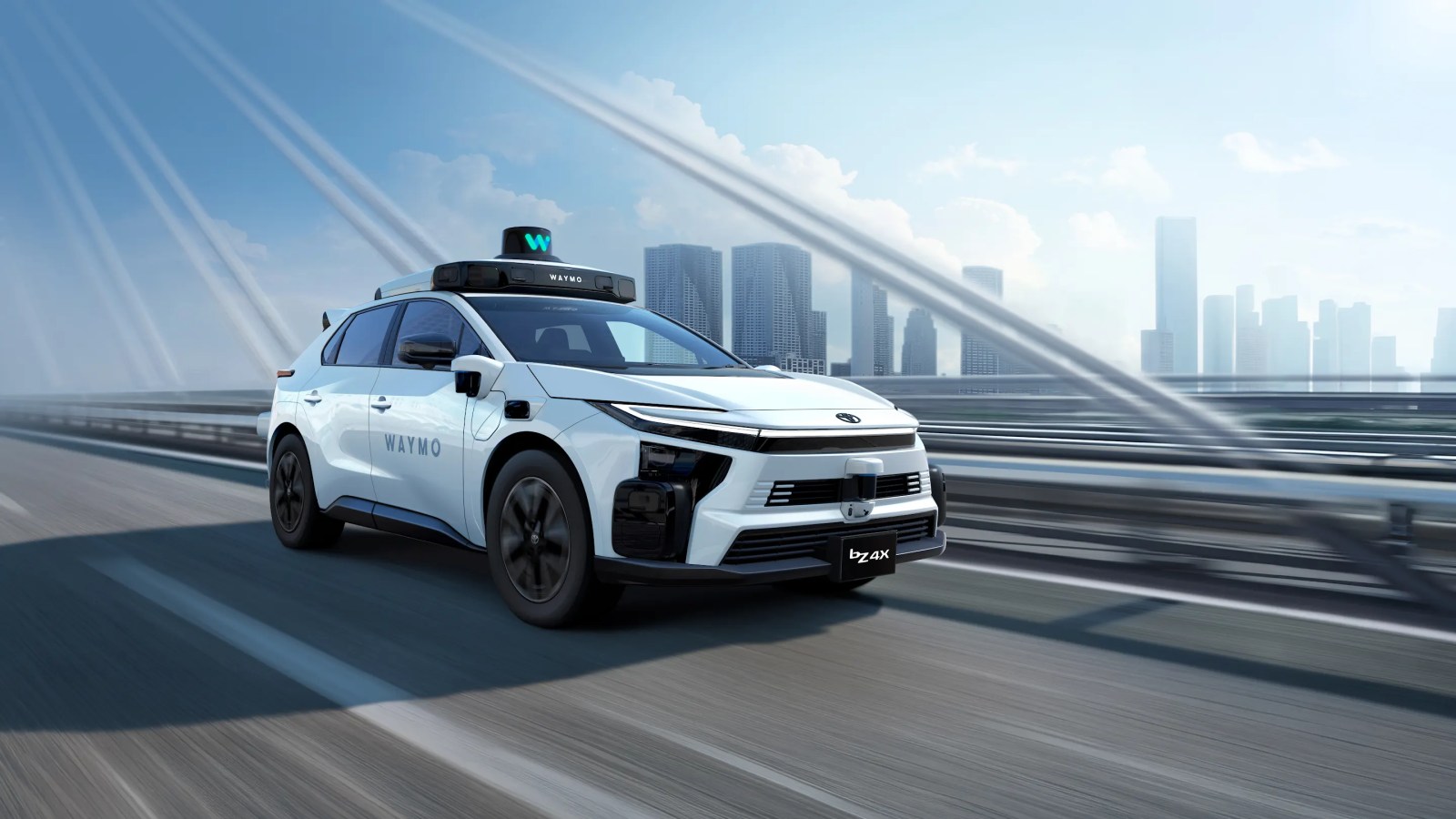
On October 30, it said Toyota would build a custom bZ4X robotaxi at its Takaoka plant in Aichi Prefecture, with testing in Japan starting in 2027 and deployment to the UK and other Waymo markets in later years.
Fleet and Safety
Waymo runs between 3,500 and 4,000 driverless vehicles across its US markets and completes more than 500,000 paid trips a week, it said in September, with a year-end target of one million weekly trips. Its website cites more than 20 million rides served.
Waymo is adding the Ojai, a minivan built in China, to that fleet. Waymo unveiled a silver version with a reworked interior in October and topped 1,100 registered robotaxis in Texas in September. The Texas registry reached over 1,250 Waymo vehicles by the end of October, according to Robotaxi Tracker.
Waymo said in September that its vehicles were involved in 82% fewer injury-causing crashes than human drivers over more than 270 million miles.
In Los Angeles County, crashes involving Waymo vehicles tripled last year, according to a Times review of federal crash data, while about 80% of this year’s reported crashes caused no apparent injuries. Waymo’s crash rate per million miles has fallen each year since 2023, the newspaper said.
Money Behind the Map
The expansion is backed by a $16 billion funding round at a $126 billion valuation earlier this year and a $5 billion term loan that Waymo closed on October 8, led by PIMCO, Blackstone and Sixth Street, which it described as its first debt financing.
“Waymo is on a great trajectory. We have now driven more than 300 million fully autonomous miles,” Alphabet Chief Executive Officer Sundar Pichai said on the company’s third-quarter earnings call last week.
“Waymo now operates in 15 major US cities and just recently opened up service to the public in San Antonio, San Diego, and Tampa with planned expansions into Canada, Germany, Singapore, and Spain,” he said.
Alphabet’s Other Bets segment, which includes Waymo, posted revenue of $372 million and an operating loss of $2 billion in the quarter.
Analysts are divided on what Waymo is worth to Alphabet, according to notes archived by Price Target, EV‘s sister publication that archives Wall Street analyst research on the EV, AI and semiconductor industries.
“At ~$100B of value, Waymo is too small to be anything but a distraction for GOOGL,” Needham analyst Laura Martin wrote in an October 27 note reiterating a ‘Buy’ rating and $450 target on Alphabet.
BofA Securities analyst Justin Post, who cut his target to $380 with a ‘Buy’ rating on October 29, wrote that “early-stage bets like Waymo & quantum computing offer meaningful long-term optionality, not in valuation.”