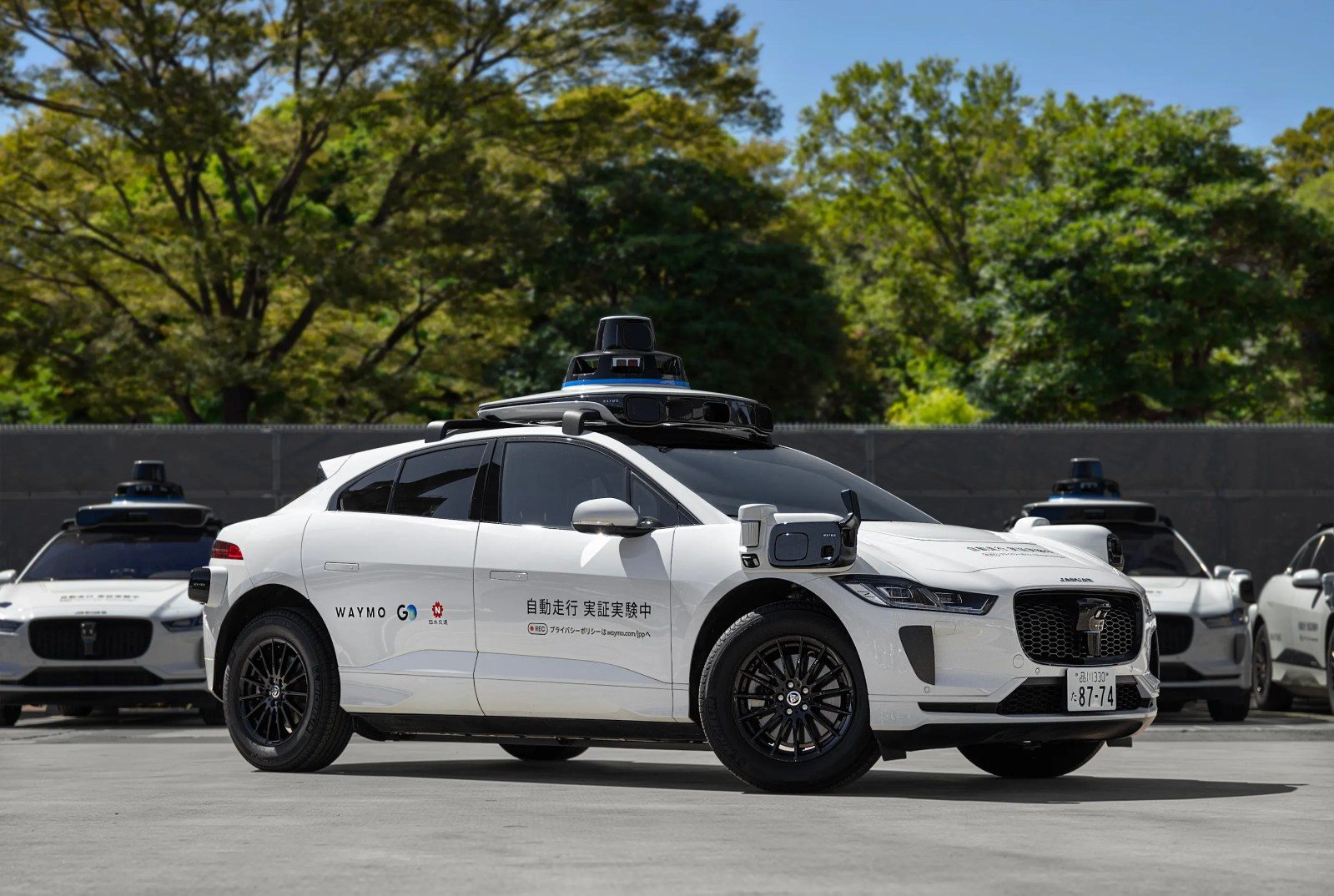

Waymo, the taxi app GO and Tokyo’s largest taxi operator Nihon Kotsu have agreed to launch what would be Japan’s first commercial driverless taxi service, targeting operation in Tokyo during 2027 with a fleet built up to about 100 vehicles.
The three companies announced the agreement on Monday in the United States and Tuesday in Japan.
They described it as a move to a new phase, from autonomous testing with a Nihon Kotsu crew member on board to carrying members of the public in cars with nobody in the driver’s seat.
Waymo said the timeline depends on securing regulatory approval from national and local authorities and on completing validation of its technology and the joint operation. It gave no date within 2027.
“Our partnership is actively expanding local operations and working closely with government ministries to secure the necessary permits and licenses,” the company said.
Who Does What
The division of labour follows Japanese transport law, which requires a licensed taxi operator to carry passengers.
Nihon Kotsu, Tokyo’s biggest taxi company, will handle operational management and depot operations on the ground.
Waymo supplies the autonomous driving system, the operating platform and the fleet management software, and says it will support its partners in scaling up.
GO will handle coordination with taxi operators and the overall design of how Waymo’s technology fits into the Japanese taxi industry.
Rides will be bookable through both the GO app and the Waymo app, which is the first time Waymo has committed to dual distribution outside the United States.
GO president Hiroshi Nakajima said users would be able to hail conventional taxis and Waymo trips through the same app. “To deliver this new mobility experience, we are launching as a full commercial service,” he said.
Nihon Kotsu president Wakabayashi framed it as coexistence rather than replacement. “This initiative, undertaken in partnership with Waymo and GO, represents a crucial opportunity, one that, while coexisting with human-driven taxis, will help address future driver shortages and pass on a safer, higher-quality transportation infrastructure to the next generation,” he said.
Two and a Half Years of Driving First
The companies announced their partnership in December 2024, when Waymo called Tokyo its first international road trip.
Waymo’s Jaguar I-Pace cars arrived in early 2025 and Nihon Kotsu drivers began manually mapping seven central wards: Minato, Shinjuku, Shibuya, Chiyoda, Chuo, Shinagawa and Koto.
That first phase ran with the autonomous system switched off. Waymo said at the time that Nihon Kotsu drivers would drive the cars as any person would, hands on the wheel.
The company has not said when it began running the system autonomously with a crew member supervising.
It was confirmed as under way by the March 2026 briefing, and Waymo said this week that its vehicles had spent “the past year” driving autonomously under supervision, “confidently navigating narrow neighborhood roads and safely maneuvering through dense crowds”.
Wakabayashi said his drivers “have spared no effort in helping the Waymo Driver adapt to Tokyo’s roads”.
The companies said during 2027 without naming a month. An opening early in the year would follow about 21 months of driving in Tokyo without a paying passenger, and one late in the year about 33.
The Timeline Has Moved
At a media briefing in Tokyo on March 27, Waymo Chief Product Officer Saswat Panigrahi said a fully driverless service was not years away and that work was progressing on a scale of months, according to Japanese trade coverage of the event.
This week’s announcement puts the target in 2027.
There was no published date to move from, so this is a change of tone rather than a delay. Neither company has accounted for it, but Waymo’s own wording points at the reason.
It says the timeline is contingent on regulatory approval and that it is working with government ministries to secure permits and licences, which is not language a company uses when approval is close.
Japan permits unmanned Level 4 operation, but approval is granted against a specific operating plan rather than to an operator across a state, and the services running today are small: low-speed shuttles and campus loops rather than a multi-ward urban taxi fleet.
Why Japan Wants It
Japan’s taxi workforce has shrunk sharply since the pandemic and the median driver is over 60. A 2024 cap on overtime tightened supply further, and the government has been pushing to widen where autonomous operation is permitted.
Nihon Kotsu has consistently framed robotaxis as a supplement to human drivers rather than a replacement, which is the position the taxi industry needs to hold if the rollout is to proceed without a fight.
Tokyo was Waymo’s first market outside the United States. It now has three named international targets and no paying driverless passenger in any of them.
The Wider Push
London has the earlier date and less road time. Waymo announced in October 2025 that it would launch a commercial service there during 2026, its European debut, giving itself about 14 months.
Vehicles have been driven by trained specialists across selected boroughs for mapping and validation, which is the phase Tokyo passed in 2025. It has not launched.
Munich followed on August 25, targeted at the end of 2027, a runway of about 15 months. Waymo said vehicles would appear “in the coming weeks”, driven manually at first to build high-definition maps, with supervised autonomous testing to follow.
“This validation period will ensure the Waymo Driver adapts seamlessly to Munich’s distinct driving conditions before we aim to open commercial ride-hailing to the public towards the end of 2027,” the company wrote.
At the time of that announcement, Waymo held no German permits of any kind, according to TechCrunch, which checked the federal motor transport authority’s database and found nothing for Level 4 commercial operation or Level 3 testing.
Mobileye, Volkswagen, Wayve and Autobrains already hold Level 3 permits in Germany.
The scale of the ambition was set out with the money.
When Waymo raised $16 billion in February at a $126 billion valuation, led by Dragoneer, DST Global and Sequoia with Alphabet remaining the majority investor, it wrote that it was “laying the groundwork for ride-hailing operations in over 20 additional cities in 2026, including Tokyo and London.”
Waymo Germany GmbH was incorporated on May 13 and entered the Munich commercial register on June 15. Subsidiaries were filed across Europe and Asia through the summer, which gives Waymo a legal presence in markets it has not named.
The Competition
Tokyo is now contested.
Nissan ran a pilot in Yokohama from late November 2025 to the end of January, with five Serena vans carrying volunteer riders free of charge and safety staff in the seat, aiming at a commercial launch in 2027.
Nuro says its vehicles are driving autonomously with safety operators in Japan.
Honda has explored a robotaxi service since General Motors shut down Cruise in December 2024, a week before Waymo announced Tokyo, and has committed to nothing.
GO listed in Tokyo on June 16, its shares trading about 21% above the offer price at the open after a 25-times oversubscribed offering of 88.6 billion yen, the largest Japanese listing of 2026.
Waymo says it now runs fully autonomous operations in 15 US cities, delivers more than half a million trips a week and has completed tens of millions of commercial trips.
Co-chief executive Tekedra Mawakana said the service is “demonstrated to be over 15 times safer than human drivers”.