
Uber confirmed onboard Monday that it is preparing a new autonomous-vehicle partnership in Phoenix, days after its robotaxis from Alphabet’s Waymo vanished from the app there, ending a nearly three-year arrangement in the city.
The ride-hailing company has not named the replacement.
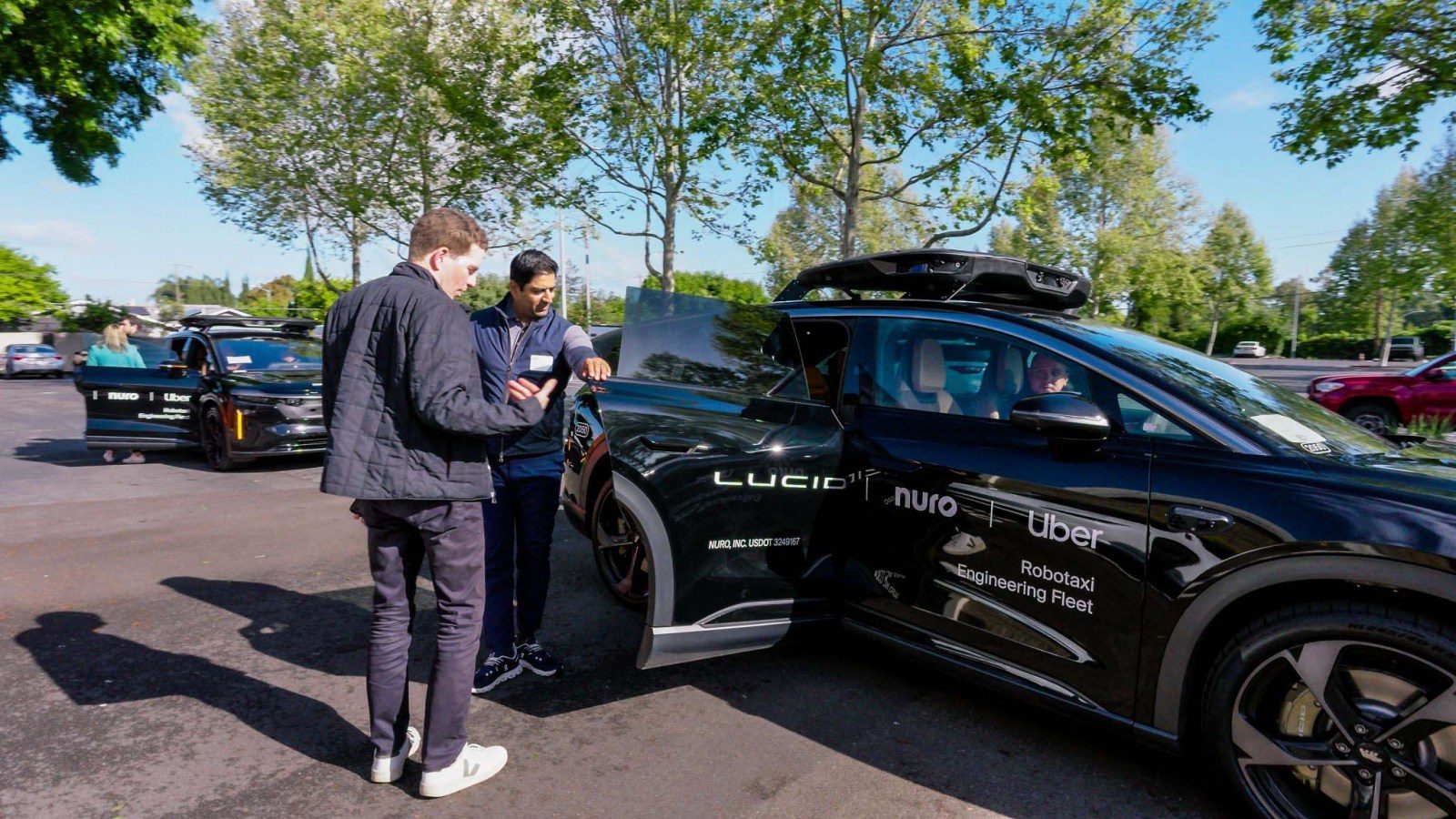
However, Uber‘s partners Lucid and Nuro appear to be the most logical candidates after announcing the Bay Area and Houston as the first two areas for the robotaxi deployment.
What Uber Said
Waymo vehicles are no longer bookable on Uber‘s ride-hail app in Phoenix, closing a pilot that began in 2023.
Uber framed the exit as planned, calling Phoenix an “intentionally limited deployment” of just over a dozen cars that helped it scale Austin and Atlanta, where the Waymo tie-up continues.
The company added that it is readying a separate autonomous-vehicle partnership in the city but declined to identify the partner.
The Roster Uber Could Choose From
Uber has spent the past year assembling one of the broadest autonomous-vehicle benches in the industry, which is precisely why a Phoenix vacancy need not stay open long.
Its partners now span Waymo in some markets, Nuro and Lucid for the owned-fleet program, and a longer list that includes Rivian, Pony.ai, May Mobility, Avride, Wayve and Baidu across various geographies.
Total commitments across those bets exceed $10 billion, and Chief Executive Dara Khosrowshahi has framed the dealmaking as locking up robotaxi supply ahead of what he sees as an industry inflection.
Why the Lucid-Nuro Pairing Fits
Uber does not merely book rides from Lucid and Nuro the way it booked them from Waymo — the company owns the program.
Uber licenses Nuro‘s Level 4 system, owns and operates the fleet itself or through partners such as Hertz’s Oro Mobility, and has committed to buy at least 35,000 Lucid vehicles.
A market it controls end to end is a more natural place to expand than one dependent on a supplier that can withdraw, which is the very lesson the Waymo exit just delivered.
The Phoenix departure showed how revocable a hosted-supply arrangement can be, and the owned-fleet model with Lucidand Nuro is the hedge Uber built against exactly that risk.
The second reason is Nuro‘s footprint.
The autonomy developer has operated in metropolitan areas with hot, sprawling, car-dependent layouts that resemble Phoenix, and its current engineering fleet of nearly 100 vehicles already runs around the clock across California and Texas.
A company validating a “universal autonomy platform” it says is built to generalize across geographies has every incentive to add a Sun Belt city to its map, and Phoenix is the most proven robotaxi market in the country.
The third reason is timing and capacity.
Lucid is building its first production-validation robotaxis at its Arizona factory in Casa Grande, with regular robotaxi production targeted for the fourth quarter — meaning the vehicles destined for Uber‘s service will roll off a line inside the same state as Phoenix.
The Benchmark It Would Be Measured Against
Any Phoenix service would be judged against Waymo, the market’s incumbent and the clearest yardstick for the gap the Lucid–Nuro program still has to close.
Waymo runs about 4,000 vehicles, operates in 11 US metropolitan areas, is launching in around 20 more cities this year and provides more than 500,000 paid trips a week, the company has said. The incumbent also holds the permits for paid driverless rides that Nuro does not yet have.
The relationship with Uber is fraying beyond Phoenix. The two are set to compete directly in London, where Waymo plans its own service and Uber has partnered with the British startup Wayve.
Waymo is also moving to cut costs, deploying a cheaper, purpose-built van made by China’s premium carmaker Zeekr, called the Ojai.
The Case Against
Rigor requires arguing the other side, and there is a real case that Uber looks elsewhere.
The most important counterpoint is that Lucid and Nuro have publicly named only two markets — the San Francisco Bay Area for a late-2026 launch and Houston for mid-2027 — and Phoenix appears nowhere in their stated roadmap.
The program is also not yet commercial anywhere, still lacking the deployment and ride-hail permits needed for paid driverless service in California, which makes a near-term third market a stretch.
The Lucid Gravity is a premium SUV, and Uber executives have said mass-market robotaxi economics need a cheaper vehicle than the Gravity, which is why the program leans on the forthcoming Midsize platform that has not yet reached production.
A Phoenix service built today would therefore ride on Lucid‘s costliest hardware, a disadvantage against rivals fielding purpose-built, lower-cost robotaxis — and one that compounds the steep paper losses Uber already carries on its Lucid stake.
These objections do not sink the Lucid–Nuro thesis, but they keep it honest: the pairing is the most logical candidate, not a confirmed one.