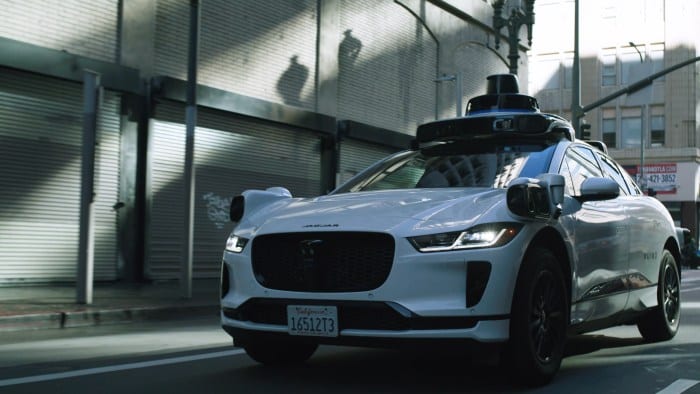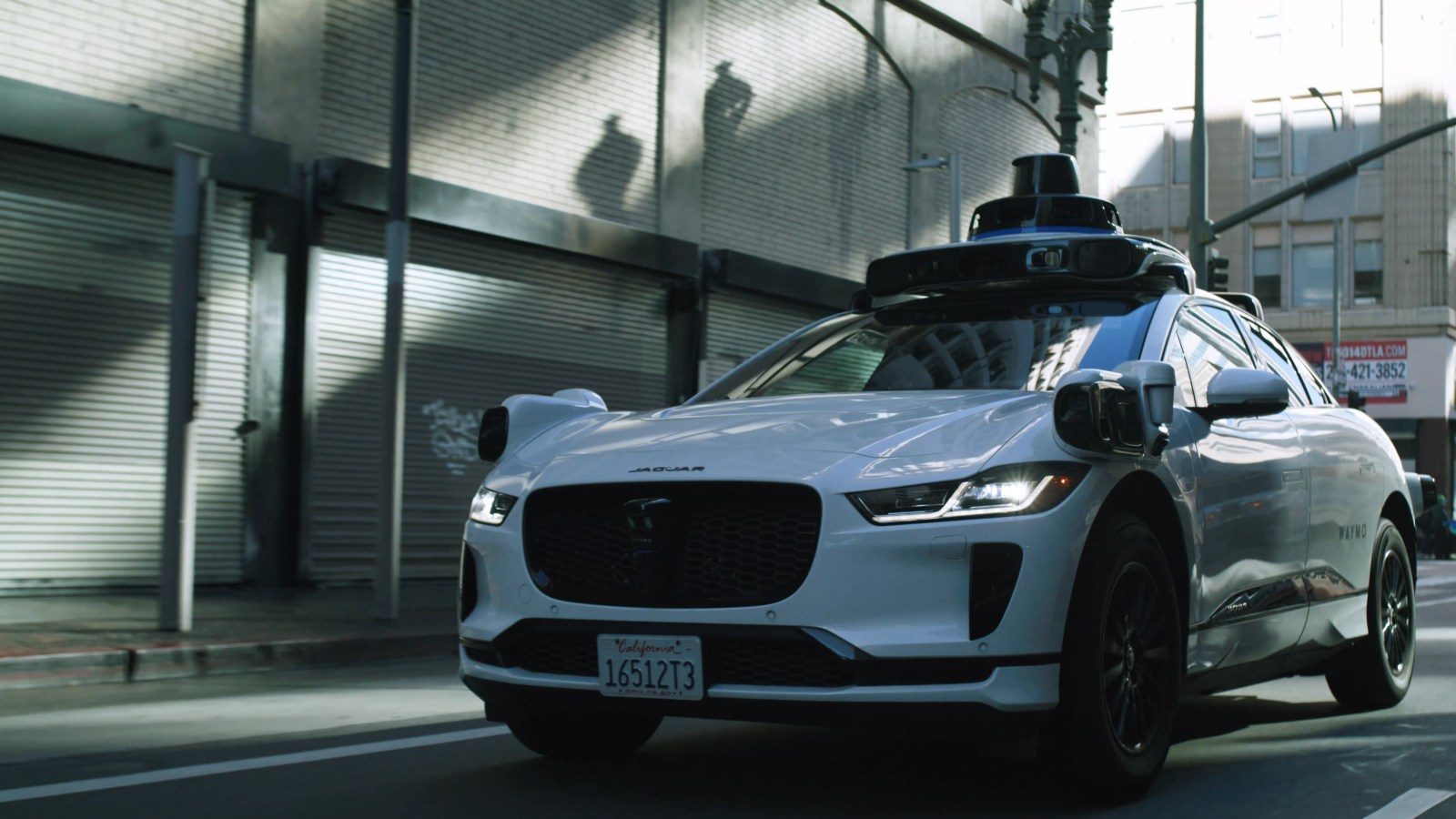

A since-deleted social media post showing a Waymo vehicle at a covered curb after a ride to San Francisco International Airport has prompted a claim that the company is testing drop-offs at the airport’s terminals.
Technology researcher Jane Manchun Wong shared a screenshot of the post on Sunday, attributed it to a Waymo employee and wrote that the company “is testing SFO terminal curbside drop-offs.”
Waymo has not announced any terminal service, and the permit that governs it at the airport bars its vehicles from the terminal curbs unless the Airport Director expressly authorizes otherwise.
What the Deleted Post Shows
The post, published on X, shows a Waymo vehicle stopped at a covered curb with luggage beside it and a 10-second video of the Jaguar vehicle.
“Very smooth experience 20 mins to SFO,” the post read. The author’s name is obscured in the screenshot.
The photos and the video could show one of the terminal-area zones named in Waymo’s airport permit, or one of the two stops the company already serves.
Waymo’s help pages on Monday still listed only those two stops for customers, the Rental Car Center and the Grand Hyatt at SFO.
The pages put them about 15 minutes and 10 minutes from the terminals by AirTrain, and say access is limited to some riders.
The Curb Stays Off Limits
The claim of curbside testing drew attention to the document that governs Waymo’s presence at the airport.
Ethan McKanna, who follows the autonomous vehicle industry, published a copy of the 46-page permit on X on Sunday.
“AV presence on any airport curbside is strictly prohibited under the terms of this pilot permit unless expressly authorized by Airport Director,” the document states.
On the arrivals and departures levels of the terminal roadways, the company may map but may not drive autonomously, pick up or drop off.
The permit contains no such authorization, and it does not show whether the Director has given one separately.
Zones Near the Terminals
The permit does name zones close to the terminals where Waymo may seek approval to operate.
The document is a second reissue, dated June 18, of the Testing and Operating Pilot Permit that the airport first issued in September 2025.
It states that it was reissued “to expand the areas of testing and operation at the Airport to certain Stage 2 Designated Areas.”
Those areas include three where the permit allows passenger pick-ups and drop-offs once the airport gives separate approval.
One is Courtyard G, which the permit does not locate and which regional bus operator SamTrans lists at Level 1 of the International Terminal.
Another is Level 5 of the Domestic Garage, together with the access road leading to it.
The third is North Link Road, which the permit lists among “publicly accessible terminal roads” and describes as “a temporary site” for paid operations “prior to the activation of Courtyard G.”
A fourth, a Kiss and Fly lot at Long Term Parking, was under construction when the permit was reissued.
The permit also designates several lots, including two used by ride-hailing vehicles, for staging only.
Waymo may not use the Domestic Garage level, North Link Road or the staging lots between 2 a.m. and 5 a.m. unless the Director allows it.
Approval Comes in Steps
Inclusion in the permit does not mean Waymo may carry customers to those areas.
Each one requires its own written Notice to Proceed from the Airport Director for each of three phases.
The first is testing with a human driver behind the wheel and no passengers.
The second is autonomous rides limited to Waymo employees and airport staff, and the third is paid service for customers.
The permit says the Airport Director “shall have no obligation to issue” any such notice.
For any of the new areas that appeared in earlier versions of the permit, the reissue rescinds the approvals already given and requires new ones.
If the post is from a Waymo employee, the ride would be consistent with the second phase in one of the new areas.
It would equally be consistent with a trip to an existing stop, and which phase Waymo has reached in any new area is not known.
For the original locations, the permit records that the airport approved the second phase on November 20, 2025, and the third on January 27, two days before public service began at the Rental Car Center.
Fees and Conditions
The permit also sets out what Waymo pays.
The airport charges $6 per trip, with a trip counted each time a vehicle enters to drop off a passenger or leaves after picking one up.
On top of that, Waymo pays a monthly permit fee of $20,744 during commercial operations, down from $27,905 a month during the testing phases.
The company must keep a phone line staffed around the clock for airport and law enforcement agencies and have a protocol for responding to collisions and stalled vehicles within 10 minutes.
A vehicle counts as immobilized if it stays at a passenger stop for more than eight minutes, stands still for more than 120 seconds and cannot move without help, or has to be retrieved by a tow truck or Waymo’s on-site staff.
Airport staff are authorized to have a stalled vehicle towed after notifying the company.
Before moving to paid service in a new area, Waymo must submit a plan that addresses “measures to minimize dwelling, clustering, crowding, or queuing at any pick-up and drop-off locations and terminal access zones.”
Testing and mapping are limited to ten vehicles at a time in any designated area unless the Director agrees to more.
A separate condition for advancing between phases in the original areas caps testing at 20 vehicles at the airport at any one time, a number the airport may raise.
The permit expires on June 30, 2027, and the Director may revoke it at any time without cause.
8 Months at the Rental Car Center
Waymo began carrying paying riders to and from the airport on January 29, initially for a select group of customers.
It has said it plans to add airport locations, including terminals, without giving a date.
At Phoenix Sky Harbor International Airport, where Waymo started away from the terminals, its vehicles now use the curb at Terminals 3 and 4.
Waymo operates more than 4,000 vehicles and provides more than 500,000 paid rides a week across its markets, and expanded to Denver, San Diego and Tampa last month.