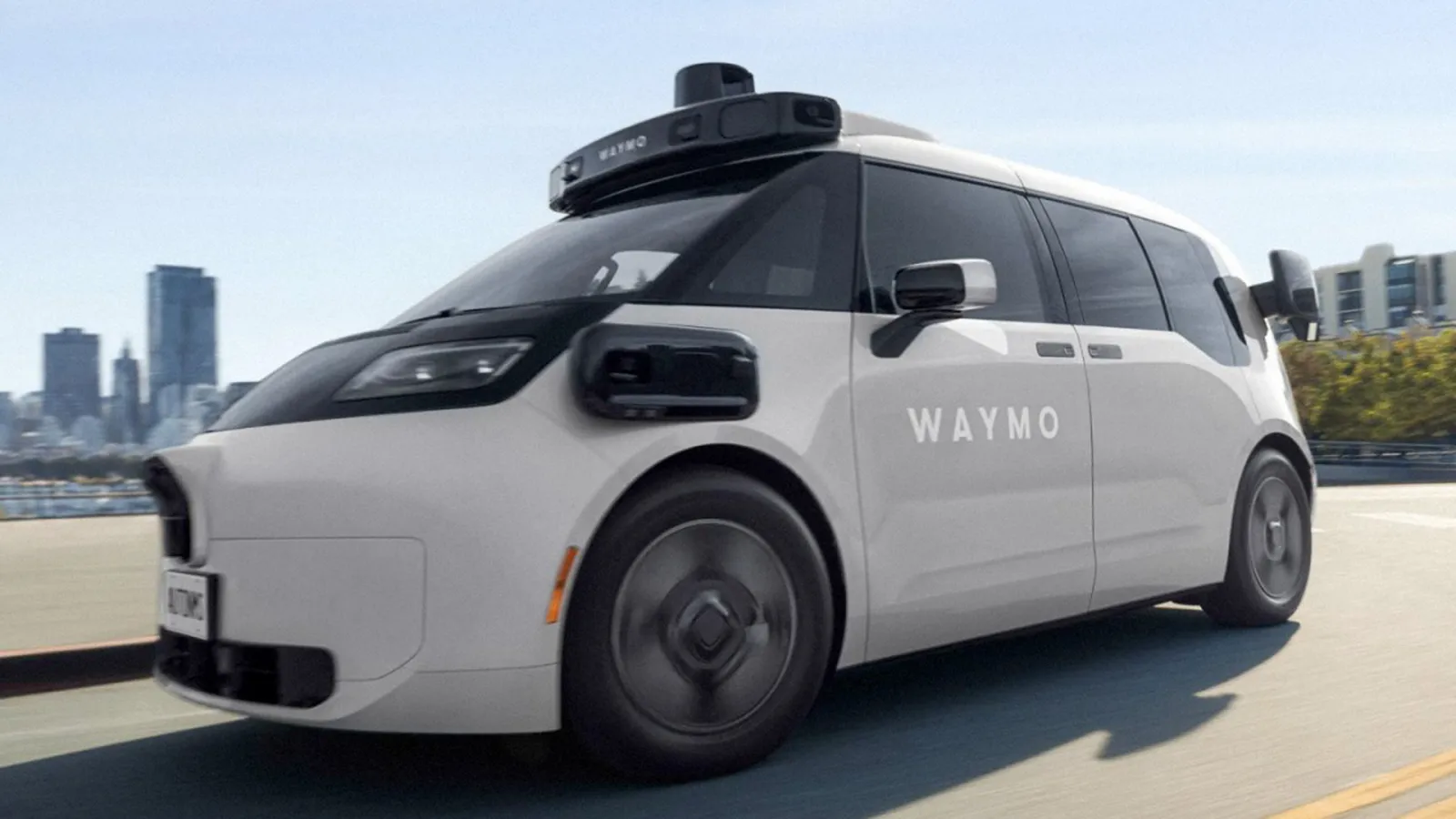
The District of Columbia Council member who wrote the bill that would let Waymo run commercial robotaxis in the US capital plans to put it to a committee vote by Thanksgiving, despite a call from the city’s likely next mayor to hold off.
Charles Allen, who chairs the Council’s Committee on Transportation and the Environment, told Axios in an interview published Friday that his bill has the “most robust protections you’ll find in AV legislation.”
He said he believes the measure has enough support to pass his committee, according to Axios, which would set up a full Council vote in December.
Allen did not say how many committee members had committed to backing it.
Lewis George Calls for a Delay
Janeese Lewis George, the Ward 4 Council member who won the Democratic mayoral primary in June, urged colleagues on Thursday to put the bill off.
“DC is facing a jobs crisis,” she wrote on X, according to Axios and The Washington Sun.
“Rushing the legalization of autonomous vehicles is irresponsible given the anticipated AI-related job displacement and disruptions that put countless workers at risk,” she wrote.
“Let’s get this right and not rush Waymo legislation this year,” she added.
She clinched the nomination in June after Kenyan McDuffie, a fellow Council member, conceded the ranked-choice race.
Lewis George sits on the transportation committee that Allen chairs, through which the bill must pass.
Labor unions that backed her primary campaign are organizing against the legislation.
She is on the ballot as the Democratic nominee in the November 3 general election.
Allen Holds His Course
Allen told Axios that her opposition “didn’t come as a surprise” and that he had been given a heads-up about her post.
“We’re still negotiating and going back and forth,” he said. “I think we’re very close.”
Allen, who represents Ward 6, is a close ally of Lewis George, according to The Washington Sun.
“I think that Janeese and I are together the overwhelming majority of the time,” he told the outlet. “This is going to be one instance where we see an issue differently.”
“It doesn’t change my confidence in her leadership and vision,” he said.
He told The Washington Sun that his office has met with workers, labor and transit groups, disability rights leaders and autonomous vehicle companies.
“We are still working on a draft, but my plan is to continue to move it forward,” he said.
What the Bill Would Do
The Autonomous Vehicle Deployment Authorization Amendment Act of 2026, numbered B26-0684, was introduced on May 1 by Allen with two co-introducers and referred to his committee.
Allen had announced it on April 23.
“We didn’t need to be the first city to bring driverless cars to our streets, but I don’t want us to be the last,” he said in announcing the bill, according to FOX 5.
It would create a commercial autonomous vehicle program run by the District Department of Transportation, according to the bill text.
An operator would first need at least 180 days in the city’s testing program and 250,000 test miles in the District.
A permit holder could run up to 200 autonomous vehicles before the city approves a comprehensive plan.
The text says that “beginning January 1, 2028, a permittee may launch on-demand autonomous vehicle network to be operated in the District.”
The bill sets a $1 million application fee and a $5 million permit fee.
It would also charge 15 cents per vehicle mile, with half the proceeds going to public transit and half to education and training for ride-share drivers.
Allen has said the per-mile fee would also discourage empty robotaxis from cruising and adding to traffic, according to Axios.
Operators would have to offer similar wait times across neighborhoods, coordinate with first responders, keep contingency plans for emergencies such as power outages and share data with the city on traffic, safety and employment, according to Allen’s announcement.
The bill’s only disability provision requires an accessible app for requesting rides and makes no mention of wheelchair-accessible vehicles, according to a line-by-line review by The Weekly Driver.
“Part of what we have built in is the strongest worker protections in any bill you have seen around the country,” Allen told The Washington Sun.
The bill had a public hearing on July 13 with 81 witnesses.
Unions Against, Waymo in Favor
Drivers, union members and faith leaders rallied outside the John A. Wilson Building, the seat of the Council, earlier in October to urge lawmakers to reject the bill.
“Rushing to allow Waymo to bring driverless cars into our communities and causing thousands of people in this region to lose their livelihoods is the last thing we need,” said Jaime Contreras, Executive Vice President of the local union chapter representing ride-share drivers, in a statement to The Washington Sun.
“Delaying this legislation until we know the real impact on jobs is responsible leadership,” he said.
Jonathan Rogers, Director of the District’s Department of For-Hire Vehicles, had earlier told The Washington Sun he was not overly concerned about mass job displacement.
“There’s always been disruption and new competition,” Rogers said.
Waymo, which supports the bill, said it would create hundreds of jobs to support its D.C. operations if robotaxis are legalized.
“Waymo will support safer roads, hundreds of new jobs, and expanded access to reliable transportation options for communities across the District,” a Waymo spokesperson said in a statement to The Washington Sun.
“We are committed to working with District leaders to deliver those benefits,” the spokesperson said.
The company has built out three locations in the city where it says its fleet would be charged and serviced, according to The Washington Sun.
“Waymo recently committed tens of millions of dollars in Wards 5 and 7 to build the service centers and charging facilities needed to support our service,” spokesperson Ethan Teicher told Axios in July.
Mayor Muriel Bowser has not seemed enthusiastic about robotaxis and slow-walked a report the Council said it needed before drafting its own legislation, The Washington Sun reported.
Waymo has tested in Washington for about two years with human safety drivers because city rules do not allow driverless operation, and it said in March 2025 that it planned to launch there in 2026.
Amazon‘s Zoox is also testing in the city.
Uber opposes the bill and has lobbied for a rule requiring robotaxis to run on platforms that also offer human drivers, TechCrunch reported in July.
A Narrow Window
Timing is the core of the dispute.
The Council works in two-year periods, and any bill it has not passed when the current period ends on January 2, 2027 dies and must be reintroduced from scratch, according to the Council.
Every bill needs two full Council votes at least 14 days apart before it goes to the mayor, and an enacted bill then sits before Congress for 30 Congressional review days before it becomes law, the Council says.
Bowser, who said in November 2025 that she would not seek a fourth term, leaves office in January, when the next mayor is sworn in.
Even if the Council approves the bill, Lewis George could stall its implementation as mayor, The Washington Sunreported.
If the Council instead waits until next year, new progressive-minded members could further complicate passage, the outlet said.
The fight in Washington mirrors setbacks elsewhere.
Robotaxi legislation failed to pass in seven US states this year, according to an Axios count in July, and the Minneapolis City Council voted 7 to 6 on October 1 to require a licensed human safety monitor in every robotaxi before Mayor Jacob Frey vetoed the measure.