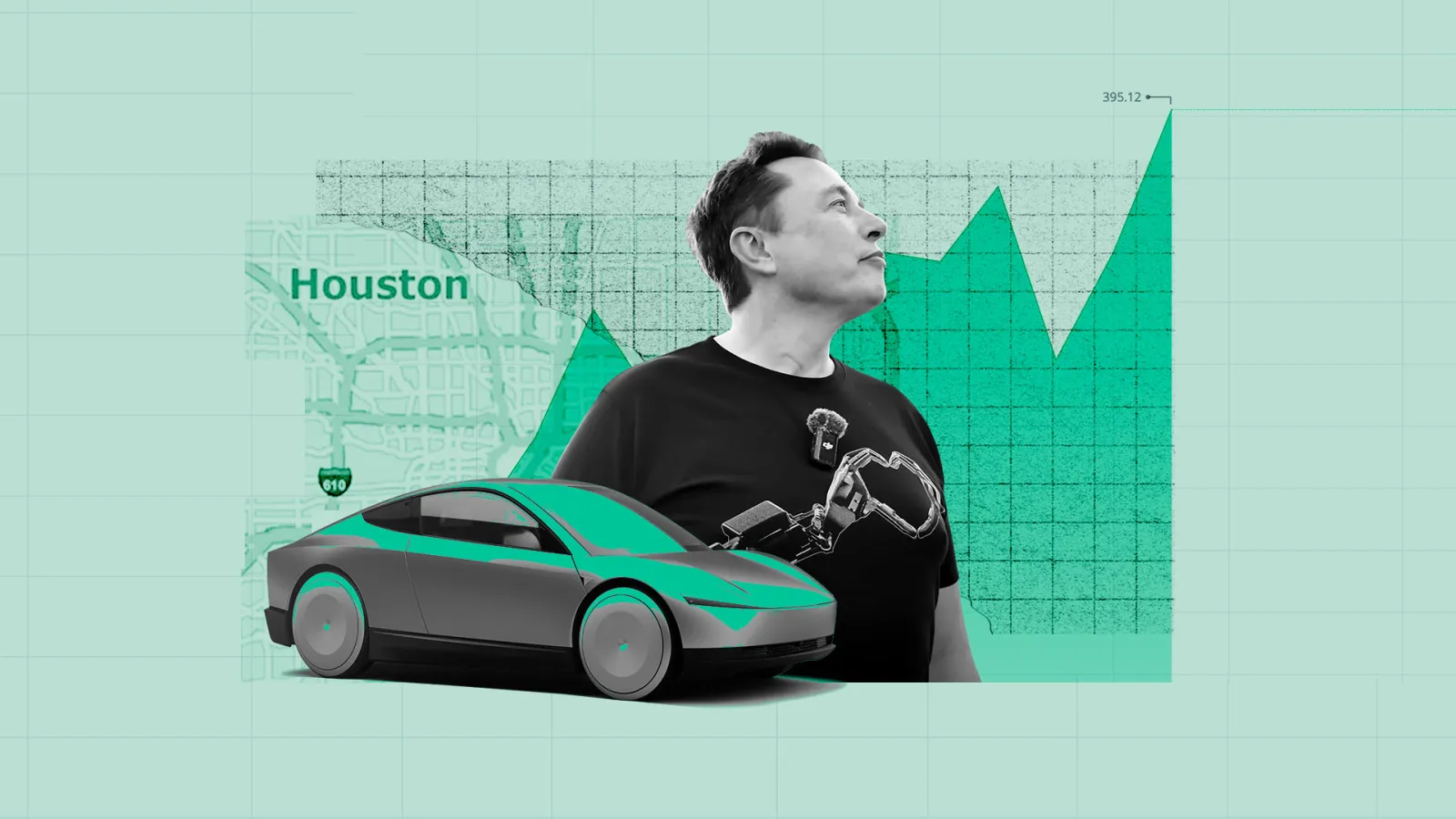
Tesla Chief Executive Officer Elon Musk said in three posts on X early Tuesday that the company’s robotaxi race against Waymo in Austin “was never a real contest,” after a chart showed Tesla’s weekly driverless miles in the Texas city overtaking Waymo’s.
The chart, from the independent site Robotaxi Tracker, shows Tesla’s robotaxis logging 438,000 miles with no safety monitor aboard in Austin in the week to October 18. That compared with an average of 406,000 a week for Waymo in the city in the second quarter.
The two figures cover different periods. Tesla’s is its latest week, while Waymo’s is the April-to-June quarter averaged per week, as Waymo publishes its mileage about three months after each quarter ends.
Three posts
Musk replied to three accounts that had shared the chart.
Jason Scharf, while sharing the chart, wrote: “I think the battle for Autonomous Austin might already be over.” Musk replied by saying, “It was never a real contest.”
The X account of the website Not the Bee posted the same chart, writing that Waymo was “about to learn an important lesson about exponential curves.”
“Log curve in blue, exponential in red,” Musk answered, referring to Waymo’s blue line and Tesla’s red one.
Musk also replied with a laughing emoji to Joe Doliner, who wrote that the “graph makes it look like Tesla is committing election fraud.”
What the chart shows
Waymo’s line in Austin climbs in quarterly steps from late 2024 and flattens in 2026.
Its Austin pace rose only slightly in the second quarter to 406,000 miles a week, or 5.28 million miles for the quarter, according to the tracker, which compiles Waymo’s figures from its Safety Impact data hub. Waymo had driven 21.1 million rider-only miles in Austin through June.
Tesla’s red line starts in early 2026 and turns almost vertical from late summer. Tesla has logged 2.12 million driverless miles in Austin through October 18, according to the figures it publishes in its new Robotaxi safety report.
Across all cities, the gap still runs the other way. Waymo averaged 3.90 million driverless miles a week across its markets in the second quarter, about seven times Tesla’s 558,000 in the week to October 18, according to the tracker.
Tesla’s own report puts its total at 3.11 million driverless miles since January 22, about 70% of them driven since late August, when the fleet began to scale up with the Cybercab. Of those miles, 862,000 were driven after dark, 113,000 in rain and 575,000 in rush hour, according to the figures compiled by the tracker.
Tesla’s weekly total rose 30% from the week before, with Austin accounting for 79% of it. Dallas contributed about 95,000 miles, and Houston, Orlando, Tampa and Miami about 6,000 to 7,000 each.
The two companies also count differently. Tesla’s figures include miles where a remote operator assisted the car, the tracker says, and exclude miles with a safety monitor aboard and its supervised Bay Area service. Waymo reports rider-only miles, with no one behind the wheel.
An old rivalry
Musk has dismissed Waymo before. In December 2025, he said Alphabet’s robotaxi unit “never really had a chance” against Tesla.
In September, hours before Tesla’s Cybercab launch event in Austin, he responded to a comparison showing that $1 million buys about 55 Cybercabs at an estimated $18,000 each, versus eight of Waymo’s new Ojai robotaxis at an estimated $125,000, and touted the Cybercab’s cost edge.
Waymo, for its part, warned in August that improving a driver-assistance system toward full autonomy is “a false summit,” in a blog post published eight days before that event.
The contest in Austin has also been fought over territory. Tesla’s service area first overtook Waymo’s in the city in August 2025, when its rides still carried a safety operator in the passenger seat.
Austin fleet
Robotaxi Tracker counted 410 Tesla robotaxis in unsupervised service in Austin early Tuesday, up 193 in 30 days. Of those, 223 were Cybercabs and 187 were Model Y SUVs.
Tesla had 970 autonomous vehicles registered with the Texas Department of Motor Vehicles, 463 Cybercabs and 507 Model Ys, the tracker said. That was up 424 in 30 days and 167 in the past week.
Its cameras in Austin recorded Cybercabs 1,462 times in the previous 24 hours, 87% of them with no one in the driver’s seat. Cybercab sightings hit a record during the Formula One weekend in Austin.
Tesla’s Austin service area covers 272 square miles, compared with 151 square miles for Waymo, according to the tracker. The median Tesla fare in Austin over the past 90 days was $12.30.
Nationally, the tracker counts at least 4,606 driverless robotaxis in service across three operators. Waymo accounts for 4,000, based on the company’s own stated figure, Tesla for 538 and Amazon’s Zoox for 68.
Tesla has filed 65 crash reports involving its automated driving system with the National Highway Traffic Safety Administration through its September filings, 31 of them in Austin, the tracker shows.
Musk’s posts came a day after Tesla expanded its Houston service area to downtown and Bellaire, as its shares rose on a Barclays upgrade.
Tesla said on its third-quarter earnings call last week that Cybercab service will launch in Dallas next month.