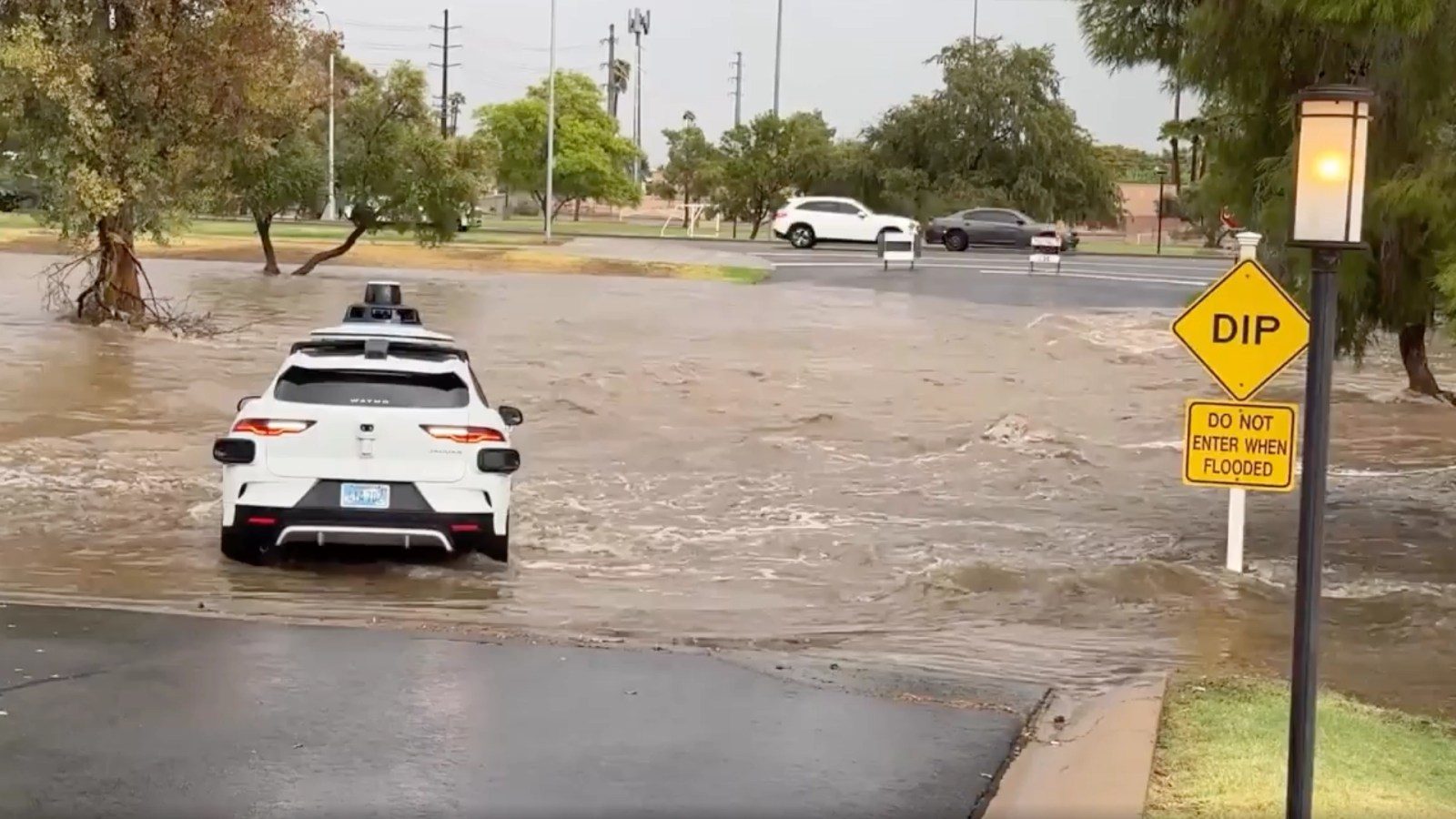

Waymo has resumed paid robotaxi rides in San Antonio, five months after one of its unoccupied vehicles drove into a flooded road and was swept into Salado Creek, prompting the company’s longest known pause in any city and a software recall covering its entire US fleet.
Service now covers approximately the same 60-square-mile area as before, including downtown and San Antonio International Airport, with a fleet described as dozens of vehicles and flood-risk zones now carved out of the map.
Only riders who had access before the pause can hail a car. New users will be admitted from the waitlist later this year.
What Failed in April
Waymo launched in San Antonio in late February with invitation-only access and added airport trips in the spring.
San Antonio police records later reviewed by the Express-News show the cars needed help from humans frequently from the start, but the stoppage came from water.
About two weeks before the main incident, an unoccupied vehicle became stranded in high water near McCullough Avenue and Contour Drive.
On the night of April 20, during a severe storm, a second unoccupied vehicle entered a flooded section of roadway. It was pulled into the creek and recovered days later. No one was hurt in either incident.
Waymo paused passenger service and kept vehicles testing without riders.
By April 29 the stoppage was already the longest known in the company’s history, longer than earlier pauses for floods in Phoenix, protests in Los Angeles and a power outage in San Francisco.
The Recall
Waymo filed a voluntary recall with the National Highway Traffic Safety Administration on April 30, covering 3,791 vehicles on both fifth- and sixth-generation driving systems, the entire US fleet then running those systems.
It was made public on May 12.
The company’s own description of the defect is the most precise account of what went wrong. “An unoccupied Waymo AV encountered an untraversable flooded section of a roadway that has a 40 mph speed limit,” the filing says. “The Waymo AV detected potentially untraversable flood water and proceeded at reduced speed.”
The general failure mode: “On higher speed roadways, the Waymo AV may slow but not stop in response to detecting a potentially untraversable flooded lane.”
The car saw the water. It slowed. It kept going.
The remedy was software delivered over the air, with interim measures including updated maps, expanded weather-related operational controls and limits on access to areas where flash flooding might occur. No vehicles were physically withdrawn, contrary to CultureMap’s account on Thursday that Waymo “responded by voluntarily pulling all of its 3,791 nationwide vehicles.”
It was the first of two software recalls in a month. Waymo issued a second in June after vehicles struck chains and gates.
The Restart That Slipped
Waymo said in early May that it expected San Antonio service to resume “early next week.”
It did not happen. On May 14, San Antonio Report wrote that the company “has also stopped serving riders in San Antonio, though its autonomous vehicles are still operating in the area,” quoting Communications Manager Chris Bonelli as saying customers would be notified when passenger service returned.
Four months passed between that forecast and Thursday’s restart.
What Changed
Waymo’s statement lists five changes. A
An audit of potential flood zones across San Antonio using several data sources, with location-specific limits in high-risk areas alongside adjusted weather alerts and operating triggers so service can change quickly during heavy rainfall.
Also, the company cited improvements to the Waymo Driver’s ability to detect floodwaters and navigate away from them, monitoring through the National Weather Service and local guidance, and a standing warning that severe weather may prompt another pause.
“Safety is our highest priority, and that unwavering commitment guided every step of the way during this pause,” Robert Chen, Waymo’s Product Lead for Weather, said in the statement. “We took the time to implement key software updates and operational improvements around flood waters, and have thoroughly validated our technology on local roads.”
The company said the improvements were tested in other cities that kept operating through the summer.
What the Police Records Show
Four days before the restart, the Express-News published a review of 270 pages of San Antonio police records covering the 10 months before the April pause.
Police responded to at least 50 incidents involving Waymo vehicles in that period. Most were cars blocking traffic. The rest included crashes, high-water strandings and reckless- and wrong-way-driving complaints.
Waymo’s spokesman told the paper the 50 calls should not be read as 50 operational incidents attributable to the company.
The restart returns Waymo to 15 US cities with paid service, the count reached when Las Vegas opened on September 14, two weeks after Denver, San Diego and Tampa.
It lands in the same week as the Singapore announcement, the Tokyo planand the Allianz insurance partnership, all of which rest on the company’s safety record.
That record has had a rougher month at street level.
Riders in established markets reported a decline in service and pickup problems in early September, and a July crash in Tennessee drew scrutiny days after a study credited the company with 68% fewer collisions.