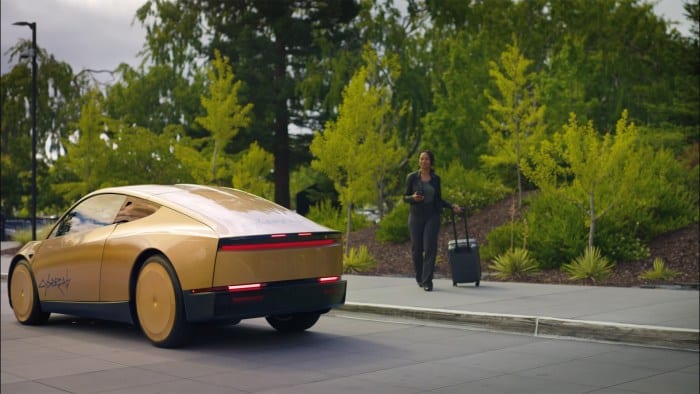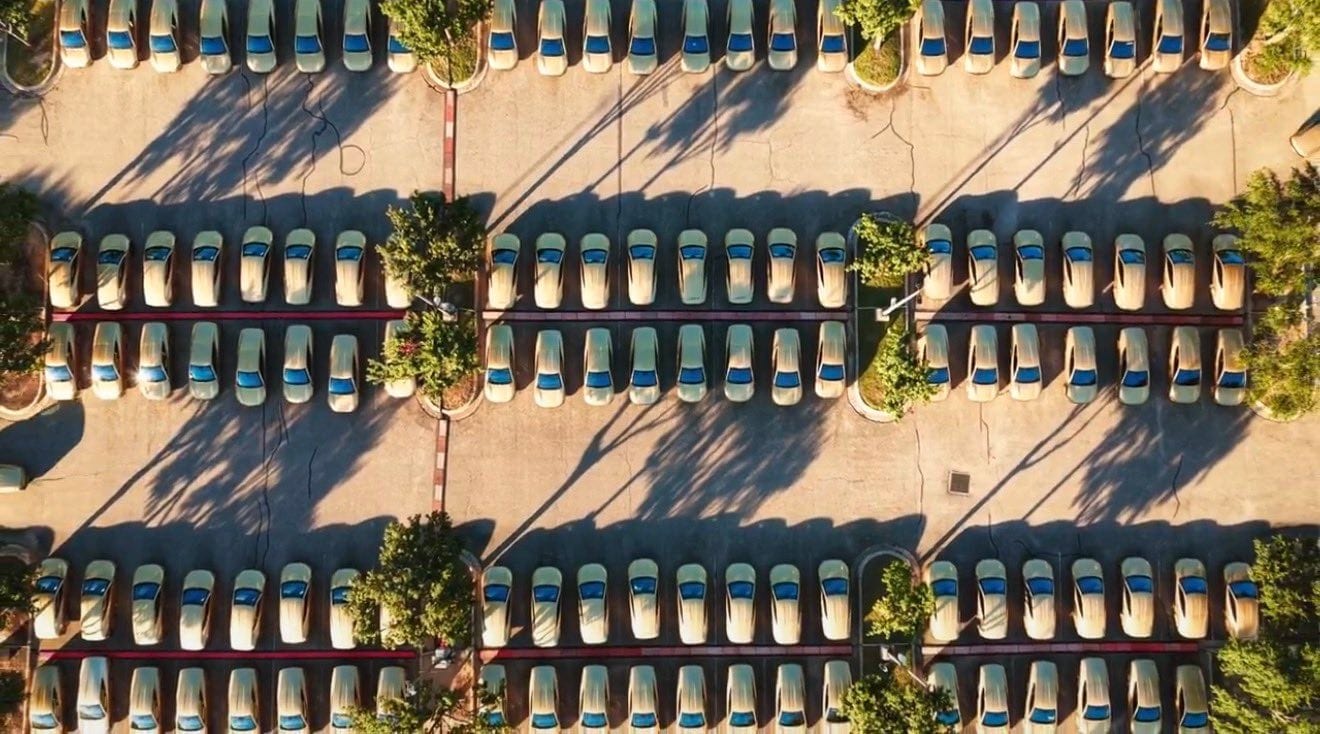

Tesla‘s Cybercab will arrive in Dallas “soon”, the company’s head of AI software said, naming the city as the next destination for its purpose-built robotaxi a month after the two-seater began carrying paying riders in Austin.
“Two years since the 10/10 Cybercab WeRobot event, the cabs are everywhere in Austin now. Dallas soon,” Ashok Elluswamy, Tesla’s Vice President of AI Software, wrote on X on Saturday.
He gave no date for the launch, and Tesla has not issued a separate announcement about Dallas.
Elluswamy was quoting a post from Tesla’s Robotaxi account, published minutes earlier, which said the company had “scaled to 300+ Cybercabs serving Austin – an 8x increase in 30 days”.
Minutes before, Elluswamy had marked the anniversary of the October 10, 2024 event at Warner Bros. Studios in Burbank, California, where Tesla unveiled the Cybercab.
“Announced that the Cybercab will be here in two years exactly two years ago this day. We are learning to be on time 😂,” he wrote.
Tesla opened Cybercab rides to the public in Austin on September 4, the day after a launch event in the city.
The Cybercab has no steering wheel or pedals and is powered by a 48-kilowatt-hour battery and a 219-horsepower motor, according to its filing with the US Environmental Protection Agency.
Tesla has listed production capacity of more than 125,000 units a year for the vehicle at its Texas factory.
Dallas, Six Months In
Dallas would become the second city for the Cybercab, but it is already Tesla’s second-largest driverless market.
Tesla announced unsupervised rides in Dallas and Houston on April 18, when its Robotaxi account wrote “Robotaxi now rolling out in Dallas & Houston” and Chief Executive Officer Elon Musk urged followers to “Try Tesla Robotaxi in Dallas & Houston!”
“Public taking robotaxi rides in Dallas,” Elluswamy wrote the same day.
The City of Dallas dates the start of Tesla’s service in the city to April 19, in a memo from Assistant City Manager Dev Rastogi to the mayor and City Council.
The launch fulfilled part of a seven-city plan for the first half of 2026 that Tesla set out in its fourth-quarter shareholder deck in January, after its robotaxi test vehicles had been spotted in the Dallas suburb of Plano in September 2025.
The start was small, with community trackers counting one car in each city at launch and three in each by the end of April.
A first fare comparison shared by a rider showed a 2.25-mile Dallas trip priced at $6.15 by Tesla against $13.93 quoted by Waymo.
Tesla widened the Dallas zone on August 29, when the Robotaxi account posted “Bigger service area for Robotaxi in Dallas, TX” and, later the same day, “Computer, enhance! Now serving more of Dallas”.
The Fleet the Cybercab Would Join
RobotaxiTracker, an unofficial site that counts vehicles from community sightings and Texas records, listed 67 Tesla vehicles in unsupervised service in Dallas on Saturday, all of them Model Ys.
That is up from 17 three months earlier and from 48 in mid-September, the site shows.
It compares with 275 in Austin, made up of 170 Model Ys and 105 Cybercabs, and 32 in Houston, according to the tracker.
The site lists no Cybercab in service in Dallas.
Tesla’s Dallas service area covers 81 square miles, home to about 381,000 residents and 568,000 jobs, the tracker estimates, up from about 31 square miles at launch.
That is larger than the 48 square miles Waymo serves in the city, by the tracker’s count.
Riders have logged 533 Tesla trips in Dallas on the site, in 65 different cars.
The median fare over the past 90 days was $5.88, or $4.04 a mile, with an average trip of 2.2 miles, based on 349 priced rides.
In Austin, the median was $10.42, or $3.50 a mile.
Tesla set a 6 a.m. to 10 p.m. window for its driverless service in August, and extended Austin’s hours to 11 p.m. on October 2.
Signs on the Ground
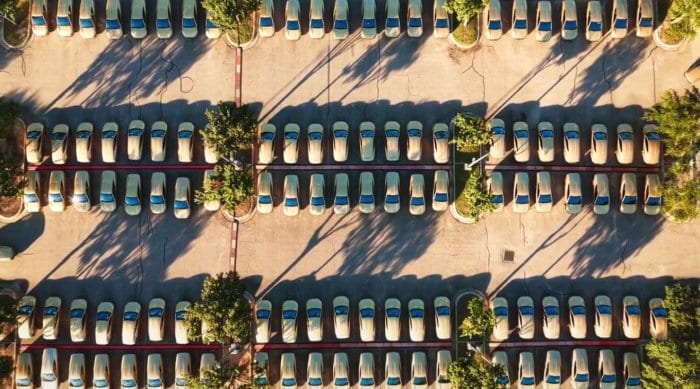
Photos posted by local Tesla owners show Cybercabs already in Dallas.
A Tesla owner who posts as Dallas Tesla David shared a photo on Thursday of a gravel lot that he described as Tesla’s Dallas Robotaxi hub, with a line of Cybercabs along its perimeter fence.
“Seems like Tesla has moved their usual line up of unsupervised Robotaxi Model Y’s from the left perimeter fence line to somewhere else bc now it’s a full line up of cybercabs,” he wrote.
On the evening of October 2, the same owner wrote that he had watched Model Y robotaxis drive themselves into a Dallas Supercharger, where two Tesla fleet staff were waiting “in cybercabs” to plug them in.
Tesla has not said how many Cybercabs it plans to deploy in Dallas in the first phase.
Approvals Already in Place
Texas law bars cities from regulating autonomous vehicles, saying a political subdivision “may not impose a franchise or other regulation related to the operation of an automated motor vehicle”, as the City of Austin notes on its website.
Commercial operators instead need an authorization from the Texas Department of Motor Vehicles under Senate Bill 2807, a requirement that became enforceable on May 28.
The department describes the framework as statewide, and operators add or remove vehicles through their online account, according to TxDMV.
Each vehicle must be certified as compliant with state and federal law and able to reach a “minimal risk condition” if its system fails, and the operator must file an emergency response plan with the Texas Department of Public Safety.
Tesla’s authorization is dated May 14. The company briefed city officials before its Model Y service began.
It contacted the Director of the Department of Transportation and Public Works to advise of its launch plans and met first responders and department staff to present its First Responder Interaction Plan and Emergency Response Guide, Rastogi’s April 24 memo said.
Tesla also told city staff it intended to host in-person, hands-on training for the Dallas Police Department and Dallas Fire-Rescue personnel and other emergency responders, according to the memo.
“Over time, Tesla intends to expand its operation to cover all of Dallas,” the memo said.
The state registry lists vehicles, not cities, so it does not show where a Cybercab will operate.
Tesla added 150 Cybercabs to the registry on Thursday, taking its count to 319 and its total registered fleet to 739, including 420 Model Ys, according to the tracker.
If all the 300-plus Cybercabs Tesla says are serving Austin are on that list, fewer than 20 registered Cybercabs would remain for another city, by EV’s calculation.
Tesla told JPMorgan in August that it was “intentionally holding back” on adding Model Ys to the robotaxi fleet while it prepared to scale the Cybercab, analyst Rajat Gupta wrote at the time.
Federal and Local Scrutiny
The Dallas expansion would come before federal regulators finish examining how Tesla certified the vehicle.
The National Highway Traffic Safety Administration opened an audit query into the Cybercab on September 3, the day of its Austin launch event, and later ordered Tesla to answer under oath how the vehicle complies with federal motor vehicle safety standards.
The agency gave Tesla until October 30 to respond, granting 30 more days rather than the eight weeks Tesla had requested.
First responders in Austin have also raised concerns.
Austin Fire Captain Matt McElearney told CNBC that Tesla had given detailed emergency guidance on the Cybercab and Model Y robotaxis, but said regulation should require driverless vehicles without controls to offer public safety staff a way to “take control — move, steer, or shut down an AV.”
“We are being extremely careful with autonomous safety, just as we are with making Teslas the safest cars in the world for human driving,” Musk wrote on X on October 3.
Rivals in Dallas
Waymo began fully driverless service in Dallas in February through a fleet partnership with Avis Budget Group.
It gives an official fleet of 100 vehicles in the city, of which community trackers have spotted 41, RobotaxiTracker shows.
Avride, which offers driverless rides in the city through Uber, has 344 Hyundai Ioniq 5s on the state registry under an authorization dated May 21.
Waymo has the largest registered fleet in Texas, with 1,185 vehicles on the state list, according to the tracker, after passing 1,100 in September.