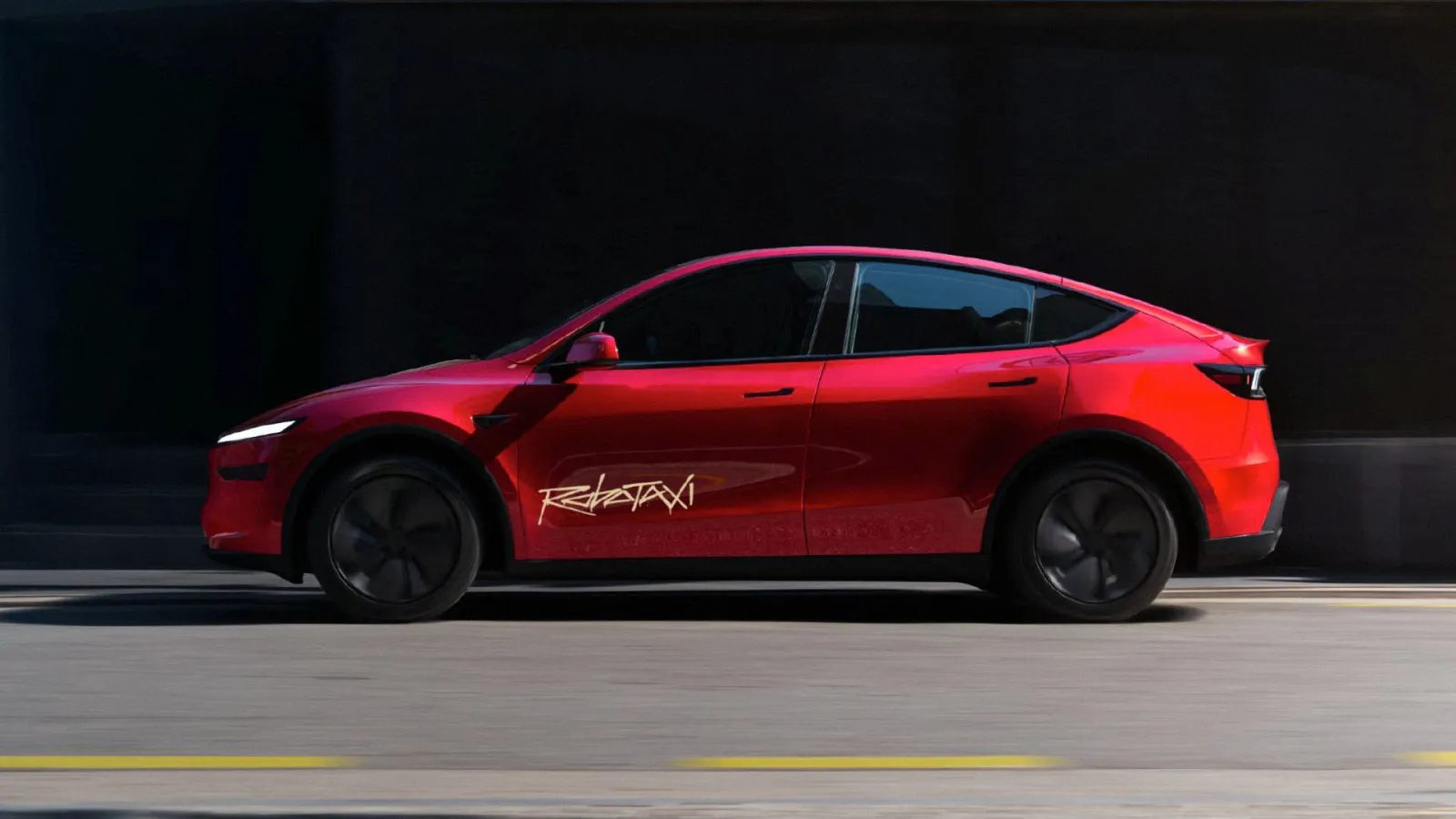

The founder of the dashboard behind a widely shared 1,000-vehicle figure for Tesla’s robotaxi fleet said on Monday that the number does not describe the fleet, while relabeling his website and clarifying the figures.
“I see people on the timeline screenshotting Robotaxi Tracker (some without citing or linking to it) claiming that Tesla has 1,000 vehicles in the fleet. This isn’t true,” Ethan McKanna wrote on X.
He gave 311 active vehicles in the past 30 days as the more accurate figure.
RobotaxiTracker, an independent community dashboard, had listed just over 1,000 Tesla Robotaxi vehicles as in service on Monday morning.
Its all-cities panel read 1,001 of 1,049 tracked since the service launched when checked on Monday morning.
The site recorded 305 of them as running without a safety driver. The largest single component of the total, at 696 vehicles, is the San Francisco Bay Area, where California law requires a person behind the wheel.
The milestone was picked up on X by the account @tslaming, which posted a screenshot of the tracker’s all-cities page and wrote: “GOOD NEWS. Tesla’s US Robotaxi fleet just surpassed 1,000 vehicles for the first time in company history.”
Tesla itself uses the Robotaxi name for both, listing the Bay Area alongside its six driverless metros in its second-quarter disclosure with the status “Safety Driver.”
Tesla does not publish a fleet figure of its own and has not since the service launched in Austin in June 2025.
What the Tracker Says Now
McKanna gave two reasons the figure is wrong.
The first is turnover. Much of the total comes from the Bay Area, “which seemingly has had a lot of turnover of cars as many cars haven’t been seen on the tracker in many months.”
The second is definitional. “I don’t count supervised cars in the fleet total at the top of the page because it’s not a robotaxi, which is the point of the site to track.”
He also explained where the figure came from. He had built an in-service count for the Austin fleet, where Texas registration records allow retired vehicles to be filtered out with confidence. “That propagated to the all cities view which was not clear, have made that more clear now.”
The panel in his post reads 311 active over 30 days against 1,001, with “unsupervised” and “all” as toggles. Earlier on Monday the same panel showed 260 active of 305 unsupervised.
How the Count Is Built
RobotaxiTracker sets out its method in a tooltip on the same panel. It defines the in-service figure as “community-tracked vehicles, minus those presumed retired: not spotted in 30+ days and no longer listed by a registry we check, the TxDMV automated-vehicle list or Tesla’s own Robotaxi vehicle lookup.
Outside Texas there is no registry to check against, so every tracked vehicle counts.
That caveat applies to the Bay Area, which is the largest single component of the total at 696 cars.
California does not publish an equivalent register, so those 696 are spotted plates rather than audited vehicle identification numbers, and they are not comparable with the Texas figures below.
Tesla operates there under a charter-party carrier permit numbered TCP 0046782, a limousine and chauffeured-transport authorisation rather than an autonomous-vehicle deployment permit, which is why a driver sits in the seat.
It holds no Californian driverless permit.
California’s own last published figure, from a December 2025 filing, was 1,655 vehicles registered for the service, more than twice the tracker’s count.
The site’s city tabs do not reconcile exactly with its headline totals. They sum to 994 against 1,001 in service, and their unsupervised entries sum to 298 against 305. Seven vehicles appear in the totals in both cases without being assigned to a city.
Where the Driverless Cars Are
The tracker puts Tesla’s unsupervised fleet at 305 vehicles, of which 260 were active in the past 30 days on the site’s default window.
Austin accounts for 197 of them, close to two thirds. The remaining city entries are Dallas at 48, Houston at 32, Tampa at 14, Miami at four and Orlando at three, which is 101 cars across five metros in two states.
In Austin, 176 of the 197 were active over the same window and the site counts 42 Cybercabs.
None of those counts measures vehicles carrying passengers. Registered, spotted, active and earning a fare are four different things. The crowdsourced receipt log maintained across the same ecosystem records tens of Tesla licence plates producing an uploaded paid ride in a month, against 305 cars the tracker lists as driverless.
The Official Count
Texas is the only state that publishes a live register of commercial autonomous vehicles, under a law whose authorisation requirement became enforceable on May 28.
Tesla had 439 vehicles on that register when the tracker last polled it on Monday, 390 Model Ys and 49 Cybercabs, up 258 in 30 days and up seven in the last week.
Of those 439, the site has matched 261 to a tracked licence plate and seen 234 in the past 30 days. So about two in five registered vehicles have never been matched to a car anyone has photographed on a public road.
Waymo has 988 registered in the same state, and added 297 in the same 30 days against Tesla’s 258.
What Changed, and When
Texas filings authorised 42 Tesla vehicles when the disclosure law took effect in late May. The register reached about 186 by mid-August, 314 on August 31, 420 on September 2 and 439 on Monday.
The tracker’s Austin chart shows the active fleet flat in a band of roughly 20 to 60 cars from June 2025 through the spring, spiking to about 100, falling back, and then rising almost vertically to 177 in the past few weeks.
Across all cities the active line reaches 262, and the unsupervised line rises with it rather than staying flat.
That is a real change and it happened in about a month. It is also the period in which Tesla launched the Cybercab commercially in Austin, on September 3, and announced that the robotaxi fleet had passed one million unsupervised miles.
The Target It Meets
A thousand is Elon Musk’s own number. He told CNBC in May 2025, a month before the Austin launch, that the fleet would start at about ten and “probably be at 1,000 within a few months.”
The branded total meets a thousand 15 months later. The promise does not. Musk was describing a driverless ramp from a ten-car start, and on that measure the count is 305. He has since tied scaling to the FSD v15 rewrite, which Tesla has pointed to for late this year or early next.
A third figure of about 1,000 is also in circulation and is not a fleet at all. The National Highway Traffic Safety Administration opened Audit Query AQ26002 on September 3, the day Tesla began charging for Cybercab rides, and the filing lists an estimated population of about 1,000 Cybercabs.
That is the scope of a regulatory inquiry into how Tesla self-certified a vehicle with no steering wheel, pedals or mirrors. Texas records showed 45 Cybercabs the following morning and 49 by Monday.
[This article was updated following the clarification provided by the tracker’s founder.]