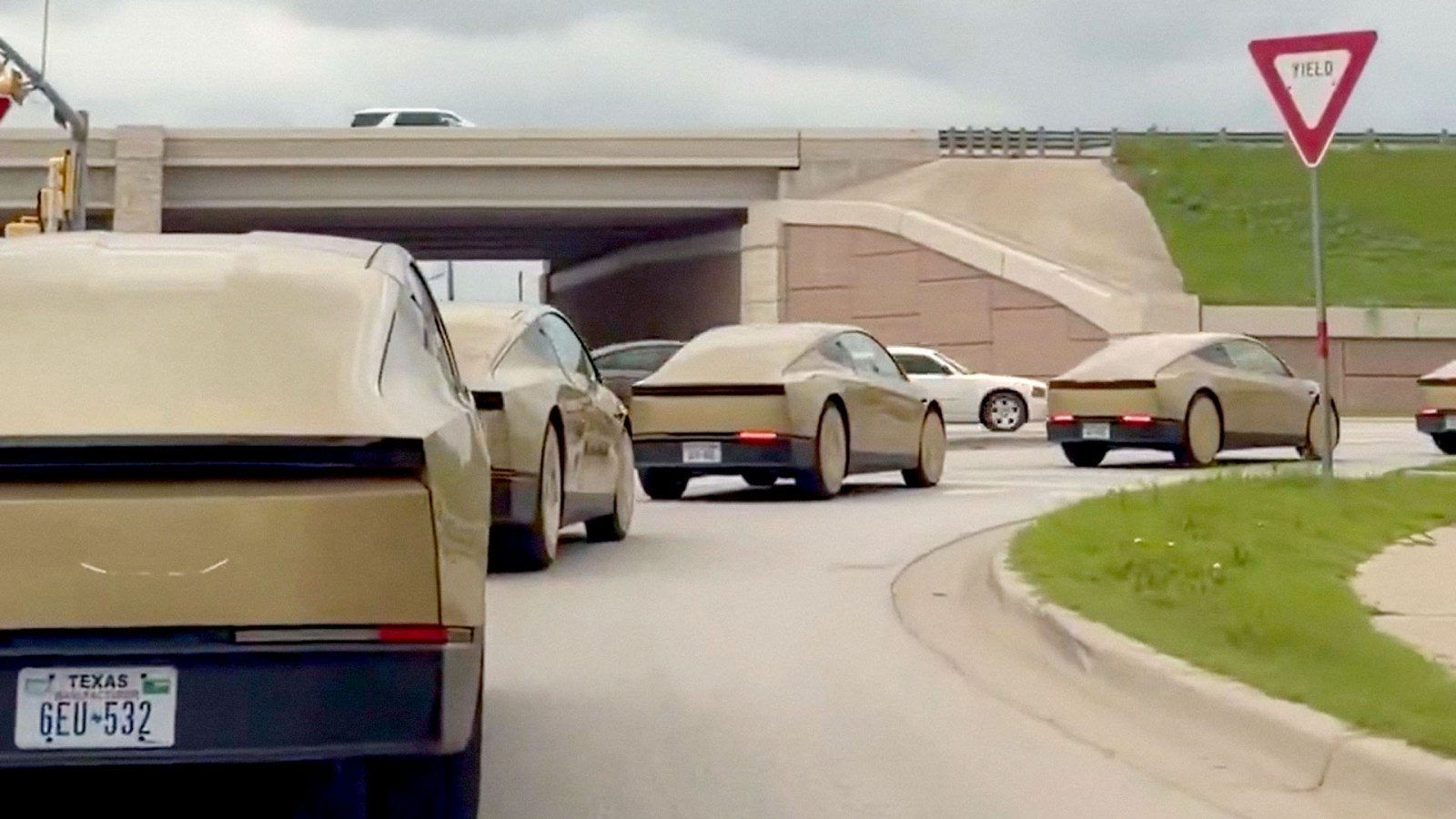

Federal safety regulators have ordered Tesla to explain under oath how it certified a vehicle without a steering wheel, pedals or mirrors as meeting American safety standards, escalating an investigation opened the day the company began charging for Cybercab rides in Austin.
The National Highway Traffic Safety Administration (NHTSA) said on Tuesday that Tesla must answer by September 30. The order was issued on September 10, contains 21 detailed requests and is signed by Chief Counsel Peter Simshauser.
A Special Order is a legal demand issued under the Safety Act at 49 U.S.C. section 30166, and answers must be sworn by a responsible company officer.
Federal regulations set a maximum civil penalty of $139,356,994 for a related series of certain violations of that act, alongside about $27,874 per violation. Those are statutory ceilings rather than any penalty the agency has sought here.
The Investigation
NHTSA opened Audit Query AQ26002 on September 3, the same day Tesla began commercial deployment.
“On September 3, 2026, Tesla began commercial deployment with a small number of its Cybercab vehicles in Austin, Texas,” the agency’s opening summary reads. “Tesla notified the Agency that it certified those Cybercab vehicles as compliant with all applicable Federal Motor Vehicle Safety Standards.”
Tesla also told the agency it plans to expand the deployment gradually to more vehicles and more locations.
The vehicles, NHTSA notes, “lack permanently attached, conventional manual controls, such as a brake pedal, gas pedal, steering wheel, and mirrors.”
The agency said it would examine the process and technical data Tesla relied on, and “will consider the extent to which Tesla’s certification depended on determinations that certain FMVSS are inapplicable to the Cybercab.”
That last sentence is the heart of the case. The agency is examining both the technical basis on which Tesla certified the vehicle and any determination that particular standards simply do not apply to it.
What the Order Asks
Among the reported requests: how a vehicle with no steering wheel, pedals or mirrors complies with standards written around a human driver, and which standards Tesla treated as inapplicable and on what legal basis.
The sharpest item concerns Federal Motor Vehicle Safety Standard 135, whose current text requires that service brakes be activated by a foot control. The Cybercab has none.
Other requests cover standards 101 on controls and telltales, 102 on shift-position display, 108 on turn-signal cancellation tied to steering wheel rotation, 111 on mirrors and 126 on stability control telltales.
NHTSA also asks whether the Cybercab can be driven by a human using temporarily installed controls, whether those controls formed part of the certification basis, and whether the touchscreen allows an occupant to move the vehicle.
The subject vehicles are defined as those lacking permanently attached controls, which raises the Safety Act’s prohibition on rendering equipment inoperative.
And it asks how the Cybercab is legal to sell without an exemption.
The Path Tesla Did Not Take
Tesla is not the first company to build a robotaxi without controls, but it appears to be the first to put a purpose-built vehicle of that kind into paid American service without a Part 555 exemption.
Zoox waited for its commercial exemption before charging. Waymo’s paid vehicles retain conventional controls.
Zoox, owned by Amazon, self-certified a comparable vehicle in 2022.
NHTSA issued it a special order that year and opened an audit query in 2023. Zoox eventually applied for a temporary exemption under Part 555 of the federal regulations, received a demonstration exemption in 2025 and final commercial approval on July 30 this year.
That exemption covers eight standards, including the foot brake and mirror rules now being put to Tesla. It caps Zoox at 2,500 vehicles a year and expires in 2028.
A Part 555 exemption caps production at 2,500 vehicles in any twelve-month period. Self-certification carries no such cap. Tesla has not said publicly why it chose to certify rather than apply.
Not a Defect Case
The audit is not a crash or injury investigation, and it is separate from NHTSA’s existing inquiries into Full Self-Driving. The opening file contains no recall or stop-sale, and no order to suspend the Austin service has been reported.
American manufacturers self-certify rather than seeking pre-approval, which is why the agency can open a file the same day paid rides begin.
The Rewritten Rules
NHTSA began rulemaking on June 25 to remove the foot-control requirement from standard 135 for vehicles designed never to be driven by a person. Braking performance requirements would remain.
The agency says it has opened eight rulemakings in total, covering brake pedals, wipers, lighting and mirrors. None is final.
“NHTSA fully supports the safe development and deployment of automated vehicles,” Administrator Jonathan Morrison said when the audit opened. “But as the federal regulator, we need to ensure that all of our laws are followed.”
The agency’s September release put it more plainly still: until that work is completed, existing standards remain in force.