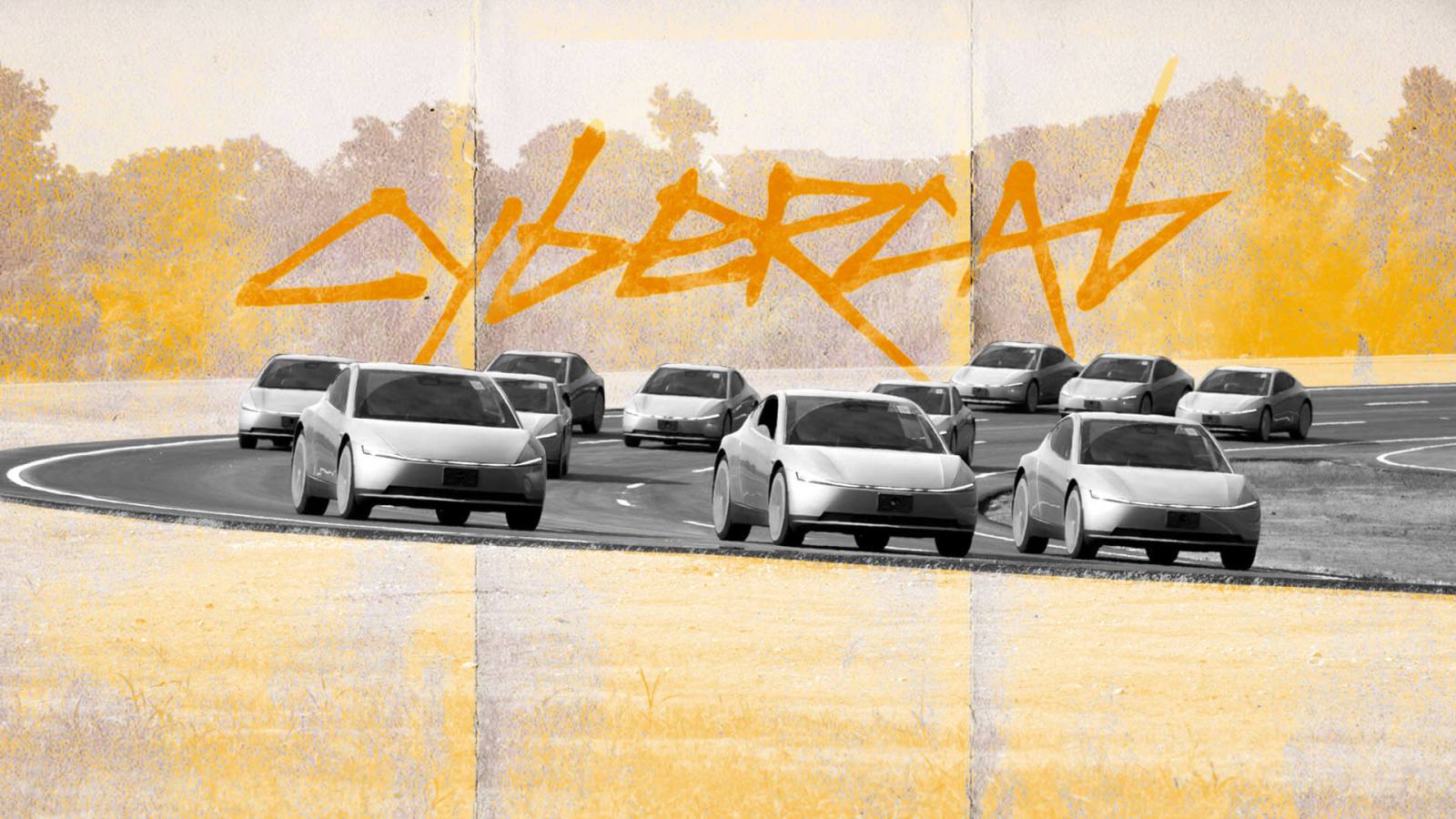

Tesla began production of the Cybercab at Gigafactory Texas during the second quarter and now lists installed annual capacity for the vehicle above 125,000 units, according to the shareholder deck published alongside results on Wednesday.
The two-seat model appeared as pilot production with no capacity figure attached three months earlier.
A conference call with chief executive Elon Musk and other members of management follows the results at 5:30 p.m. Eastern time.
The stock extended the decline to $364 after the earnings were published.
The company described the Cybercab as “our purpose-built autonomous EV designed to be the workhorse of our Robotaxi fleet.”
From pilot to production
Engineering test drives of production Cybercabs on public roads began during the quarter, the first time a vehicle without a steering wheel or pedals has operated in live US traffic.
Employee rides in Cybercabs started on the Gigafactory Texas campus in July. Tesla called both steps “important precursors to Cybercab deployment in our Robotaxi fleets.”
No production volume, delivery figure or paid-ride date was disclosed for the vehicle.
Output of models outside the Model 3 and Model Y fell during the quarter. Production of other models dropped 34.0% year on year to 8,822 units, while deliveries in the category rose 19.0% to 12,364.
The Semi moved to “commissioning” status at the company’s new Nevada factory, and the outlook section said the Semi and Megapack 3 remain on schedule for production starting in 2026.
Cell supply links the two programmes. Tesla said it is increasing production of 4680 cells to support production ramps of both the Cybercab and the Semi.
Battery output remains the wider constraint, described in the deck as “the main limiting factor to near-term vehicle production volume increase.”
Three Florida markets
The robotaxi coverage table shows Miami, Orlando and Tampa listed as ramping unsupervised, having all appeared as preparations underway in the first-quarter deck.
Austin, Dallas and Houston carry the same status. The San Francisco Bay Area operates with a safety driver under a California charter permit.
Phoenix and Las Vegas remain listed as preparations underway.
Those two are the only markets from a seven-city target for the first half of 2026 that have not opened. Tesla set out that list at its fourth-quarter 2025 earnings call in January, naming Dallas, Houston, Phoenix, Miami, Orlando, Tampa and Las Vegas.
Service is now live in seven metropolitan areas across three states.
Tesla said it expanded the unsupervised operating area in Austin during the quarter and that preparation for additional US metros continued through testing, permitting and first responder training.
Cumulative paid robotaxi miles passed two million, according to the chart accompanying the services section, having stood near half that level at the end of the first quarter.
Fleet
The company disclosed no robotaxi fleet size in the deck.
Texas filings showed 42 vehicles registered for autonomous ride-hailing in late May, against 577 for Waymo and 317 for Avride. Tesla then added 58 Model Ys in a single day in July, taking the state total to 175 and marking the largest single-day addition since the service began, as EV reported.
Previous expansions had come in increments of one to five vehicles.
No fleet figure has been published for the Florida markets.
Every vehicle registered for paid ride-hailing in Texas remains a Model Y. The deck restates that the Cybercab is intended to become the workhorse of the fleet, without giving a date for its first paying passenger.
Connectivity
Tesla confirmed on July 20 that the Cybercab will be the first model with integrated Starlink V5, as EV reported.
Ashok Elluswamy, vice president of AI software, said connectivity is not required for the vehicle to drive safely, with the onboard computer handling perception and decision-making.
Spending
Capital expenditure reached $5.79 billion in the quarter, up 142.0% year on year and more than double the $2.49 billion spent in the first quarter.
Free cash flow was negative $1.09 billion. Operating income fell 57.0% to $398 million for a margin of 1.4%.
The Cybercab, robotaxi infrastructure, Optimus and semiconductor manufacturing all draw on that spending. Tesla told shareholders it is “in its largest and most exciting period of investment.”
Analysts have been unable to model the vehicle. Company-compiled consensus put full-year deliveries of other models, the line containing Cybercab, Semi and Roadster, at an average of 55,156 against a median of 40,907 and a standard deviation of 46,980 across 22 inputs.
Shareholder pressure
Robotaxi drew 62 tagged questions and Cybercab 27 among 429 submitted through the Say Technologies platform, as EVreported.
The most-voted question of the quarter noted that Tesla has missed short-term robotaxi guidance on three consecutive earnings reports. Shareholders raised comparable themes before the first-quarter call, as EV reported then.
Analysts had identified the Cybercab launch as a near-term catalyst before earlier calls, as EV reported on Cantor Fitzgerald’s preview.
Competition
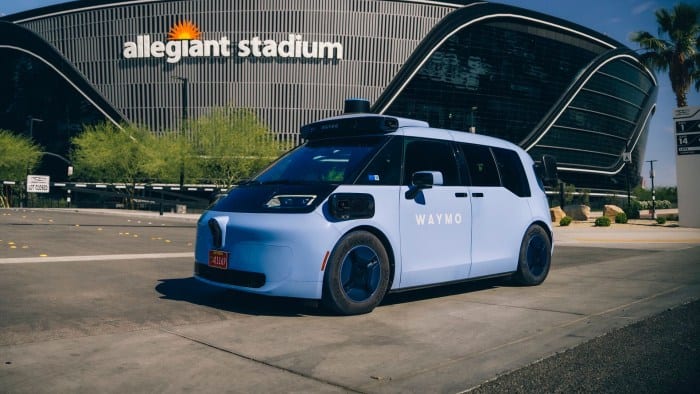
Waymo has begun dispatching robotaxis in Dallas, Houston, San Antonio and Orlando, taking it to 10 major US metropolitan markets, and provides more than 400,000 paid trips a week across its established metros.
The company recently raised $16 billion at a $126 billion valuation and is targeting more than one million weekly trips by the year’s end.