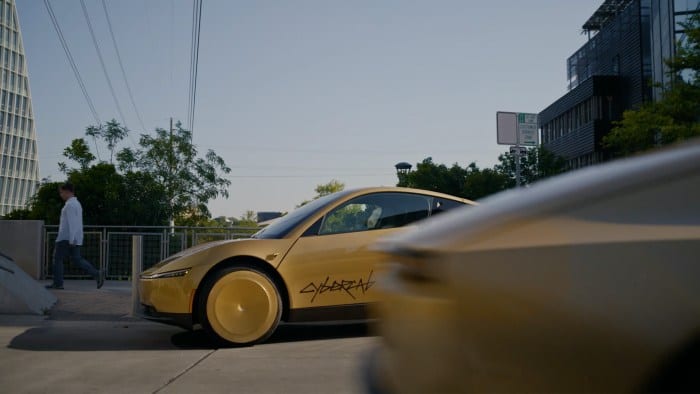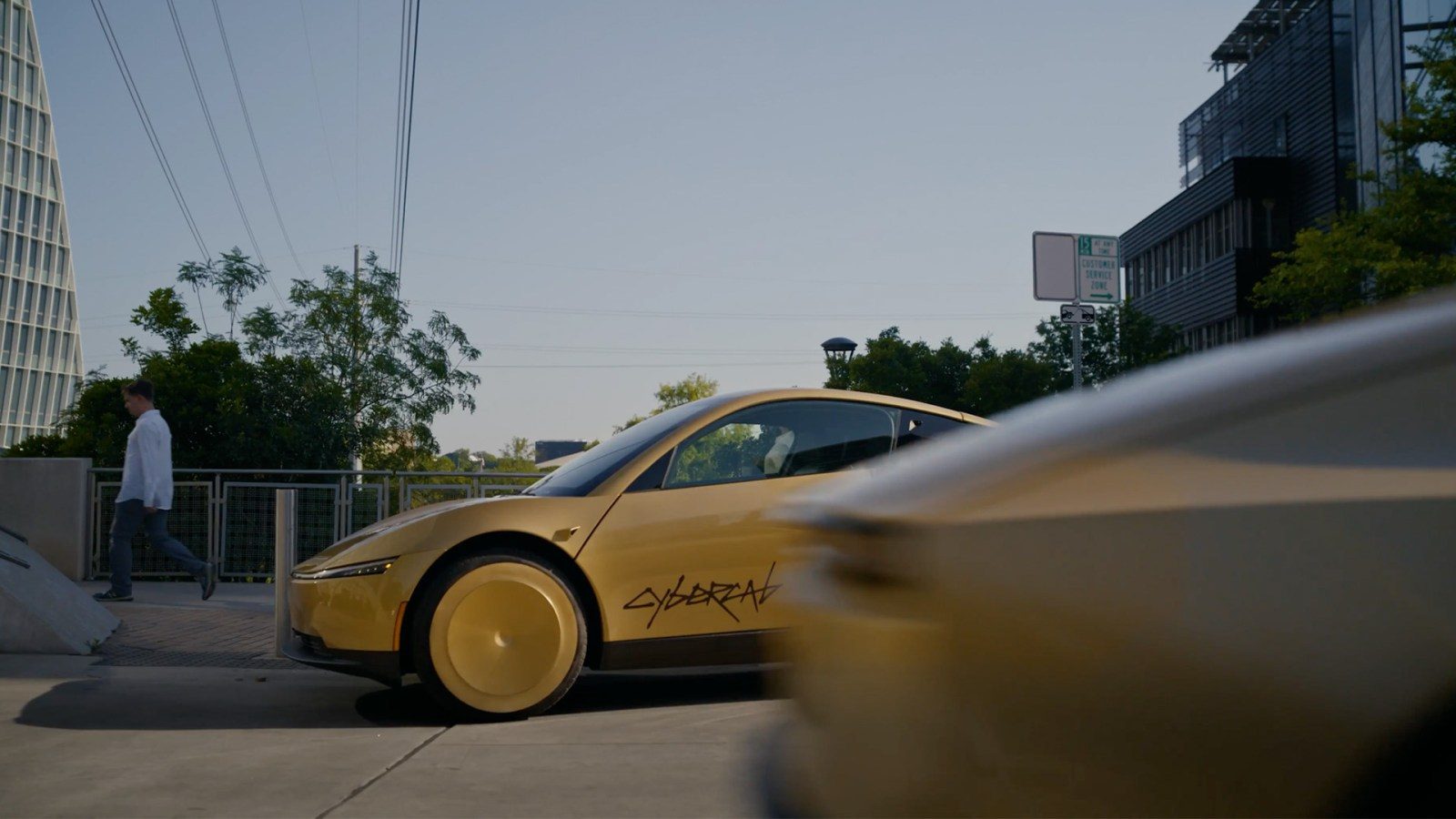

Tesla has until October 30 to give sworn answers to a federal Special Order on how it certified its Cybercab robotaxi, after regulators granted 30 more days rather than the eight weeks the company had requested, according to a National Highway Traffic Safety Administration memo.
Tesla asked on September 18 to push the original September 30 deadline back to November 20, the memo said.
It attributed the need for more time to “the voluminous nature of the request, and the need for Tesla to conduct a diligent search of records, review material for responsiveness and privilege, and organize and prepare information into thorough narrative formats in response to each question.”
“On September 22, 2026, NHTSA granted Tesla a 30-day extension,” the agency wrote in the memo to the file, dated September 29.
The memo was first flagged publicly on Thursday by X user Spencer (@scotsrule08), who posted a copy of the document.
NHTSA had already told CNBC last week that Tesla had obtained an extension, without giving the new date.
The memo does not explain why the agency granted less time than Tesla asked for, and it sets no other conditions. The new deadline falls nine days after Tesla reports third-quarter results on October 21.
What NHTSA Wants to Know
NHTSA opened an Audit Query on September 3, the day Tesla began commercial Cybercab service in Austin, Texas, and escalated it a week later with the Special Order.
The opening document estimates the population under review at 1,000 vehicles.
Tesla told the agency it had “certified those Cybercab vehicles as compliant with all applicable Federal Motor Vehicle Safety Standards,” even though the vehicles “lack permanently attached, conventional manual controls” such as a steering wheel, pedals and mirrors.
NHTSA said the audit would examine “the process and technical data” behind that certification and whether it rested on findings that certain standards do not apply to the Cybercab.
“NHTSA fully supports the safe development and deployment of automated vehicles,” Administrator Jonathan Morrison said when the audit was announced, adding that “we need to ensure that all of our laws are followed.”
The Special Order, signed on September 10 by NHTSA Chief Counsel Peter Simshauser, contains 21 requests.
They range from fleet data, such as unit counts, operating locations and the vehicle’s operational design domain, to how Tesla tested compliance with each standard and whether any tests were considered invalid.
The sharpest request concerns Federal Motor Vehicle Safety Standard 135, which states that “the service brakes shall be activated by means of a foot control.”
The order restates NHTSA’s view that “a manufacturer of a vehicle without a service brake activated by means of a foot control could not certify” to that section, and asks Tesla to explain how the Cybercab complies.
Other requests cover controls and telltales under Standard 101, the shift-position display under Standard 102, turn signals under Standard 108, mirrors and rear-view images under Standard 111, and stability-control telltales under Standard 126.
The order also asks Tesla to list any passenger-car standard it considers inapplicable, including on the grounds that the rule “did not when promulgated contemplate vehicles designed to perform the entire dynamic driving task.”
It asks whether the Cybercab can be driven using temporarily attached controls, whether those controls formed part of Tesla’s compliance basis, and how removing them fits with the federal ban on making required safety equipment inoperative.
It also asks whether the touchscreen offers controls that can move the vehicle.
Riders in Austin posted videos in the first week of service showing a cabin screen with a joystick and throttle scale, though neither reported the car moving under manual input.
The final request cites NHTSA’s 2022 occupant-protection rule, which said further changes to the standards “would likely be necessary to permit a vehicle solely operated by an ADS to be manufactured for sale” without an exemption.
Penalties for Failing to Respond
Tesla’s response “must be signed under oath,” with an affidavit from a responsible company officer, the order says.
Failure to respond fully can bring civil penalties of up to $27,874 a day, capped at $139.4 million for a related series of violations, as well as referral to the Department of Justice.
Knowingly falsifying or withholding information carries criminal penalties of up to 15 years in prison.
The order does not halt Cybercab service, and NHTSA has made no finding that the vehicle fails to comply with any standard.
Tesla has sought more time from NHTSA before.
In the agency’s probe into traffic violations by vehicles using Full Self-Driving, Tesla said in January it had 8,313 records to review manually, and NHTSA granted a five-week extension to February 23, later allowing until March 9 for one question.
The Exemption Route Tesla Skipped
Tesla registered the Cybercabs under a Texas self-certification law and had not filed for a federal exemption as of early September, unlike rival Zoox.
NHTSA granted the Amazon-owned company a two-year exemption from parts of eight standards, including Standard 135, allowing it to charge fares in its purpose-built robotaxi from July 31.
That route caps Zoox’s commercial fleet at 2,500 vehicles a year.
Self-certification carries no such cap, which matters for a vehicle Tesla has listed with production capacity above 125,000 units a year.
NHTSA proposed in June to limit Standard 135’s foot-pedal requirement to vehicles with manual driving controls, letting on-board systems activate the brakes in vehicles without them, according to a Federal Register notice.
The proposal is not final, and “existing standards remain in force” until that work is completed, NHTSA said in September.
Morrison also said in September that the agency had signed a three-year, $5 million agreement with SAE to gather data for the first federal performance standard for automated driving systems.
Fleet Keeps Growing
Tesla has kept adding Cybercabs while the inquiry runs. It had 45 Cybercabs authorized for commercial use in Texas when the vehicle launched and 169 as of October 2, according to state motor-vehicle records cited by CNBC.
Cybercab rides are offered only in Austin, where Tesla last week extended operating hours by one hour to 11 p.m.
Tesla also runs driverless Model Y robotaxis in Dallas, Houston, Miami, Orlando and Tampa.
Waymo had more than 1,100 vehicles on the Texas registry in late September.
Tesla’s vehicle deliveries fell 2.1% to 486,532 in the third quarter but beat analyst estimates.