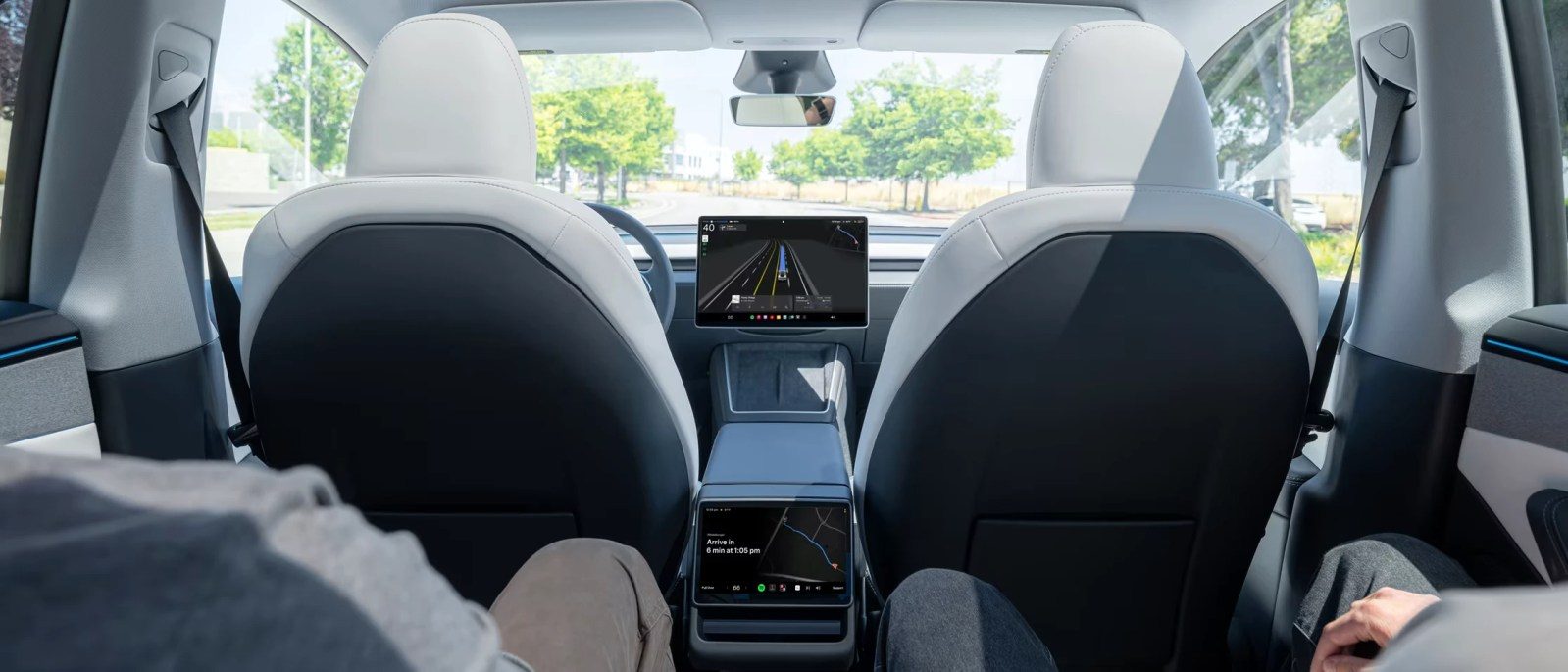

Tesla added five unsupervised Model Y vehicles to its Robotaxi fleet within a span of a few hours, bringing the total number of active vehicles across its three Texas cities to 25.
Austin — where the Elon Musk-led company first launched the service with safety operators nearly a year ago — now has 19 unsupervised vehicles, up from 16.
Dallas and Houston, where Tesla launched unsupervised Robotaxi rides on April 18, saw the respective fleets increase to three from two.
The launch took place just a few days before the company released its first-quarter earnings — and with only one vehicle in each city.
A few days later, Tesla had added a second vehicle in both cities.
In late January, the company had also introduced its first fully unsupervised Robotaxi vehicles shortly before announcing its 2025 earnings results.
Slow Climb in Austin
The pace of fleet growth in Austin, Tesla‘s lead Robotaxi market, has been gradual since the service launched in late June 2025.
The company started with approximately ten Model Y vehicles covering a five-mile radius, each with a safety monitor seated in the passenger seat.
In September, Tesla increased the fleet by 50% alongside a service area expansion to 173 square miles.
By late November 2025, crowdsourced data from the Robotaxi Tracker platform estimated the Austin fleet at 29 vehicles.
At the time, Musk responded to complaints about limited availability by promising to double the fleet in December roughly.
By late December, the tracker showed 32 vehicles in Austin — only three more than when the pledge was made.
That figure was well short of Musk’s earlier target.
In October 2025, he said at the All-In Podcast that he expected 500 Robotaxis operating in Austin and over 1,000 in the Bay Area by the end of the year.
The actual figures were approximately 42 and 130, according to Robotaxi Tracker, most of which still had safety monitors on board.
Ten months into the programme, the Austin fleet sits at 19 unsupervised vehicles — a figure that underscores the gap between the company’s ambitions and operational reality.
Earnings Call Context
Tesla reported its first-quarter 2026 financial results on April 22 — the same week it launched in Dallas and Houston.
During the earnings call, Musk acknowledged that Robotaxi revenue would not be a meaningful contributor this year.
“I don’t think probably unsupervised FSD or Robotaxi revenue will be super material this year, but I do think it will be material… in a significant way next year,” the CEO said.
The company’s shareholder letter stated that it “continued to make meaningful progress on the build out of the infrastructure and AI software that underpins our Robotaxi and future robotics businesses in Q1.”
Additionally, paid Robotaxi miles nearly doubled sequentially during the quarter.
Tesla‘s VP of AI Software Ashok Elluswamy addressed fleet scaling, noting that the company is “simultaneously solving the long tail of safety by monitoring the metrics across the entire Tesla customer vehicle fleet” while “scaling up the amount of QA fleet that we have across the entire US to accelerate our safety validation.”
Musk hopes to have “unsupervised FSD and Robotaxi operating in a dozen or so states by the end of the year,” but cautioned that the company is “taking a very cautious approach to the rollout.”
“It’s difficult to release this to everyone, everywhere, all at once,” Musk noted, “because we do want to make sure that there aren’t unique situations in a city.”
When questioned about when unsupervised FSD would reach customer-owned vehicles, Musk replied: “I’m just guessing here, but probably in the fourth quarter.”
The Road to 1,000 Robotaxis
The latest expansion brings Tesla‘s total confirmed Robotaxi fleet to 25 unsupervised vehicles across three Texas cities.
The Bay Area fleet is larger — with over 500 vehicles — however those rides still require a safety driver behind the wheel due to California regulations.
Morgan Stanley forecasts that Tesla will operate 1,000 Robotaxi vehicles by the end of 2026, up from what was a handful at the time of the projection in December 2025.
The company still has five cities remaining on its first-half 2026 expansion plan — Phoenix, Miami, Orlando, Tampa, and Las Vegas — with roughly two months left to meet the deadline it outlined in its January shareholder deck.
Vehicles have been spotted testing in several of these cities ahead of launch.
Waymo Comparison
The scale gap between Tesla and its primary competitor remains wide.
Alphabet’s Waymo launched in Dallas and Houston in late February, roughly two months before Tesla.
The Robotaxi Tracker shows Waymo operating 16 Jaguar I-PACE vehicles in Dallas — compared to Tesla‘s three — within a larger 48-square-mile geofenced area.
Co-CEO Dmitri Dolgov said in March that the company now operates approximately 3,000 vehicles on the road, delivering about 500,000 rides per week nationwide across 11 US cities.
Wolfe Research analyst Emmanuel Rosner projected in February that the Robotaxi revenue could reach $250 billion by 2035, but flagged that “it’s difficult to have high confidence in the success of all of Tesla‘s initiatives, especially as timing can shift around.”
Tesla plans to begin volume production of the Cybercab — a purpose-built, two-seat autonomous vehicle with no steering wheel or pedals — later this year.
The company has said the Cybercab will eventually replace the Model Y as the highest-volume vehicle in the Robotaxi fleet, as the purpose-built vehicle is produced specifically for the service.