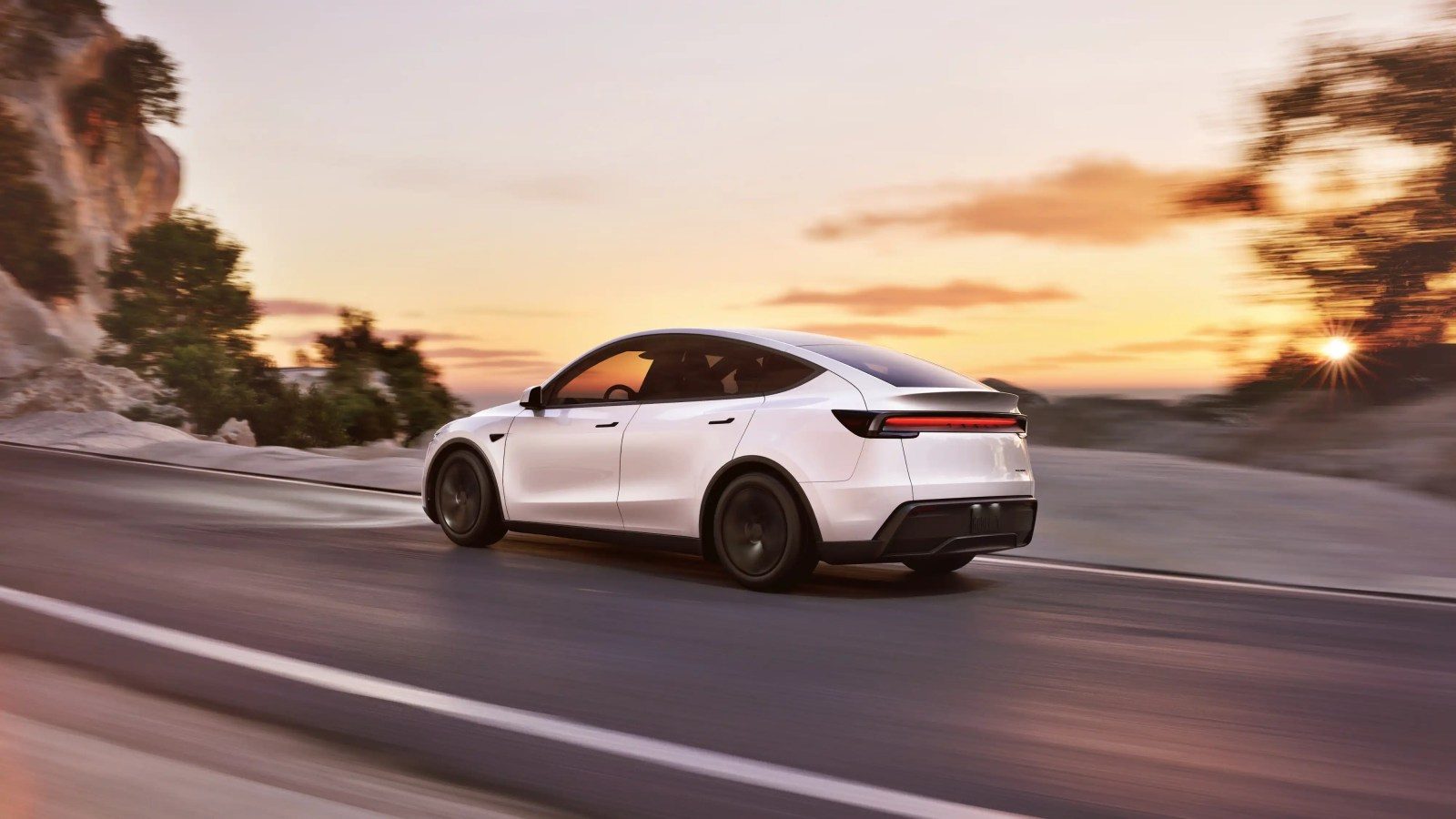

Tesla has stopped taking orders for its cheapest Model 3 versions in Canada, saying demand had exhausted its import quota for China-built vehicles.
“Model 3 Premium orders paused after high demand exhausted Tesla’s import quota,” Tesla said in a banner on its Canadian website, which appeared on Monday afternoon.
“Ordering resumes if Govt of Canada issues more quota, expected March 2027,” the banner said.
The pause covers the rear-wheel-drive Model 3 Premium, priced from C$39,490 ($27,700), and the all-wheel-drive Premium, priced from C$49,990 ($35,100), both built at Tesla’s Shanghai factory.
The Model 3 Performance, priced at C$74,990 ($52,600), remains available to order and is now the only Model 3 Canadians can configure on Tesla’s site.
Only 328 Chinese-built vehicles had entered Canada under the second six-month window as of October 9, against 33,397 permits available, according to the latest weekly utilization report from Global Affairs Canada (GAC).
The window runs until February 28, so the report covers only its first five and a half weeks.
The report also counts vehicles that have entered Canada, not permits issued for shipments still to arrive, so it does not show how many permits any automaker holds.
The Weekly Reports
GAC publishes the utilization report every Friday at 3 p.m. New York time, breaking imports down by month and by customs tariff line, without naming the automakers behind them.
Canada replaced its 100% surtax on Chinese-built electric vehicles in March with a quota of 49,000 vehicles a year at the 6.1% most-favoured-nation tariff, under a framework agreed by Prime Minister Mark Carney and Chinese President Xi Jinping in January.
The first window, from March 1 to August 31, offered 24,500 permits on a first-come, first-served basis.
No vehicles entered in March or April, and the first 2,910 showed up only in the May 29 report, after the Canada Border Services Agency opened its release channel for Chinese-made electric vehicles on May 19.
Imports then came in waves rather than as a steady flow.
The weekly total rose to 6,531 on July 10, as the first Lotus vehicles landed, then to 9,235 on July 17 and 9,813 on July 31.
July set a monthly record of 5,982 vehicles, a figure that was revised up by 300 in a later report.
The total reached 12,513 on August 7 and 15,063 on August 21, before the window closed at 15,603, or 63.7% of the permits available.
May accounted for 3,510 vehicles, June 621, July 5,982 and August 5,490, according to the final figures.
The 8,897 unused permits rolled into the second window, which runs from September 1 to February 28, 2027, and offers 33,397 permits.
Tesla’s Share
The bulk of the first window went to electric passenger cars, the customs category that covers sedans such as the Model 3, with 7,805 at or below C$35,000 ($24,600) and 7,495 above.
Together, those 15,300 vehicles made up 98.1% of the first window.
The C$35,000 threshold applies to the free-on-board import value, not the retail price, according to GAC.
The rest comprised 44 electric SUVs and vans and 259 non-plug-in hybrid SUVs, which arrived in July around the time Ford resumed Canadian sales of the China-built Lincoln Nautilus hybrid.
Tesla is the only automaker known to have sold China-built passenger cars in volume in Canada over the period, although the government data do not identify it.
The company cut the Model 3’s Canadian starting price to C$39,490 in May after switching supply from its Fremont, California, plant to Shanghai, and began assigning VINs to the first Canada-bound cars that month.
It added the all-wheel-drive Premium in June.
Tesla had shipped Shanghai-built Model 3 and Model Y vehicles to Canada in 2023, before Ottawa imposed its 100% surtax on Chinese-made electric vehicles in October 2024.
It had since supplied Canada with Model Y SUVs from its Berlin plant, which does not build the Model 3, and withdrew US-built Model 3s from its Canadian website in early March.
The Second Window
The second window has run at a fraction of the first one’s pace.
The October 9 report shows 328 vehicles entered in September and none so far in October.
Of the September total, 153 were electric passenger cars above C$35,000, 7 were at or below that threshold and 168 were hybrid SUVs.
The hybrid entries were added to September’s count between the September 25 and October 9 reports.
The 153 higher-priced cars coincided with the planned start of imports of the Polestar 2, which Polestar reintroduced in Canada in June at C$69,900 ($49,000).
Delivery estimates on Tesla’s Canadian configurator had already moved to December 2026 or January 2027 for all three Model 3 versions at the end of August, from between September and November.
GAC reports for September 11, September 18 and October 2 are not available, because the page shows only the latest snapshot.
No Company Caps in the Rules
The notice governing the second window, Serial No. 1168, published on August 29, says the quota is administered on a first-come, first-served basis and that permits are “issued on demand to eligible importers” up to the available quantity.
The notice sets no per-manufacturer or per-importer limit.
The notice says GAC will monitor permit applications to provide equitable access, which “could include setting aside a portion of the available quota for the use of OEMs, including new entrants.”
The department has not announced any such set-aside.
Bloomberg reported in May that officials were considering automaker-specific caps out of concern that a single company could consume a large share of the quota before newer entrants such as BYD arrived.
Importers can apply for a permit up to 30 days before a shipment’s expected arrival, and each permit is valid for a maximum of 60 days.
Shanghai-built Model 3s are also excluded from Canada’s federal EV rebate of up to C$5,000 ($3,500).
Tesla’s Shanghai plant exported a record 132,978 vehicles in the third quarter.
Geely has set a 2027 launch in Canada without naming models or prices, and BYD has yet to give a date.