
Canada’s first six-month window for tariff-reduced imports of Chinese-built EVs closed on August 31 with 15,603 of 24,500 permits used, and the unused 8,897 have been carried into a second period that opened on September 1 with 33,397 permits available, according to a Global Affairs Canada utilization report released on Friday.
The September 4 report is the first to present the quota as a single year rather than a six-month period, showing a maximum of 49,000 vehicles for March 1, 2026 to February 28, 2027, 15,603 utilized and 33,397 remaining.
No second-period utilization had been recorded as of Friday, four days after it opened.
The first window therefore finished at 63.7% of its allocation, with imports recorded in only four of its six months: none in March or April, 3,510 in May, 621 in June, 5,982 in July and 5,490 in August.
The final figures are unchanged from the August 28 report, meaning nothing was recorded in the last three days of the window.
The Final Split
Fully electric vehicles with a customs value at or below C$35,000 ($25,300) finished as the largest classification at 7,805 vehicles, or 50.0% of the window, built from 465 in June, 4,743 in July and 2,597 in August.
EVs above C$35,000 totalled 7,495, or 48.0%, from 3,510 in May, 135 in June, 957 in July and 2,893 in August.
The affordable line, which had nothing on the books before June, overtook the higher-value line during July and finished 310 vehicles ahead, even though August’s late additions ran mostly through the >C$35,000 line: of the 540 vehicles added in the week to August 28, 482 were above the threshold and 58 below it.
Non-plug-in hybrid SUVs and passenger vans above C$35,000 stayed at the 259 recorded in July, and fully electric SUVs and vans above C$35,000 at 44, unchanged since July.
The C$35,000 threshold is a free-on-board customs value rather than a retail price, according to Global Affairs Canada’s April consultation paper.
The reserved share for the affordable tier is 0% in the current quota year and rises to 10% next year, so importers went cheap ahead of any obligation to.
Global Affairs Canada does not identify importers or brands, and no automaker has confirmed its share.
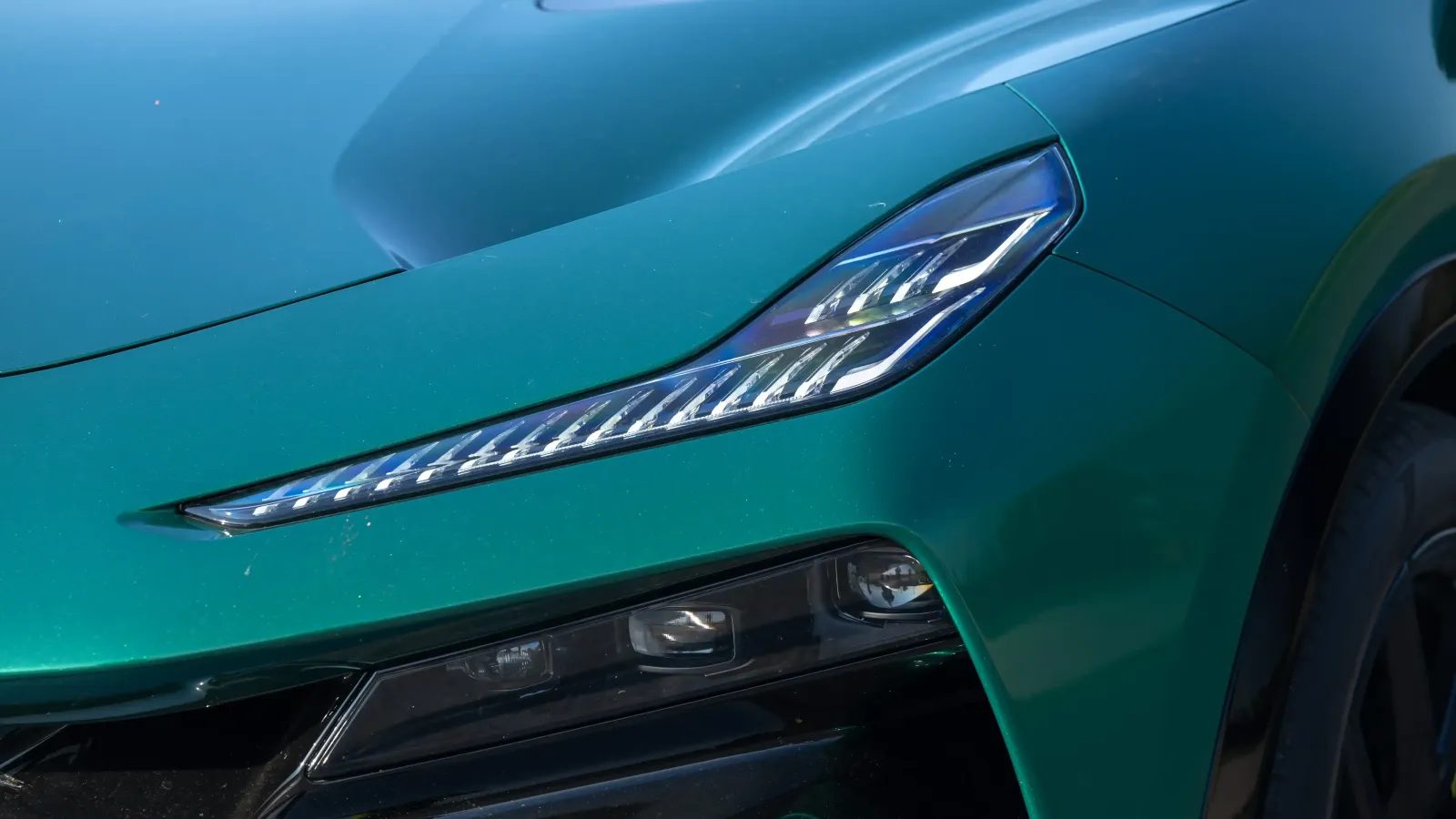
The Shanghai-built Tesla Model 3 launched in Canada on May 1 at C$39,490 is the only high-volume model known to have been imported under the quota, with Lotus’s Eletre and the China-built Lincoln Nautilus hybrid accounting for a few hundred.
How the Window Ran
The weekly reports trace a lumpy flow rather than a steady one: 9,813 on July 31, 12,513 on August 7, 12,813 on August 14, 15,063 on August 21 and 15,603 on August 28, with the July figure revised up by 300 vehicles in the August 7 report.
August’s 5,490 arrived as 2,400 in the first week, 300 in the second, 2,250 in the third and 540 in the fourth. July’s 5,982 remains the window’s busiest month.
Across the six months the window averaged about 2,600 vehicles a month against a ceiling of roughly 4,083.
The Second Period
The new period, in effect from 12:00 a.m. on September 1, sets the second-period quantity at 24,500 plus the 8,897 carried forward, keeps first-come, first-served administration with shipment-specific permits issued until the quantity is exhausted, and retains the 6.1% most-favoured-nation tariff in place of the 100% surtax that applied before March 1.
Permit applications may be filed up to 30 days before the expected date of entry, and eligibility remains limited to Canadian-resident EV manufacturers or non-resident manufacturers acting through a Canadian agent.
Who Is Waiting
The larger pool arrives as brands other than Tesla prepare to draw on it.
Geely-owned Polestar reopened Canadian orders for the China-built Polestar 2 in June at C$69,900 with first imports slated for September.
BYD launched a Canadian website carrying a “coming soon” message in late August and has been hiring for sales, marketing and dealer-development roles since early in the year, though it has published no prices, dealers or launch date; its chair Stella Li told Bloomberg in March that the company was studying a wholly owned Canadian plant.
XPeng has said Canada’s “door is open” and that it is in close contact with Canadian officials and partners about a long-term entry.
Dongfeng’s distributor North World Industry, which showed six models in Montreal in July, is targeting 2027.
The Trade Backdrop
The quota is the centrepiece of the January arrangement between Prime Minister Mark Carney and President Xi Jinping, and its second period opens with Canada’s other trade relationship in open conflict.
The United States began enforcing 50% tariffs on about $20 billion of Canadian goods on August 22 after talks collapsed over the rate to apply to Canadian-built vehicles, and Carney said Canada would match them dollar for dollar with retaliatory tariffs on US steel, dairy, appliances, agricultural equipment, paper and electronics from Tuesday, September 8.
US Trade Representative Jamieson Greer said on August 22 that no further talks were planned and that Washington would respond to any Canadian retaliation, and no negotiations have been announced since.
The quota itself was a target before it was a fact: Trump threatened a 100% tariff on Canadian goods in January over the deal, calling it “a disaster for them” and warning Carney against making Canada a “drop off port” for Chinese products bound for the United States, while Greer called the low-tariff EV access “problematic.”
Carney replied that Canada had “no intention” of pursuing a free-trade agreement with China and that the cap amounted to about 3% of the 1.8 million vehicles sold in Canada each year.
By June the tone had shifted: a hot microphone at the G7 summit in Evian caught Carney telling Trump the deal capped the imports, “I thought you’d actually like that,” and Trump replying “that’s good”; asked about it the next day, Trump said, “I don’t know that I said I like it, but I could understand that, yeah,” according to Bloomberg.
The 100% threat was never enacted, and the August tariffs were tied to the unresolved rate on Canadian-built vehicles rather than to the Chinese quota, which has not featured in either government’s public statements since the talks collapsed.
Chinese-built vehicles entering under the quota pay 6.1%, against the 25% national-security tariff Canada applies to US-built vehicles, a gap that Tesla, which builds nothing in Canada, has used to source the Model 3 from Shanghai rather than Fremont.