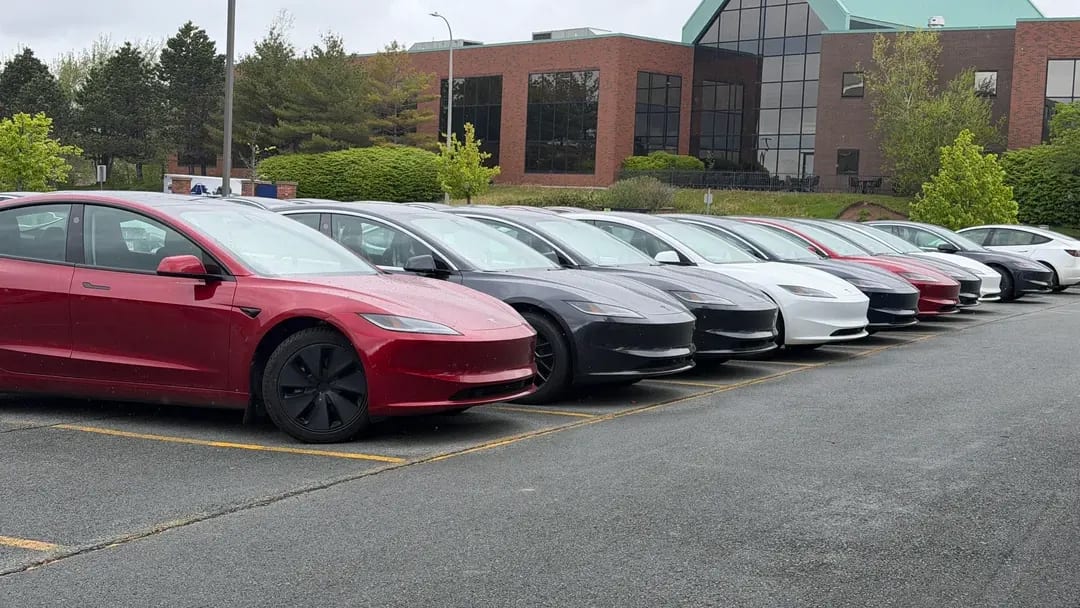

Tesla has used about 12% of Canada’s first-window quota for Chinese-built EVs, the only automaker yet to move volume under the new system announced last January.
Global Affairs Canada data show 2,910 vehicles imported under the quota as of May 29, against a cap of 24,500 for the window that opened March 1 and runs to August 31.
The figures leave 21,590 permits available.
The early lead positions Tesla ahead of every rival under a framework officials are already weighing whether to rein in.
First Mover
The window opened on March 1, but the federal tally records zero imports through the end of April.
All 2,910 units appear in May.
The clustering tracks the customs timeline as much as Tesla’s: the Canada Border Services Agency only opened its Single Window release channel for Chinese-made EVs on May 19, leaving no standard route to record clearances before then.
Car shipments from Shanghai adds roughly four to six weeks, so even permits filed on day one would not have landed cars much before mid-spring.
The 2,910 figure equals 11.9% of the window’s allocation, and competitors have yet to register a single unit.
At this pace, Tesla could claim a large share of the 24,500 ceiling before the window closes at the end of August.
Each import permit is valid for 60 days, longer than the standard 30, and may be filed up to 30 days before a shipment is expected to enter the country.
The timeline gives an importer with vehicles already in transit a wide booking window, an advantage that favors a company shipping in volume from a single plant over rivals still arranging their first crossings.
A Tally That Does Not Name Tesla
The government figures identify the imports only as electric vehicles originating in China, logged under one customs line without naming any automaker.
Shanghai-built Model 3 sedans have been documented arriving at Canadian delivery centers earlier this week, and the only other confirmed shipment under the quota is 18 Lotus Eletre SUVs brought in by Geely.
The SUVs from the China-backed brand are expected to arrive over the next few weeks.
Every unit was booked under the tariff line for electric passenger vehicles valued above $35,000, none in the lower-priced category the quota is designed to favor later.
The Framework
The quota permits up to 49,000 Chinese-built EVs a year at a 6.1% most-favored-nation tariff, replacing the 100% surtax imposed in October 2024.
The first 24,500 permits are issued first-come, first-served through August 31.
A second 24,500 allocation, plus any unused volume from the first, opens September 1 and runs to February 28, 2027.
The annual ceiling then rises 6.5% a year, reaching about 70,000 by 2030.
A share reserved for vehicles priced at or below C$35,000 climbs from 10% in the second year to 50% by the fifth, a tier none of the early imports fall into.
Prime Minister Mark Carney and Chinese President Xi Jinping signed the framework in Beijing on January 16, replacing the punitive surtax with the standard tariff in exchange for relief on Canadian exports.
China cut its duty on Canadian canola seed from roughly 85% to 15% and lifted restrictions on Canadian lobster, crab and peas, trading agricultural access for a managed opening to its carmakers.
Ottawa Weighs a Cap
Tesla‘s speed has drawn government scrutiny.
Officials are considering manufacturer-specific caps within the 49,000-unit quota, Bloomberg reported, a measure that would limit how much any single company can claim.
A public consultation on how to allocate and administer the quota ran from April 7 to May 1.
Should Ottawa adopt an allocation model for the September window, it would replace the first-come, first-served rule that handed Tesla its early lead.
A decision is expected before the second window opens.
Rivals to Follow
Chinese-headquartered brands are not yet competing for the permits in volume.
BYD, Chery, and Geely are preparing their Canadian consumer launches, depending on certification timelines, dealer-network buildouts, and the local production or assembly.
Tesla, by contrast, can scale at once on an existing national sales, service and Supercharger network, having moved its remaining US-built Model 3 inventory home ahead of the switch.