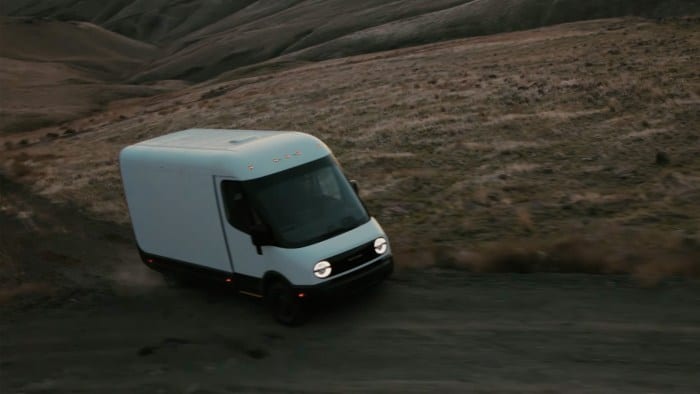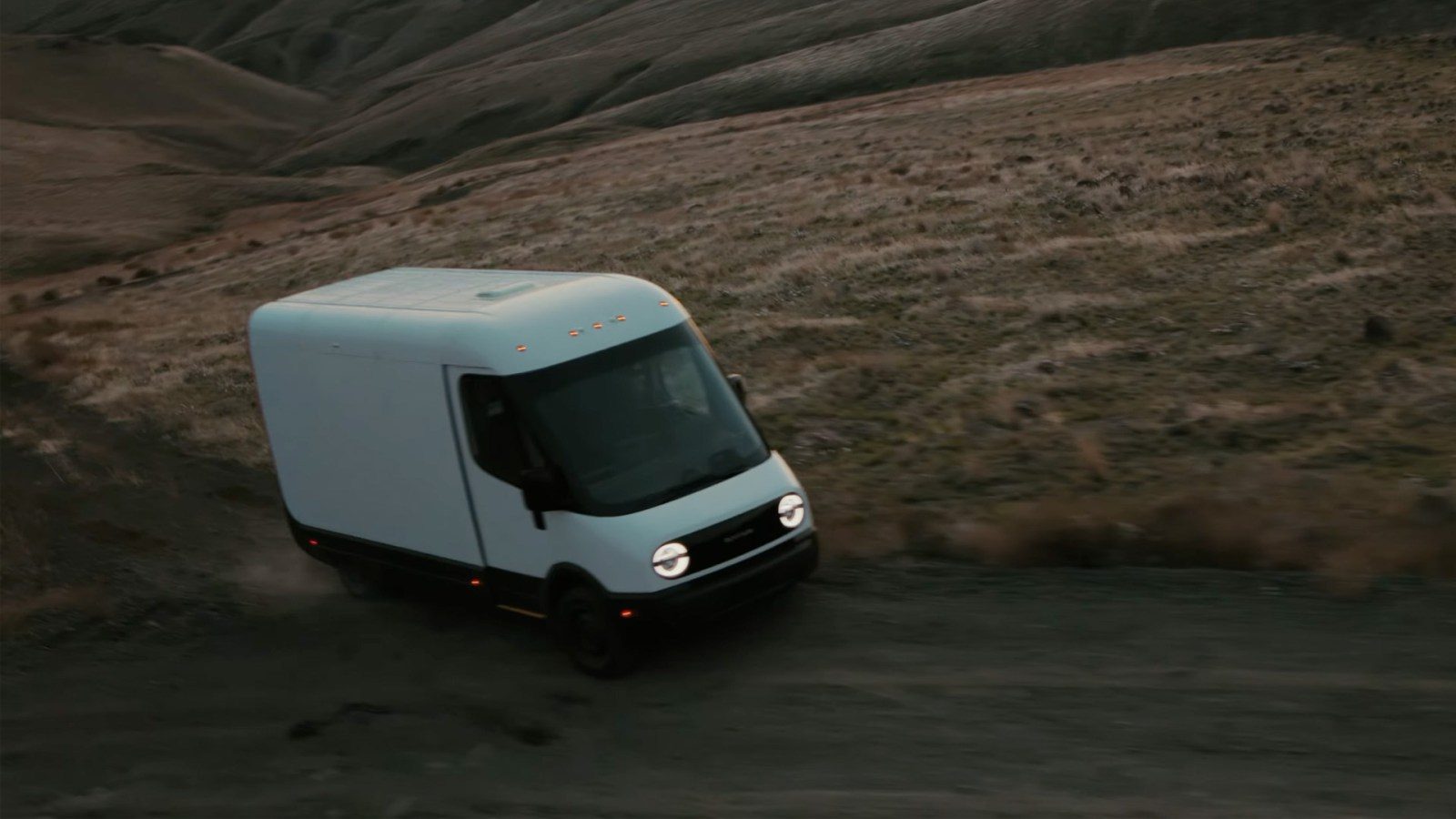

Rivian has won US Environmental Protection Agency certification for all-wheel-drive and larger-battery versions of the electric delivery van it builds for Amazon and other fleet customers, with the bigger pack adding about 36% to the van’s range in laboratory testing, regulatory filings show.
The company sold an estimated 4,003 vans in the US in the second quarter, up 48% from a year earlier, according to Cox Automotive data.
Cox Automotive had not published its third-quarter estimates at the time of publication.
The EPA issued a certificate of conformity on September 17 covering Rivian’s 2027 model-year vans, including the new EDV 700 Large in front-wheel-drive and all-wheel-drive versions and the equivalent Rivian Commercial Van models sold to other fleets.
The certificate, signed by Byron Bunker, Director of the EPA’s Compliance Division, took effect the same day and runs until the last day of 2027. The EPA approval was first reported by X user ‘Rivian_DD’ on Monday.
The approval came seven months after Rivian said in its fourth-quarter shareholder letter on February 12 that it was developing new variants “with a larger battery pack and AWD” to expand the van’s route coverage in Amazon’s network.
Rivian has not said when deliveries of the new variants will begin.
What the Filings Show
The larger “Large” pack holds 129 kilowatt-hours of usable energy, up from 90 kWh in the existing “Standard” pack, according to Rivian’s application to the EPA.
Both use lithium iron phosphate cells.
The Large pack is offered only on the bigger 700 body, while the smaller EDV 500 and Commercial Van 500 remain available only with the Standard battery and front-wheel drive.
The all-wheel-drive version adds a second motor, with both motors listed at 265 kilowatts, the filing shows.
Rivian describes the existing van’s battery as a 100 kWh pack in its marketing materials, such as a specification sheet for California’s clean-truck voucher program, while its EPA filings give the usable figure.
The Commercial Van “differs from the EDV by the exterior color change and Amazon badging removal,” Rivian said in the application, describing the two as sharing the same battery, motor and EV characteristics.
Range on the Test Cycles
In the EPA’s multi-cycle test, the EDV 700 Large FWD covered 355.5 miles on a full charge, 35.8% more than the 261.7 miles recorded for the EDV 700 with the Standard pack, according to the certification summary.
The all-wheel-drive version covered 322.25 miles, 23.1% more than the Standard EDV 700.
Compared with the 500 models, the gains were 39% to 40% for the Large FWD and 26% to 27% for the AWD version, by EV‘s calculation.
On the highway portion of the test, the Large FWD reached 279.6 miles and the AWD 253 miles, against 201.2 miles for the Standard EDV 700.
The figures are unadjusted laboratory results and run well above what Rivian quotes for real-world use.
Rivian advertises 161 miles for the Delivery 500 and 160 miles for the Delivery 700, versus 254.2 to 261.7 miles for the same vans in the EPA lab test.
“The larger battery brings a 30% increase in range, while all wheel drive improves traction in conditions like mud and snow,” Rivian said in its February letter.
Heavier Vans
The extra battery and motor add weight.
The EDV 700 Large FWD has a curb weight of 8,223 pounds and the AWD version 8,677 pounds, compared with 7,295 pounds for the Standard EDV 700, the summary shows.
That is 928 and 1,382 pounds more, respectively.
Rivian raised the gross vehicle weight rating of the Large models to 10,000 pounds from 9,500, the top of the Class 2b range.
The AWD van’s efficiency is also lower, at about 516 watt-hours per mile on the highway test, versus about 469 for the Large FWD and 447 for the Standard EDV 700, by EV‘s calculation from the test data.
Both Large models charge at up to 100 kW on DC fast chargers and 11.5 kW on AC, according to the application.
Recharging the Large FWD van from empty after the test drew 158.4 kWh from the grid, compared with 108.7 kWh for the Standard EDV 700, the summary shows.
The Large FWD van was tested at FEV’s Michigan lab on May 28, while the AWD van was tested at Rivian’s facility in Torrance, California, on August 4.
The Standard models carry over results from tests carried out in August 2024, the filings show.
Rivian first filed for the test group in August, listing the two Large variants as new for the 2027 model year, and updated the application in September.
Amazon’s Fleet
Rivian has given few public details on the variants since February.
“We’re developing new variants with a larger battery pack and all-wheel drive to support Amazon’s needs,” founder and CEO RJ Scaringe said on the company’s second-quarter earnings call on July 30, without giving a launch date.
Vice President of Investor Relations Chip Newcom has said they were continuing to progress well, without giving a date.
Amazon’s fleet of Rivian vans passed 40,000 across North America in the second quarter, and Amazon accounted for 52% of Rivian’s automotive revenue in the first quarter.
The company is expanding its van engineering team and has rehired Aaron Hensler as chief engineer of the commercial van platform.