
Canada’s import quota for Chinese-built EVs is filling faster than its early months suggested, with fresh government data showing 6,531 vehicles brought in by mid-year.
The flow remains dominated by higher-priced models rather than the affordable cars the arrangement was meant to encourage.
The figure, from a Global Affairs Canada report on quota utilisation executed on July 10, equals 26.7% of the 24,500 vehicles permitted in the first six-month window that closes on August 31, more than double the level recorded in late May.
Almost all of the early volume is Tesla Model 3 sedans built at the company’s Shanghai factory, with the company having moved first to use the quota while Chinese brands were still preparing to enter the market.
What the Numbers Show
The utilisation data breaks the imports down by month and by price, and the pattern points to premium models leading the way.
Vehicles priced above $35,000 on an import basis account for 4,101 of the 6,531 units, or 62.8%, spread across passenger cars and a small number of SUVs, while the remaining 2,430 fall in the sub-$35,000 category.
Imports began in earnest in May with 3,510 units, all in the higher-priced tier, followed by 621 in June and 2,400 in July, leaving more than 17,900 vehicles of first-window headroom before the August 31 cutoff.
Chinese Brands Begin to Arrive
The mid-year data coincides with the first shipment of a Chinese-controlled brand entering under the deal.
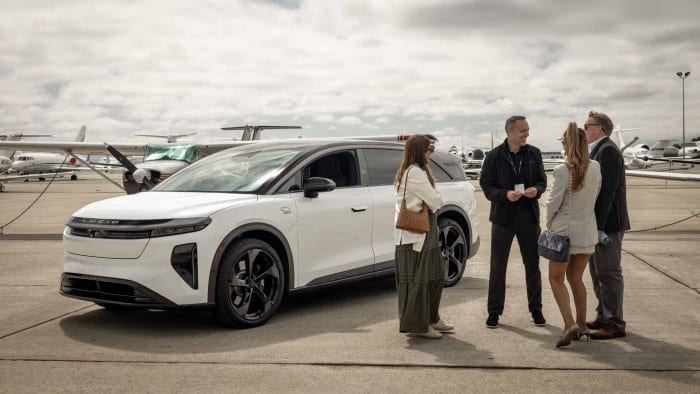
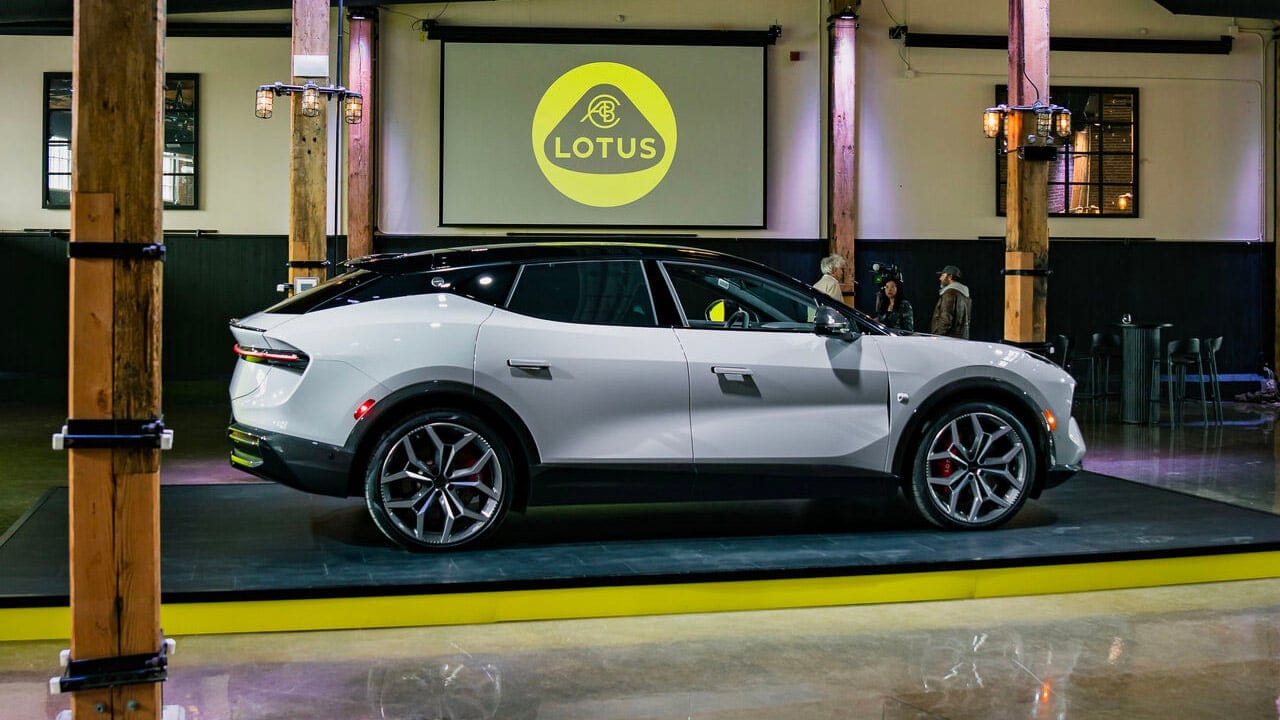
A total of 18 Lotus electric vehicles docked Canada last week, the first batch of vehicles from a Chinese-owned marque to arrive under the framework, built at the Geely-controlled brand’s plant in Wuhan.
Max Trantini, chief executive of Lotus Cars Americas, said Canadian demand had been strong, that the first shipment arrived in full, and that the brand would expand imports based on dealer sales.
The arrival followed remarks in late June by Wang Di, China’s ambassador to Canada, who said BYD and Chery had not yet shipped their first vehicles for sale to Canada, with both still completing steps with Canadian agencies, and that he hoped they would enter in the autumn.
Until the Lotus batch landed, the only China-built electric vehicles selling in Canada were Tesla Model 3 sedans shipped from Shanghai, underscoring how far ahead the American automaker has run of the Chinese brands the deal was written to attract.
The Lotus arrival aside, BYD, Chery and Geely‘s own nameplate remain in the run-up to their first Canadian sales, leaving Tesla and the Geely-controlled brands as the main users of the quota so far.
The outcome inverts the stated purpose of the arrangement, which Ottawa framed as a controlled reopening for Chinese manufacturers rather than a lane for an established US brand.
Canada agreed in January to admit up to 49,000 China-built EVs a year at the standard 6.1% most-favoured-nation tariff, repealing a 100% surtax that had effectively blocked the vehicles since October 2024.
The deal emerged from a January meeting in Beijing between Prime Minister Mark Carney and President Xi Jinping, under which China agreed to ease retaliatory duties on Canadian canola and other farm exports in exchange for the lower vehicle tariff.
The 49,000-vehicle figure was set to match the pace of China-built EV imports before the surtax, a volume made up almost entirely of Tesla and Polestar vehicles, and the quota is scheduled to rise 6.5% a year toward roughly 70,000 vehicles by 2030.
Why Tesla Moved First
The early tilt toward one company reflects a simple gap in readiness between Tesla and the Chinese brands the policy was meant to invite.
Tesla launched a Shanghai-built Model 3 in Canada on May 1 at C$39,490, roughly half the price of the cheapest Model 3 it had offered weeks earlier, and moved its remaining US-built inventory out of the country to make room for the imported version.
The company already operates a national sales and service network in Canada and had previously shipped Shanghai-built cars there, leaving it able to use the quota immediately while newer entrants were still preparing.
The tariff math sharpened the incentive, since the 6.1% rate on China-built vehicles sits far below the 25% national-security tariff Canada applies to cars imported from the United States, giving Tesla reason to source Canadian Model 3s from Shanghai rather than its Fremont plant.
By contrast, BYD, Chery and Geely have spent the last months hiring staff, filing trademarks, scouting dealership sites and running cold-weather tests, and have scaled back some Canadian plans as the capped volumes squeeze the economics of a full dealer network.
The imported vehicles do not qualify for Canada’s C$5,000 federal purchase rebate, which is restricted to models built domestically or in free-trade partner countries, yet the Shanghai Model 3’s price still undercuts most rivals even without the incentive.
The permit design has reinforced the advantage, because importers may apply up to 30 days before a shipment arrives and each permit stays valid for as long as 60 days, a wide booking window that favours a company already moving vehicles in volume from a single plant over rivals still arranging their first crossings.
Most units logged so far were booked under the tariff line for electric passenger vehicles valued above $35,000, and the lower-priced category the quota is meant to favour in later years carries no set-aside until the second year, when a share reserved for cheaper models rises from 10% to half by the fifth.
Ottawa Weighs Per-Company Caps
The concentration has prompted the government to reconsider how the quota is shared.
Canadian officials are debating whether to cap how much of the allocation any single automaker can claim, concerned that an established brand could absorb much of the low-tariff volume before newer competitors establish themselves.
The first-half allocation is issued on a first-come, first-served basis, but Global Affairs Canada opened consultations in April on whether to move to a system of per-manufacturer allocations for the second window, which begins on September 1 and carries any unused first-half volume forward.
The agency has said it will monitor permit issuance to provide equitable access to eligible applicants, and a new notice governing the second half is due before it opens.
Industry Minister Melanie Joly has said the only routes for Chinese automakers into Canada are the quota system or a joint venture with a Canadian company, and has rejected arrangements based solely on final assembly of imported kits.
The Broader Trade Backdrop
The quota sits inside a wider realignment that has set Canada apart from its largest trading partner.
Carney’s decision to lower the tariff broke with the United States, which retains steep duties on Chinese vehicles, and the divergence has drawn criticism from US officials wary of Chinese-built cars entering North American supply chains.
The arrangement has also become a point of discussion in talks over the United States-Mexico-Canada Agreement.
Parts industry representatives noted that Washington and Ottawa will need to reconcile their differing approaches to external tariffs, and US officials argued that preferential regional access should not extend to subsidised vehicles built outside the trade bloc.