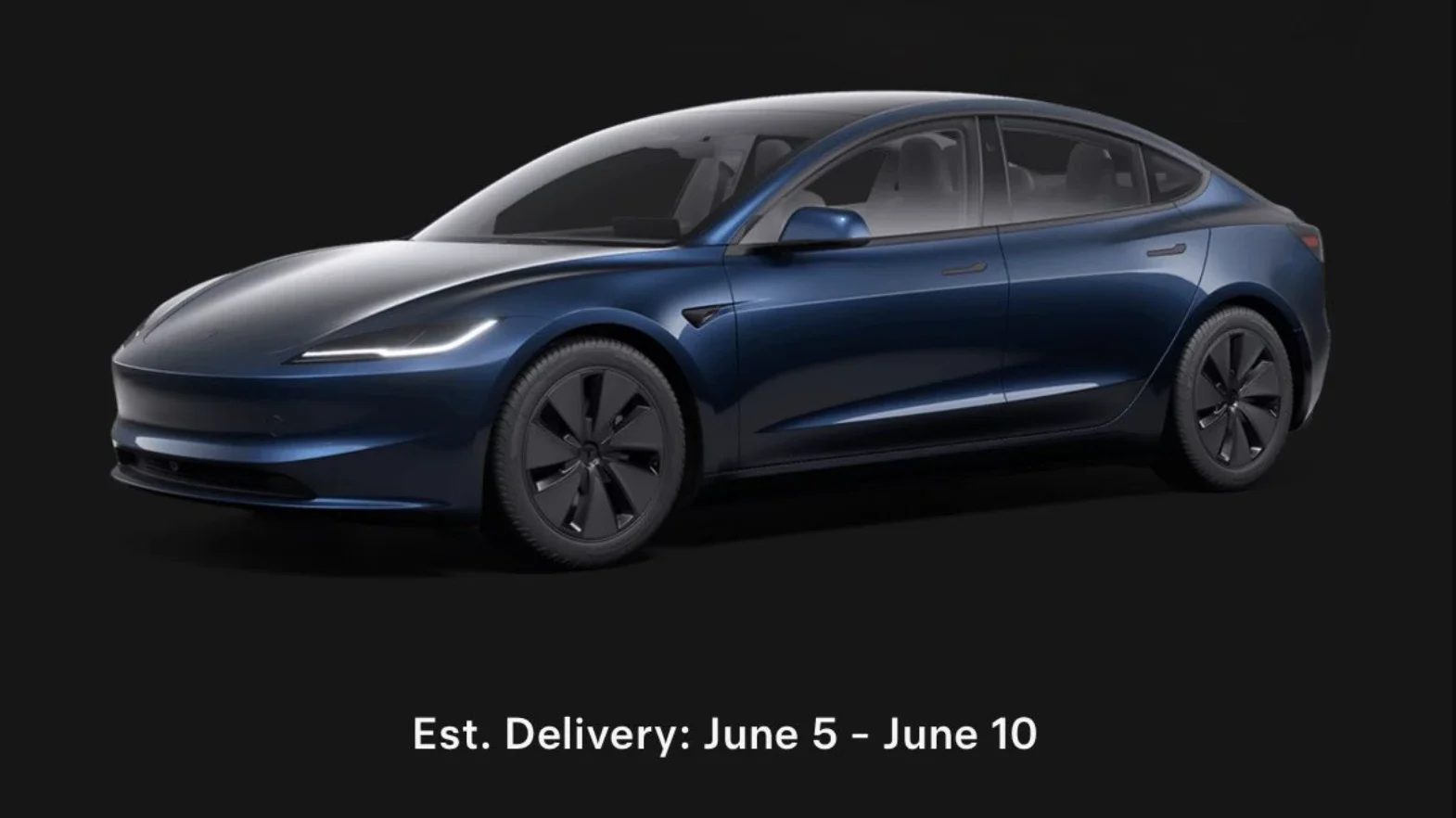

Tesla has begun assigning Vehicle Identification Numbers (VINs) to the first batch of Shanghai-built Model 3 sedans destined for Canada.
Delivery waiting times have also been updated for “early June”, signaling that first customer deliveries of the new Premium Rear-Wheel Drive variant are set to begin in a month.
X user ‘TechLapVolt’ shared the development on Thursday, writing that “VIN is getting assigned for New premium RWD Model 3 in Canada.”
The user, who placed their order on May 4, said their estimated delivery date had also been updated to “early June.”
In the comments, another buyer reported an even tighter window, writing, “Mine May 25-30. Ordered May 2.”
The VIN assignments mark a concrete logistics milestone for Tesla‘s China-to-Canada supply chain pivot — a shift that has reshaped the company’s pricing and competitive positioning in the country over the past two months, as trade relations between the US, China and Canada continue to evolve.
From Fremont to Shanghai
Tesla pulled all US-built Model 3 inventory from its Canadian website in early March, withdrawing demonstration vehicles from showrooms and removing the option to configure the sedan online.
The move signaled a deliberate supply chain shift away from Fremont, California — toward the company’s Shanghai Gigafactory.
The pivot was made possible by the China-Canada EV trade framework that took effect on March 1.
Under the deal struck by Prime Minister Mark Carney and Chinese President Xi Jinping in January, Canada replaced the previous 100% surtax on Chinese-built EVs with a 6.1% most-favored-nation tariff rate, opening a quota of up to 49,000 vehicles per year.
The 6.1% Chinese EV tariff sits well below the 25% Section 232 national security tariff currently applied to US-built vehicles entering Canada — an 18.9 percentage point gap that gives Tesla a clear financial incentive to source from Shanghai rather than from its Fremont plant.
Tesla briefly used this exact supply chain route in mid-2023, shipping Model 3 vehicles from Giga Shanghai through the Port of Vancouver and boosting Chinese automobile imports through the port by 460% year over year.
In late 2024, however, Ottawa imposed the 100% duty on Chinese EV imports, mirroring the US President Joe Biden’s move then.
Cheapest Tesla Ever Sold
The Elon Musk-led company launched the new Premium Rear-Wheel Drive variant in Canada at C$39,490 — making it the cheapest Tesla vehicle ever sold in the North American market.
The variant lists at C$42,132 once delivery and other fees are included.
Tesla North America announced the pricing in a post on X, calling the Premium RWD “the most affordable it’s ever been.”
The variant offers an EPA-estimated range of 463 kilometers and accelerates from 0 to 100 km/h in 4.2 seconds.
The company also cut the Model 3 Performance trim by approximately 17% to C$74,990 from C$89,990, while discontinuing the previously available Long Range trim at C$79,990.
The new entry price represents roughly a 50.6% reduction from the Long Range trim that previously anchored the Canadian Model 3 lineup.
The Shanghai-built variants are not eligible for Canada’s federal Electric Vehicle Affordability Program rebate, which provides up to C$5,000 on qualifying purchases.
The exclusion stems from the program’s country-of-origin requirements, which extend rebate eligibility only to vehicles manufactured domestically or in countries with which Canada has a free-trade agreement.
That creates a competitive trade-off for Canadian consumers.
The Berlin-built Model Y, which became eligible for the C$5,000 rebate after Tesla priced its RWD variant at C$49,990 — just C$10 below the program’s cap — offers a rebate-adjusted effective price of C$44,990.
The China-built Model 3, at C$39,490 before fees, undercuts that figure without any government subsidy.
Spec Changes Draw Backlash
The supply chain shift has not been without controversy.
Tesla‘s Canadian Model 3 page now displays lower specifications than it did last month, with peak charging speeds and battery warranty distances both reduced.
The new Premium RWD variant uses lithium iron phosphate (LFP) battery chemistry sourced from Chinese suppliers, distinct from the nickel-manganese-cobalt (NMC) chemistry used in the higher-spec Long Range and Performance trims previously sold in the country.
LFP batteries typically deliver lower peak charging speeds than NMC chemistries due to different thermal characteristics.
The new variant lists a 175 kW maximum charging power — a figure that Canadian buyers have flagged as a notable downgrade from previous specifications.
Quota Politics
The VIN assignments arrive as Ottawa weighs whether to cap how much of the 49,000-unit quota any single automaker can claim.
Bloomberg reported this week that Canadian officials are examining the introduction of sub-allocations within the broader quota — a quota-within-a-quota mechanism — to prevent any one company from dominating access.
Tesla is widely expected to capture the largest share of the first-year quota.
With a fully built-out national sales, service, and Supercharger network already in place, the company can immediately scale deliveries without waiting for the certification and retail infrastructure buildout that Chinese-headquartered brands face.
Chinese Ambassador to Canada Wang Di confirmed in an interview with the Globe and Mail that multiple Chinese brands are in active contact with Canadian authorities, but acknowledged that early allocations would favor companies already certified for Canadian sale.
Initial deliveries from BYD, Chery, and Geely to Canadian consumers are not expected before the final months of 2026.
What Comes Next
With VINs now being assigned, the first Shanghai-built Model 3 units appear to be either in transit or arriving at Canadian ports in the coming weeks.
The deliveries will make Tesla one of the first automakers to physically put Chinese-manufactured vehicles into Canadian customer hands under the new trade framework.
The other one is Geely-backed Lotus, which shipped the first batch of Chinese-made Eletre SUVs earlier this week.