
Nio Inc.‘s US-listed shares fell to a new three-month low on Tuesday, trading as low as $4.95 in the morning session — a drop of over 4% from Monday’s closing price of $5.20.
Over the past 60 days, the company saw its stock decline from a 2026 high of $7.00 to below $5.00 — a decline of more than 29% on the share price.
The EV maker’s shares have been highly volatile over the past year.
The US-listed shares hit a multi-year low of $3.02 in April 2025, during a period of heightened US-China trade tensions, before staging a strong recovery that nearly tripled the price to $8.02 by early October, following the unveiling of the third-gen ES8 SUV.
The rally proved short-lived, however. After briefly holding above $7.00 for about a month, the stock began to weaken again and has since drifted back toward the $5.00 level.
Nio‘s stock dipped as low as $4.38 in February before returning to $5.00 — underscoring repeated swings between sharp rallies and steep pullbacks rather than a sustained trend in either direction.
Tuesday’s Stock Decline
Tuesday’s drop mirrored weakness in Hong Kong, where it closed 2.3% lower at HK$40.74.
The stock decline came hours after China’s National Bureau of Statistics reported that retail sales fell 0.6% year-over-year in May — the first decline since December 2022, after COVID-19 restrictions were eased.
Fixed asset investment in China fell 4.1% in the January–May period, a sharper decline compared with the 1.6% drop seen in the first four months of the year.
Property investment also weakened further, declining 16.2% over the same period, while new home prices across 70 major cities slipped 0.2% month over month.
On the external side, exports rose 19.4% last month — highlighting China’s continued reliance on foreign demand as domestic consumption remains weak.
China has set a GDP growth target of 4.5% to 5% for 2026, its lowest level in decades.
The weaker economic data weighed on Chinese automakers’ stocks.
As of press time, all three US-listed Chinese EV makers were trading lower, with XPeng down about 4% to below $14 — marking a 17-month low — while Li Auto fell around 1.5% to $14.20.
In Hong Kong, both companies also ended the session roughly 1% lower on Tuesday.
Li Warns of Lower Retail Sales
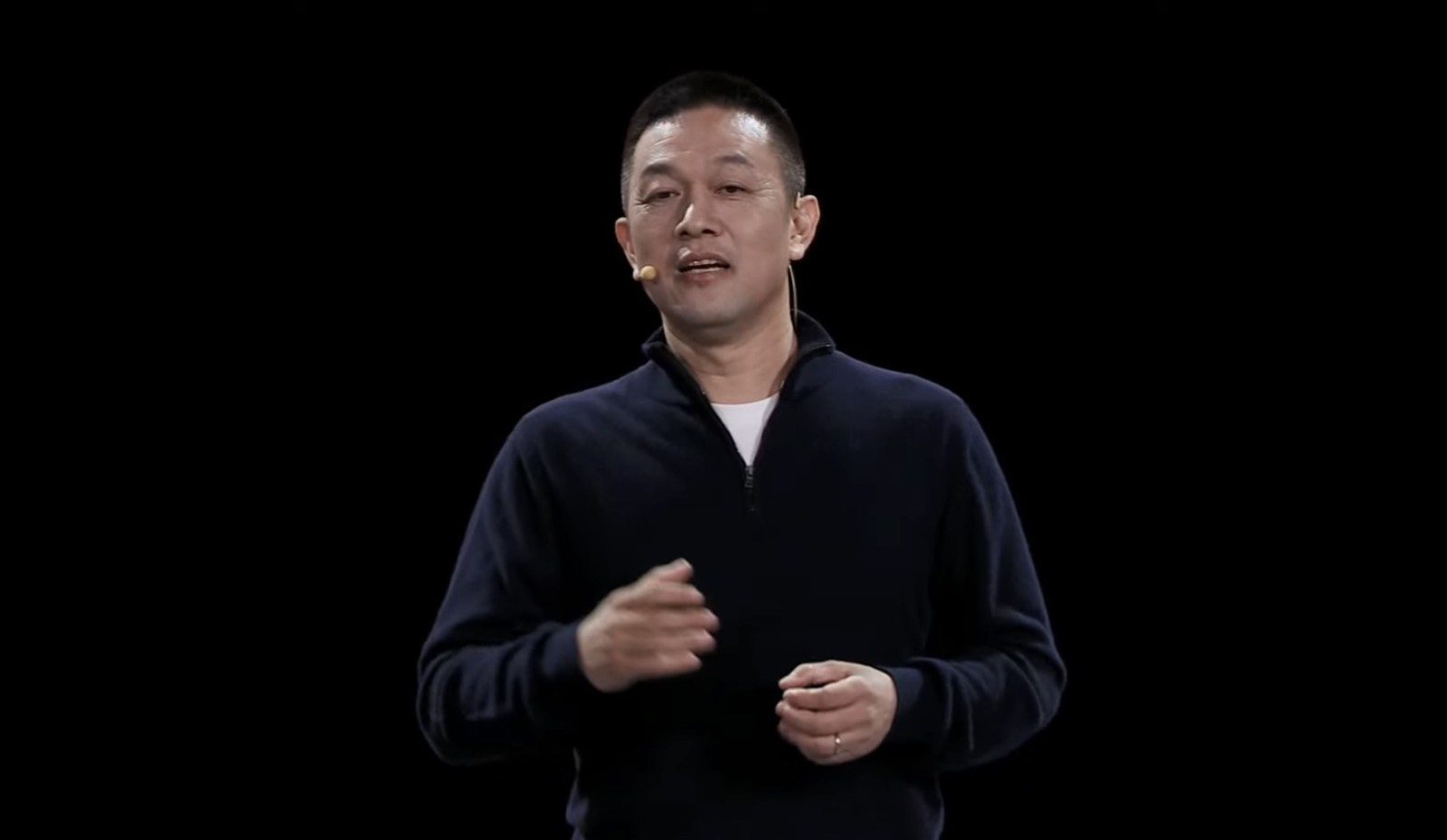
Speaking at the 2026 China Auto Chongqing Forum late last week, Nio‘s founder and CEO William Li positioned the company as entering what he called its third stage of development — a high-quality growth phase anchored by profitability.
The Shanghai-headquartered EV maker is pursuing its first full year of profitability after posting its first-ever quarterly profit in the fourth quarter of 2025.
The company slipped to a narrow net loss of 332.1 million yuan ($48.1 million) in the first quarter of 2026, reversing the prior quarter’s result — but remained profitable on an adjusted basis, reporting an adjusted net profit of 43.5 million yuan ($6.3 million).
Management affirmed a single full-year financial target of positive non-GAAP operating profit for 2026.
The founder has reiterated the company’s goal of achieving 40% to 50% growth in deliveries, despite adding that the broader auto industry should be mentally prepared for a 15% to 20% decline in full-year retail volume.
“China’s auto industry has entered the most brutal phase of the finals starting from 2026,” Li said at the forum, describing a shift from what he called a brand chaos period into a brand clarification period.
Year-to-date deliveries reached 150,526 units through May, up 68.7% from the same period last year.
Of those, only 403 were exports, according to figures published monthly by China’s Passenger Car Association (CPCA).
Nio more than doubled its market presence in Europe throughout 2025, introducing both new markets and its sub-brand Firefly in the continent.
Additionally, it switched to a dealership business model, which allows the company to cut costs in fixed infrastructure, while leveraging from local distributors’ sales networks.
Despite that, the company’s European vehicle registrations have continued to plunge.
As EV exclusively reported earlier this year, Nio‘s sales data across Europe have been distorted by its subscription model.
The company also told owners late last month that it has no plans to ship new iterations of its models to European markets until late 2027.
Nio‘s global full-year target stands at 456,000 to 489,000 vehicles, representing 40% to 50% growth from 2025.
Li admitted in a media interview on Monday that “in all the years I’ve been in the auto industry, this year is truly the most difficult one.”
Margins Anchored by ES9 and ES8
Nio is banking on a product cycle led by its two flagship SUVs to sustain the margin trajectory.
Vehicle margin climbed for a fourth consecutive quarter to 18.8% during the first three months of the year, aided by the success of the third-gen ES8 SUV.
The ES9 launched on May 27 at prices starting from 498,000 yuan ($73,400) with the battery included, and buyers of its top trims face wait times of 16 to 17 weeks.
Bank of China International expects the ES9 to stabilize at 3,000 to 4,000 monthly deliveries, driving combined ES8 and ES9 volumes above 10,000 units per month.
The third-generation ES8 has been a key profit driver.
Co-founder and President Qin Lihong has said the model carries a 20% gross margin, generating approximately 80,000 yuan ($11,600) in gross profit per unit.
On the mass-market side, Onvo’s L80 five-seat SUV delivered 5,949 units within 15 days of its May 15 launch.
The revamped 2026 L90 began deliveries on May 9 as the first Onvo model to offer LiDAR.
Nio has also rolled out 2026 model year updates across its ET5, ET5 Touring, ES6, and EC6 lineup, with prices unchanged.
Long-Term Volume Distribution
William Li said late last month he expects Onvo will become the group’s majority seller long-term, targeting the sub-brand to eventually account for 55% of total vehicle sales under a long-term 35-55-10 brand mix.
However, the company’s founder also noted on Monday that building new brands remains far more difficult than the company had anticipated, citing the family-targeted sub-brand as an example.
Per-vehicle costs at Onvo have risen by more than 10,000 yuan ($1,450), Li said, with the impact on selling prices reaching roughly 15,000 yuan ($2,180) after taxes and other increases.
Battery raw materials including lithium have also risen significantly, compounding the cost pressure.
Earlier this year, Li stated that Onvo’s brand awareness is at the same level as Nio’s in 2019 — when the company nearly went bankrupt.
Battery Swap Deployment
Despite the cost pressures, Nio has not pulled back from infrastructure spending.
CEO William Li reaffirmed the target of deploying 1,000 battery swap stations this year and 3,000 additional stations through 2028.
The company ended 2025 with 3,676 stations and has guided to a year-end range of 4,500 to 4,600.
Much of the 2026 deployment is expected to be back-loaded, with roughly 450 stations planned for the fourth quarter alone — nearly half the full-year target in a single quarter.
The acceleration hinges on the rollout of fifth-generation stations, which are scheduled for mass deployment in the third quarter after repeated delays.
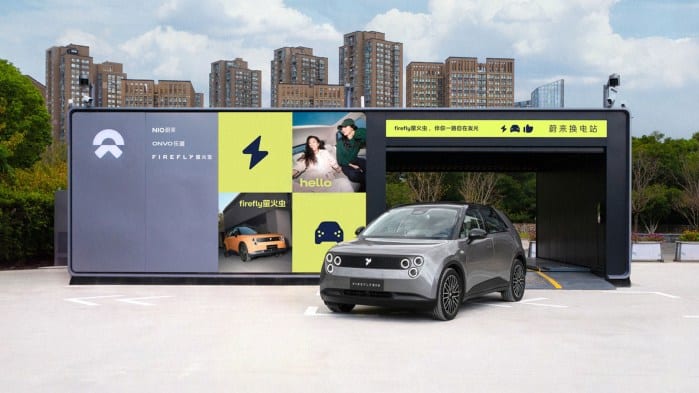
The new stations will allow Firefly vehicles to be integrated within the battery swapping network for the first time since the brand’s launch.