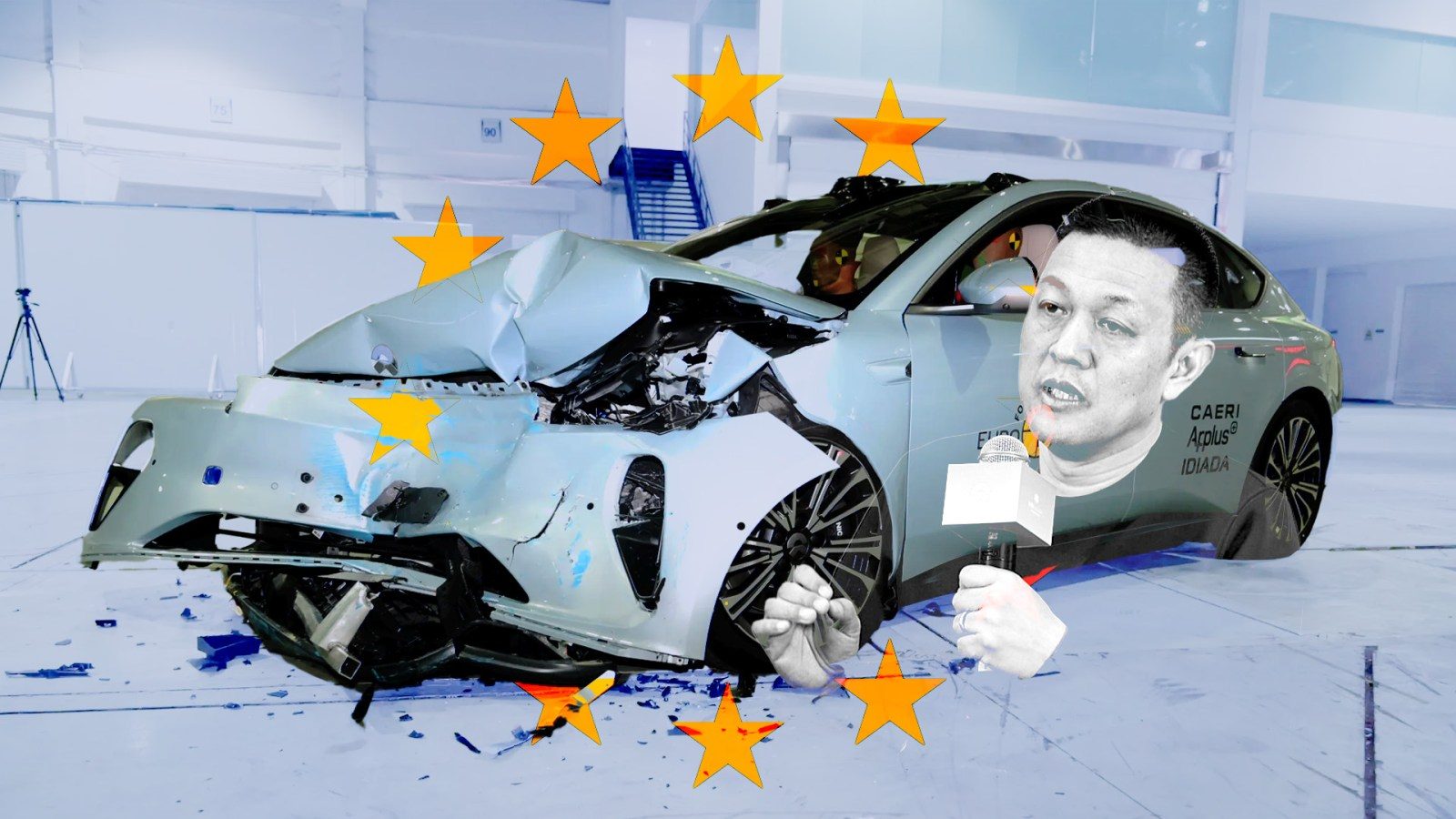

Nio used a customer event in the Netherlands this week to address mounting frustration among its European owners, as the Old Continent plays an important role in the company’s ambition to sell “several thousand” electric vehicles outside China this year.
One of the attendees told EV on Tuesday that the session left owners more alarmed, describing a strategy with no near-term new models, no price cuts and no further infrastructure.
The updates from the May 26 software roadmap and Q&A session align with what EV has documented over the past several months.
The session was led by Chris Chen, who heads Nio‘s Global Business department.
EV exclusively reported in March that Nio had split its European management into six departments and shifted toward a dealer and distributor model, with Norway and a new Europe sales division moved under Chen’s department in China.
No New Models Before 2027
According to the attendee, Chen said Nio would not launch vehicles larger than the ET7 sedan in Europe, would not bring its NT2.5 platform to the region, and would not introduce next-generation NT3 models until late 2027 or early 2028.
When NT3 arrives, Nio is planning to repeat its current approach: selling older model-year stock in Europe while reserving newer platforms and facelifts for China.
That description matches EV‘s reporting.
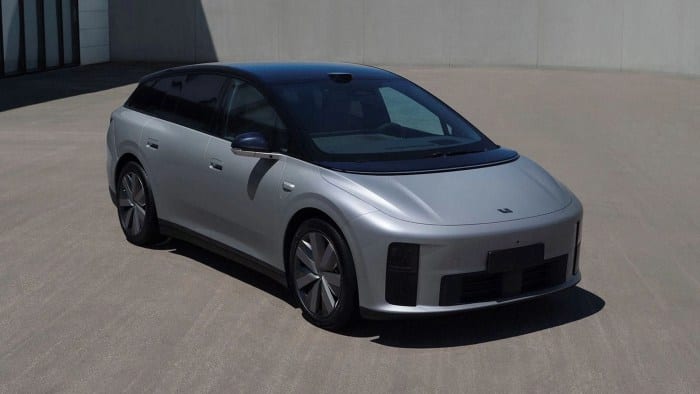
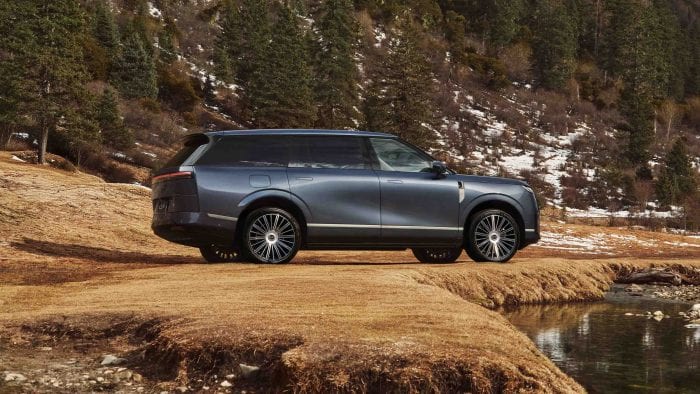
Nio currently sells only NT2.0-generation cars in Europe — the ET5 sedan, the ET5 Touring wagon, the EL6 SUV and the EL8 SUV — all of them 2023 or 2024 model-year vehicles built in China and exported to Europe, where the company has worked to clear them through incentives.
The brand has gone without a new or updated model in the region since the second-generation EL8, sold as the ES8 in China, arrived in 2024.
Meanwhile, Nio has moved on at home. It refreshed its lineup in China in the first half of 2025 and launched the third-generation ES8 there last September, neither of which has been announced for Europe.
The result is a structural mismatch: European buyers are offered years-old technology while competitors refresh their ranges, and Nio still carries 2022 and 2023 model-year stock it needs to clear to avoid inventory write-downs.
The current inventory level is undisclosed.
Onvo’s Uncertain European Future
The account said Nio might launch its Onvo sub-brand in only certain European markets, and potentially without the Battery-as-a-Service model.
Dropping BaaS for Onvo would remove the need to build new swap stations to support newer platforms.
BaaS is not currently offered for Nio‘s newest entry vehicles in Europe, and no local distributor has announced plans to build battery swap stations in any of the new markets such as Hungary, Romania, Portugal, among others.
Pricing and BaaS Frozen
The attendee told EV that Chris Chen indicated Nio would not reduce BaaS pricing in Germany, which is the highest of all markets, marking a leading barrier to purchase.
The company also would not build new battery-swap stations or charging infrastructure in Europe, ruling out fourth- or fifth-generation swap stations, according to the account, shifting instead toward third-party service partnerships.
That claim echoes EV‘s earlier reporting that Nio‘s battery-swap expansion in Europe had stalled amid investment cuts.
According to the attendee, the European management acknowledged that Nio would only free up marketing budget by selling its existing stock of NT2-generation cars in Europe, yet struggled to sell those cars without marketing in the first place.
Software at the Center
The event was called largely in response to anger over software, according to the account.
The attendee said the previous update, Banyan 2.4.3, arrived in April, six months after the prior version, and mainly added system-language support for Hungary, the Czech Republic, Poland and Romania — markets where the Nio brand does not yet sell cars — rather than fixing existing problems.
The next major update is not expected until the fourth quarter of 2026, bringing minor changes such as navigation contrast adjustments, highway rest-stop information, playlist sorting in Tidal and incremental improvements to phantom braking, a recurring driver-assistance complaint in Europe, according to the same source.
Updates would fall to one or two a year under current budgets, according to the attendee, who said that when owners asked about bug fixes, the company indicated there was no budget for them.
A Widening Technology Gap
The account described a growing divide between Nio‘s software in China and in Europe, a split EV has documented.
European cars, built on the NT2.0 platform, run a local version of Nio‘s Banyan operating system.
Newer vehicles in China have moved to a newer system, Cedar, which debuted with the flagship ET9 sedan, and the company has been pushing frequent updates to its Chinese fleet across both systems.
Nio first rolled out its New World Model assisted-driving software in China in late May 2025, through a Banyan update there, with the Cedar system following weeks later.
The attendee said European cars run an early, largely rule-based version of the driver-assistance software, while Chinese vehicles run a far more advanced version built on machine learning, and that Nio does not expect to bring NWM to Europe until around 2030.
Nio‘s founder and CEO William Li said last week that another NWM upgrade is due in China in June.
April Sales Underline the Problem
The account fits a steep sales slide that EV has documented through official registration data.
Nio registered just 45 vehicles across its ten European markets in April, a seven-unit decline from a year earlier, when it operated in only five countries and sold only its premium brand.
Germany, once seen as a key market, recorded a single registration, down 18 from a year earlier.
The Nio brand failed to register a single vehicle in the Netherlands for the first time since it entered that market in October 2022. The five newest markets, all entered through distributors, contributed nine units combined.
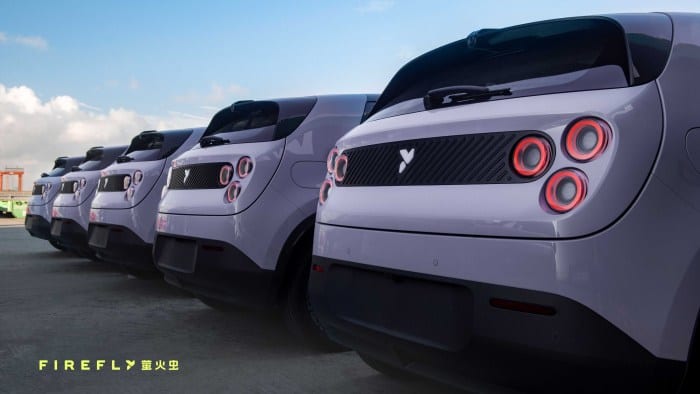
Norway, Nio‘s strongest European market and the only one exempt from EU tariffs, managed 26 units, 22 of them Nio-branded and four from Firefly, still a three-unit decline from a year earlier.
For the full year 2025, the Nio brand’s registrations across its five original markets fell 31% to 1,129 vehicles.
In Norway, the group registered about 520 vehicles in 2025, missing its 1,500-unit target by roughly 65%.
The Tariff Backdrop
In the European Union, Nio faces a 20.7% countervailing duty on top of the bloc’s standard 10% import tariff, a combined 30.7% levy that raises prices in markets such as Germany and the Netherlands.
Norway, outside the EU, carries no such duty, which makes its plateau especially telling: even without a tariff penalty, Niohas been unable to build momentum there.
Management Churn
The customer account’s picture of disarray coincides with verified leadership turnover and cost-cutting.
EV exclusively reported that Nio Germany’s chief, David Sultzer, was ousted earlier this year after the brand’s weakest sales month since entering the country, and that the company’s German head of sales and operations, Sven Conrad, also departed after three years.
The departures followed others.
In October, EV exclusively reported that Benjamin Steinmetz, a key figure in Nio‘s product-experience strategy for international markets, had resigned, citing personal reasons, weeks after the brand’s Southern Europe chief left.
The exits came amid a broader restructuring of Nio‘s European and US operations that included investment cuts and layoffs across multiple departments, as the company pursued its first profitable quarter.
An Earlier Admission
Nio executives have previously conceded missteps in Europe, in terms that closely track the customer account.
In February, Mark Zhou, Nio‘s executive vice president and chairman of its product committee, acknowledged that the company made fundamental miscalculations expanding from Norway into the broader EU in 2022.
He said its Norway success had not translated, and that the markets, consumers and governments were “totally different.”
Zhou’s account of the product mismatch foreshadowed the parking remark the customer attributed to Chen this week. “Our European colleagues kept telling us, your car, our cars are too big,” Zhou said, adding that maneuvering in narrow areas was “really painful.”
He also said Nio had underestimated the cost and speed of building its swap network in Europe, and that the region’s stricter data-privacy rules required adaptation.
Customers Say They Feel Abandoned
The Nio owner’s sharpest criticism concerned how existing owners are treated.
Nio announced in February that it had partnered with DHL to handle aftermarket logistics across Northwestern Europe, with the logistics company managing storage, distribution and customs clearance of parts from a campus in Holtum, the Netherlands, in a deal both sides said would deliver “fast delivery times.”
The attendee said that in practice, owners still wait up to two months for a part as simple as a parking sensor.
The account also said owners had warned Nio as early as 2024 and 2025 against expanding its network of Nio Houses and showrooms, describing the spaces as little-used and costly, and that the company pressed ahead anyway.
Nio operates flagship locations across Germany, the Netherlands and the Nordics, including a store on Amsterdam’s Leidsestraat.
Recent reporting supports the concern.
German magazine Manager Magazin reported in April that Nio was seeking subtenants for its four flagship German showrooms, in Berlin, Frankfurt, Düsseldorf and Hamburg, as it tried to exit long-term leases on the large-format sites, which pair car displays with cafés, lounges and co-working space rather than conventional dealership floors.
The retreat followed the brand’s registration of just eight vehicles in Germany in the first quarter.
The attendee said owners felt unheard and that some were now steering potential buyers toward rival brands offering newer technology at lower prices.
Co-founder and President Qin Lihong has said Nio aims to sell “several thousand” vehicles overseas in 2026, with larger expansion over the following two to three years.
Nio has said a written summary of the session will be released.