
Lucid Motors sold 1,055 vehicles in the United States in June, up 26% from 840 units a year earlier, according to estimates published on Thursday by Motor Intelligence.
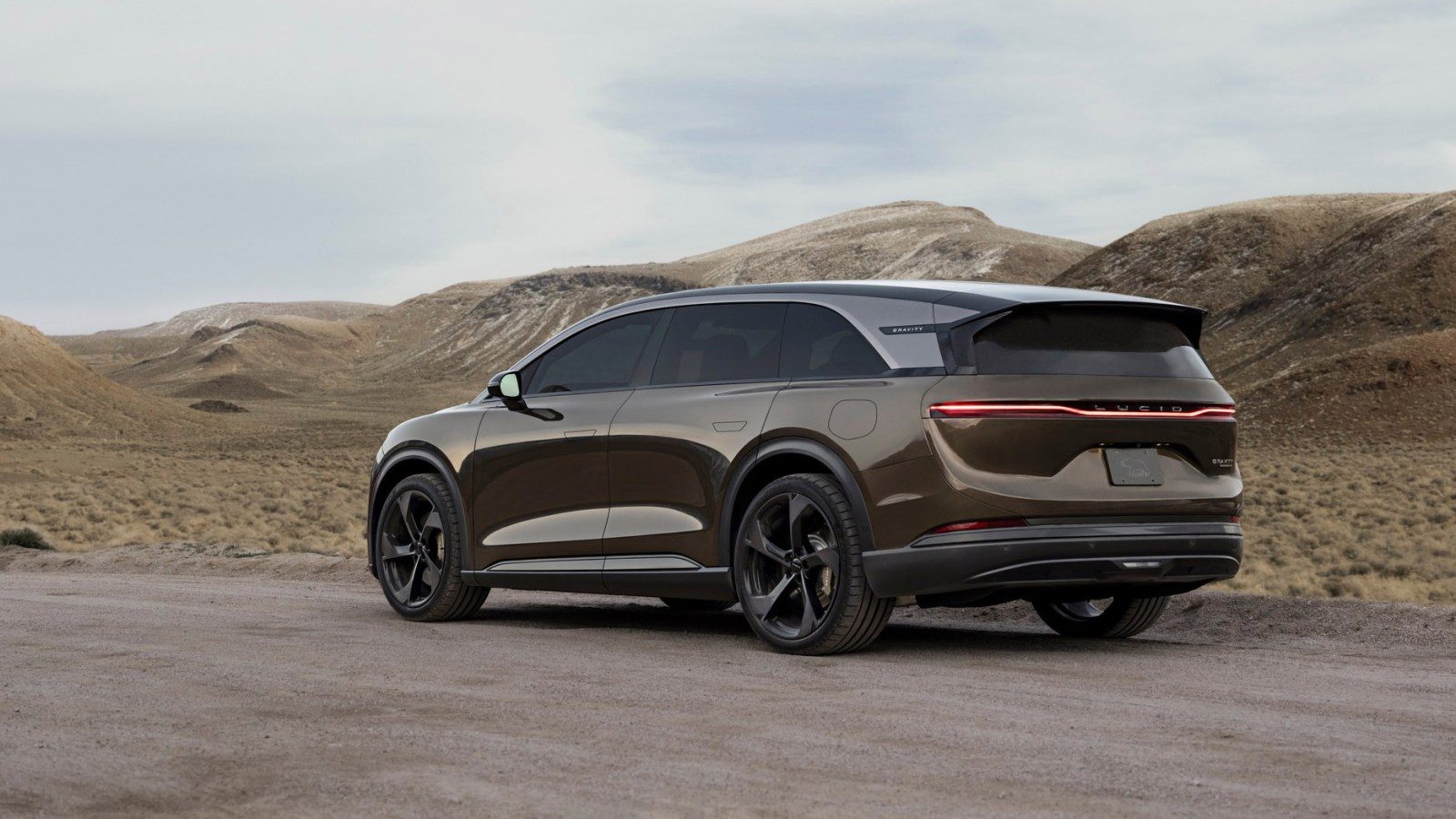
The result marked the strongest monthly volume since February, driven almost entirely by the Gravity SUV, which posted its highest monthly sales figure since deliveries began.
June’s total represented a 17% month-over-month increase from the 905 vehicles sold in May, snapping a three-month stretch below 950 units.
On a quarterly basis, however, the picture was mixed.
Second-quarter US sales totaled an estimated 2,800 vehicles, up 7% from 2,635 in the same period a year ago, when the Gravity SUV was not yet moving volumes.
However, the figures are down 44% from the 4,985 units recorded in the first quarter — mostly explained by a delivery halt, followed by a recall on nearly all Gravitys produced to date in April.
For the first half of 2026, Lucid sold an estimated 7,785 vehicles in the US, up 54% from 5,047 between January and June 2025.
The year-over-year monthly pattern has been uneven — January and February produced gains of 156% and 86%, March through May flattened at -5%, +2%, and -7%, and June’s 26% rise broke the trend against a weak prior-year base.
By then, Lucid was still a single-model company.
Diverging Model Trajectories
The model-level split reveals growing dependence on its second model, the Gravity SUV.
The Lucid Gravity accounted for an estimated 775 of June’s 1,055 sales — roughly 73% of the total.
Air sedan sales, however, fell to an estimated 280 units, down 67% year over year.
The sedan volumes have sat below 330 in every month since March, compared with a range of 685 to 975 through the same months last year.
For the full second quarter, Air sales totaled an estimated 880 units versus 2,630 a year ago — a 67% decline.
Gravity sales came in at an estimated 1,920, up from just five units in Q2 2025.
Across the first half, the Gravity accounted for 3,541 units versus the Air’s 3,352 — the first sustained period in which the SUV has outsold the sedan in Lucid’s home market.
Lucid does not break out delivery figures by model.
Promotions Remain Aggressive
Lucid continues to run broad purchase incentives across both models.
The Air Pure carries 0% APR for up to 60 months and up to $9,500 in Lucid Credits for cash purchases, alongside a $2,000 conquest offer and a $4,000 trade-in allowance.
Lease pricing starts at $649 per month.
The Gravity Touring offers 0% APR for up to 72 months, the same conquest and trade-in incentives, and up to $5,000 in Lucid Credits.
Lucid also introduced a Lucid Care maintenance plan covering two years or 24,000 miles for new purchases from April 1 onward.
The incentive stack reflects pressure to move inventory at a time when the company’s average selling price has roughly halved since 2022.
Recall, Delivery Halt, and Lawsuit
The first half of 2026 was shaped by a major disruption in the company’s deliveries.
In January, Lucid discovered that some second-row seat belt anchors had been improperly welded — a defect traced to its seat supplier Camaco Automotive.
The EV maker issued a stop-sale and froze Gravity deliveries for 29 days earlier this year.
The recall, filed with the National Highway Traffic Safety Administration (NHTSA) on March 26, covered 4,476 Gravity vehicles — every unit produced through February 14 — and disclosed the first Gravity-specific production figure ever made public.
Last month, Pomerantz LLP filed a federal securities class action against Lucid, alleging that then-interim CEO Marc Winterhoff and CFO Taoufiq Boussaid made materially misleading statements while the disruption was underway.
A second, unrelated physical recall followed weeks later, covering 3,627 Air sedans over a half-shaft disengagement issue.
Software Issues Continue
The Gravity’s hardware problems arrived on top of persistent software complaints that have dogged the model since deliveries began in late 2024.
Key fob recognition failures, frozen screens, and navigation malfunctions prompted Winterhoff to email Gravity customers in December 2025 acknowledging the company had fallen short.
He confirmed at CES weeks later that the entire software leadership team had been replaced.
On Tuesday, Lucid shipped yet another key fob firmware update — extending a sequence of at least eight releases aimed at a problem the company’s own executives have called embarrassing.
Hands-free driving for the Gravity was repeatedly delayed and finally arrived in June through the UX 3.6 update.
Within weeks, owners reported intermittent hands-free failures introduced by the same release, with customer-service representatives telling affected drivers a patch was days away.
Restructuring and COO Firing
The sales figures land amid the deepest restructuring in Lucid‘s history, as new Chief Executive Officer Silvio Napoli — appointed in April after a 14 month-long search — took over.
Last week, EV exclusively reported that Lucid cut 18% of its US workforce — the fourth formal layoff since 2023 and the second this year.
The round was the first to sweep in hourly production workers, eliminating the second shift at Casa Grande.
A state filing showed 705 of those jobs are at the Arizona plant.
Lucid said the cuts would save approximately $158 million annually. The company is also weighing a reduction of up to 40% in its European operation.
The same day, EV exclusively reported that Lucid had pushed out COO Marc Winterhoff — the former interim CEO who led the company for 15 months before Silvio Napoli took over on June 1.
Winterhoff had returned to the COO seat barely three weeks earlier. Lucid said it was eliminating the role entirely.
Days before, SVP of Engineering and Software Emad Dlala departed after nearly 11 years, bringing the tally of C-level and VP exits since October 2023 to 15.
Lucid shares traded at approximately $6.65 on Wednesday, up from an all-time low of $4.47 reached on June 11 but still down roughly 50% year to date.
The stock has lost more than 99% of its value from its 2021 peak on a split-adjusted basis.
Robotaxi Programme Advances
Against the operational turbulence, Lucid‘s robotaxi partnership with Uber and Nuro has continued to advance.
CEO Napoli said last month that the company is preparing to build the first production-validation robotaxis at its Arizona factory.
Nuro operates a fleet of approximately 100 Gravity engineering vehicles and has secured both a California DMV driverless testing permit and a CPUC pilot permit for the Gravity platform.
Uber has expanded its purchase commitment to at least 35,000 vehicles and raised its total investment in Lucid to $500 million.
Commercial launch remains targeted for the San Francisco Bay Area in late 2026, with Houston confirmed as the second market for a mid-2027 start.
Separately, Uber is exploring Lucid and Nuro as a potential partner in Phoenix after its Waymo-powered robotaxis disappeared from the app there — though Phoenix does not yet appear in the programme’s stated roadmap.