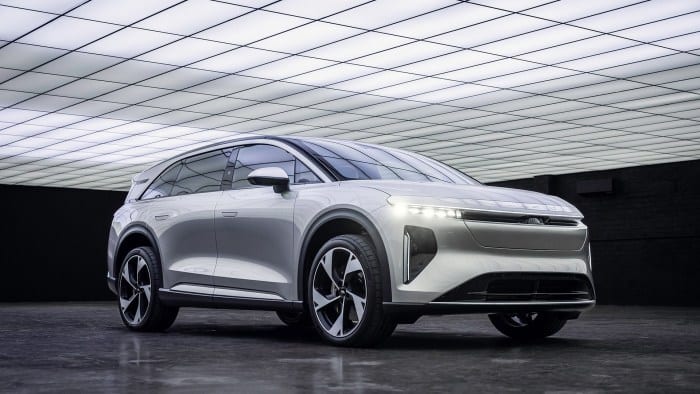

Lucid is preparing a follow-up software update to repair bugs introduced by the largest over-the-air release of the year, customer-service representatives told owners this week — three weeks after the UX 3.6 update began reaching the Gravity SUV.
The patch, identified by representatives as version 3.6.2, would address an intermittent failure of the hands-free driving system that multiple owners began reporting within days of installing the new software.
According to a thread dedicated to the issue on LucidOwners Forum, representatives also told customers the update would carry a key-fob firmware fix, according to accounts posted on a widely read independent owners’ forum.
Lucid has not formally announced 3.6.2 or a release date, and the company did not detail the scope of the fix beyond what owners said they were told by phone.
Since the very first produced units in late 2024, owners have reported numerous software issues, including slow boots, blank screens, and a key fob that the car often failed to recognize.
Emad Dlala, the Powertrain chief promoted into the crisis to run all of engineering and software, left earlier this month after nearly 11 years, days after new chief executive Silvio Napoli took over.
The Flagship Update
The Saudi-backed EV maker positioned UX 3.6 as a milestone, the update that finally brought hands-free driving to the Gravity after the capability slipped through multiple deadlines, first set for 2025.
For vehicles equipped with the DreamDrive 2 Pro hardware, the release added Hands-Free Drive Assist, which manages steering, acceleration and braking on compatible highways, along with Hands-Free Lane Change Assist and automatic lane changes that let the SUV overtake slower traffic and return to its lane.
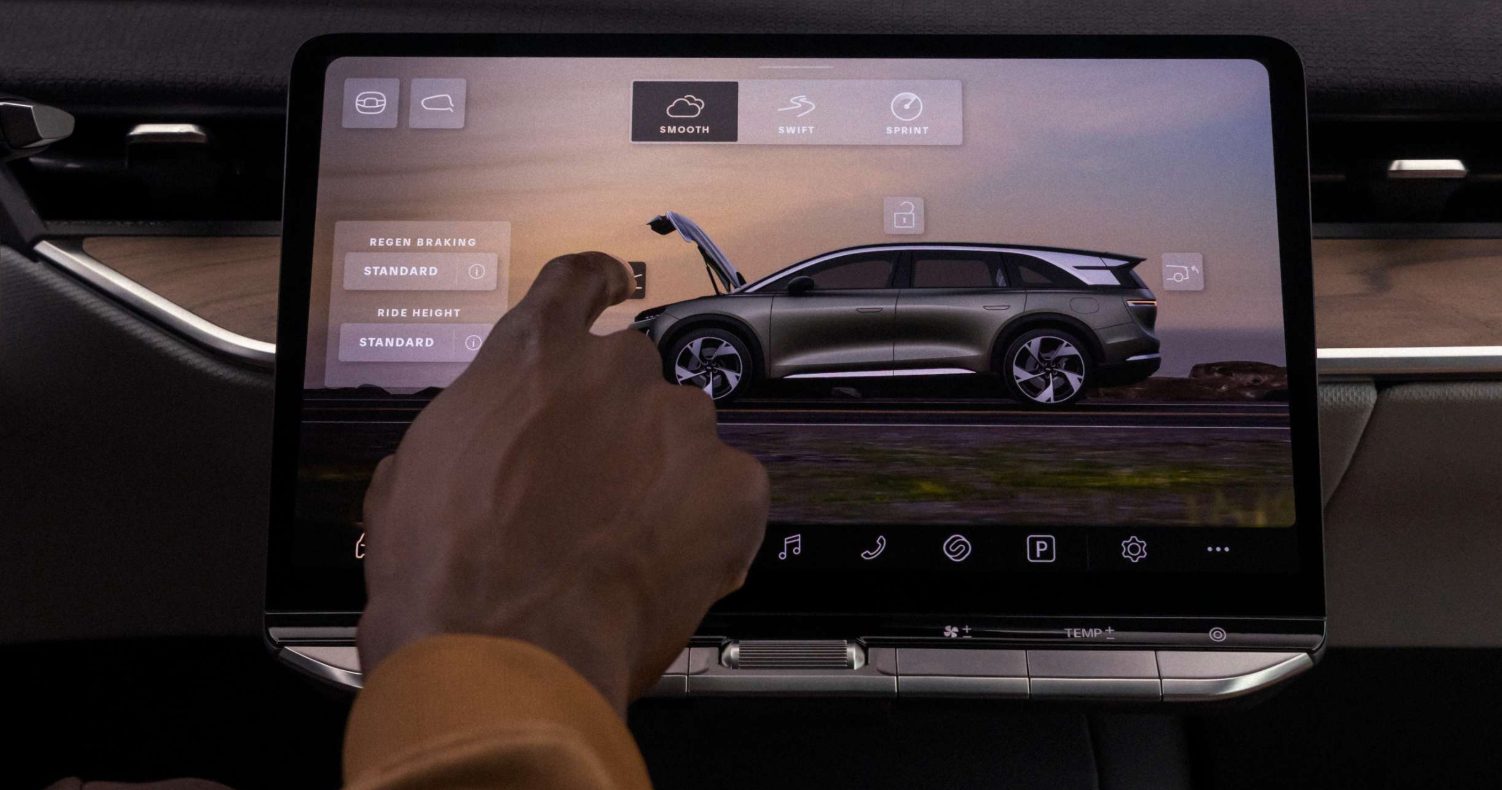
The update also introduced selectable driving styles, a five-lane traffic visualization in the cockpit display, an Adaptive Driving Beam for night driving, a Google Maps Places search integration, new charging and energy-management tools, and what the company described as a smoother system startup and earlier door-handle deployment.
The New Complaints
Within days of the rollout, owners began reporting that the hands-free system they had just received was cutting out without warning.
One Grand Touring owner wrote that the feature had been “inconsistent, at best” since installing 3.6, describing assist that dropped out, recovered on its own, then failed again until it stopped working altogether.
Another owner said the hands-free steering-wheel icon disappeared from the display four days after the update, removing access to the system on the highway.
A separate driver reported that the assistance suite began to “ping-pong all over the place” on a trip through Oregon, with the display showing phantom vehicles that cleared only after the car’s exterior sensors were wiped down.
A fourth owner said a hands-on version of the driver-assistance feature flagged itself unavailable on the freeway for about an hour before returning on its own.
A Patch Promised by Phone
Owners said they learned of 3.6.2 the same way, by calling the company about the broken feature and being told a fix was imminent.
One owner wrote that a representative said an update was coming “in the next few days” and would resolve the fault, adding that the agent described other callers reporting identical symptoms.
The Grand Touring owner whose assist had failed since installing 3.6 gave a near-identical account after a separate call, saying a representative pointed to another over-the-air update within a couple of days but was not certain it would fix the problem.
Both owners said they asked, half in jest, to have their vehicle identification numbers moved to the front of the line for the patch.
A Familiar Pattern
The episode lands against a software record that has shadowed Lucid for more than a year and repeatedly outrun its own fixes.
Then Interim chief executive Marc Winterhoff told reporters in January that the Gravity would be “over the hump” by the end of the first quarter, after the company shipped a run of over-the-air updates targeting the key fob and related faults.
The senior executive who oversaw the work later said a subsequent update had resolved 90% to 95% of the issues flagged by customers and reviewers, a claim that has been tested by each new wave of complaints since.
Lucid had already drawn a fresh round of criticism in the spring, when owners reported persistent key-fob, navigation and climate faults despite the promised fixes, as EV reported, and a separate viral wave of Gravity complaints followed the company’s earlier updates.
The pattern has carried a measurable cost, with one prominent reviewer accepting a buyback of his sedan after a string of recurring faults, a case the company has acknowledged.
The Leadership Toll
The software failures have already cost Lucid much of the leadership that built its first two cars.
Chief engineer Eric Bach, who launched the Air and the Gravity across a decade at the company, was forced out in November 2025 as exclusively reported by EV and has sued for wrongful termination, a case the company called absurd and that is now stayed pending arbitration.
Emad Dlala, the Powertrain chief promoted into the crisis to run all of engineering and software, left earlier this month after nearly 11 years.
Following the exit, the company said VP of Vehicle Engineering Vivek Attaluri and VP of Software Marc Solsona Palomar would report directly to Napoli, removing the senior layer Dlala had occupied and placing the driver-assistance organization one step closer to the new chief executive.
Within the same window, the manager responsible for the camera and sensing hardware behind the DreamDrive platform left for Apple after nearly five years, just as the hands-free feature he helped build reached customers.
Demand and the Stock
Software has become one of the central drags on demand for a brand whose hardware reviewers consistently praise.
The Gravity won the 2026 World Luxury Car of the Year, and the Air holds the longest range rating of any production EV, yet potential buyers have repeatedly cited reliability of the in-car software as a reason to wait.
The strain has shown up in the share price, which hit a new all-time low of $4.47 in June before a relief rally that extended past 23% over two sessions, driven by cost cuts and an above-consensus delivery preview rather than any turn in the underlying business.
Even after that bounce, the stock remained down about 38% for the year, a slide that has tracked weak demand, a leadership exodus and heavy cash burn, as EV reported.
The same DreamDrive software underpins a planned robotaxi service with Uber and Nuro, built around a self-driving Gravity the company has targeted for San Francisco roads by the end of the year.
The architecture is also meant to carry into the Cosmos, the sub-$50,000 midsize platform on which the company is staking its move beyond the low-volume Air and Gravity.