
Porsche said on Monday it will eliminate 9,000 jobs by 2035 after management and labor representatives agreed to a second restructuring package, deepening cost cuts at the German luxury carmaker as sales in China continue to fall and its EV strategy stalls.
A deal reached after months of negotiations adds 5,000 positions to the roughly 4,000 already earmarked under Chief Executive Michael Leiters, who took over at the start of the year with a mandate to overhaul the business.
Porsche and its works council said in a joint statement that the additional cuts avoid compulsory redundancies, relying instead on natural attrition and voluntary departure schemes.
Leiters had already moved to shrink the headcount through a first package of about 3,900 reductions in the Stuttgart region by 2029, the expiry of roughly 2,000 fixed-term contracts and the closure of three subsidiaries affecting another 500 employees. Monday’s agreement more than doubles the scope of that program.
The company’s Supervisory Board approved the additional workforce reductions during its meeting last Wednesday.
Handelsblatt had earlier reported that up to 4,000 additional jobs could go under the second package, falling most heavily on management and administration, with about 30% of capacity at Weissach under review.
Alongside the cuts, both sides agreed to keep all Porsche sites open for another five years, through the end of 2035.
Porsche and the works council also announced €2.1 billion ($2.4 billion) in investment in the brand’s main factory at Stuttgart-Zuffenhausen, where the 911 is built, and its research and development centre in Weissach.
Financial Collapse
Leiters inherited a brand in sharp financial decline.
Porsche‘s 2025 revenue fell to €36.27 billion from €40.08 billion, while operating profit collapsed to €413 million from €5.64 billion a year earlier, cutting the operating margin to roughly 1%.
About €3.9 billion in exceptional charges tied to a retreat from the brand’s original electric-vehicle strategy, battery-related costs and US tariffs drove the bulk of the erosion.
Additionally, sales have continued to slide.
Porsche delivered 122,306 vehicles worldwide in the first half of the year, a 16% decline from 146,391 a year earlier and the brand’s weakest first-half performance in six years.
China, once Porsche‘s most lucrative single market, saw deliveries plunge 32% to just 14,501 vehicles — fewer than the 14,938 handed over in Germany.
Leiters scrapped his predecessor’s ambition of selling 350,000 to 400,000 cars a year and called the first restructuring package insufficient.
This year, Porsche has guided to revenue of €35 billion to €36 billion and an operating return on sales of 5.5% to 7.5%, absorbing a further €800 million to €900 million in restructuring costs and about €700 million in US tariff-related charges.
An EV Strategy in Retreat
Porsche‘s electric-vehicle plans have also narrowed under Leiters.
Bloomberg reported earlier this year that the brand was weighing shelving the planned battery-electric versions of the 718 Boxster and Cayman, citing budget constraints from the China slump, US tariffs and rising development costs.
Leiters has not made a final decision on the models.
Production of the fully electric Cayenne SUV began in February at Volkswagen Group‘s plant in Bratislava, Slovakia, with customer deliveries starting at the end of June.
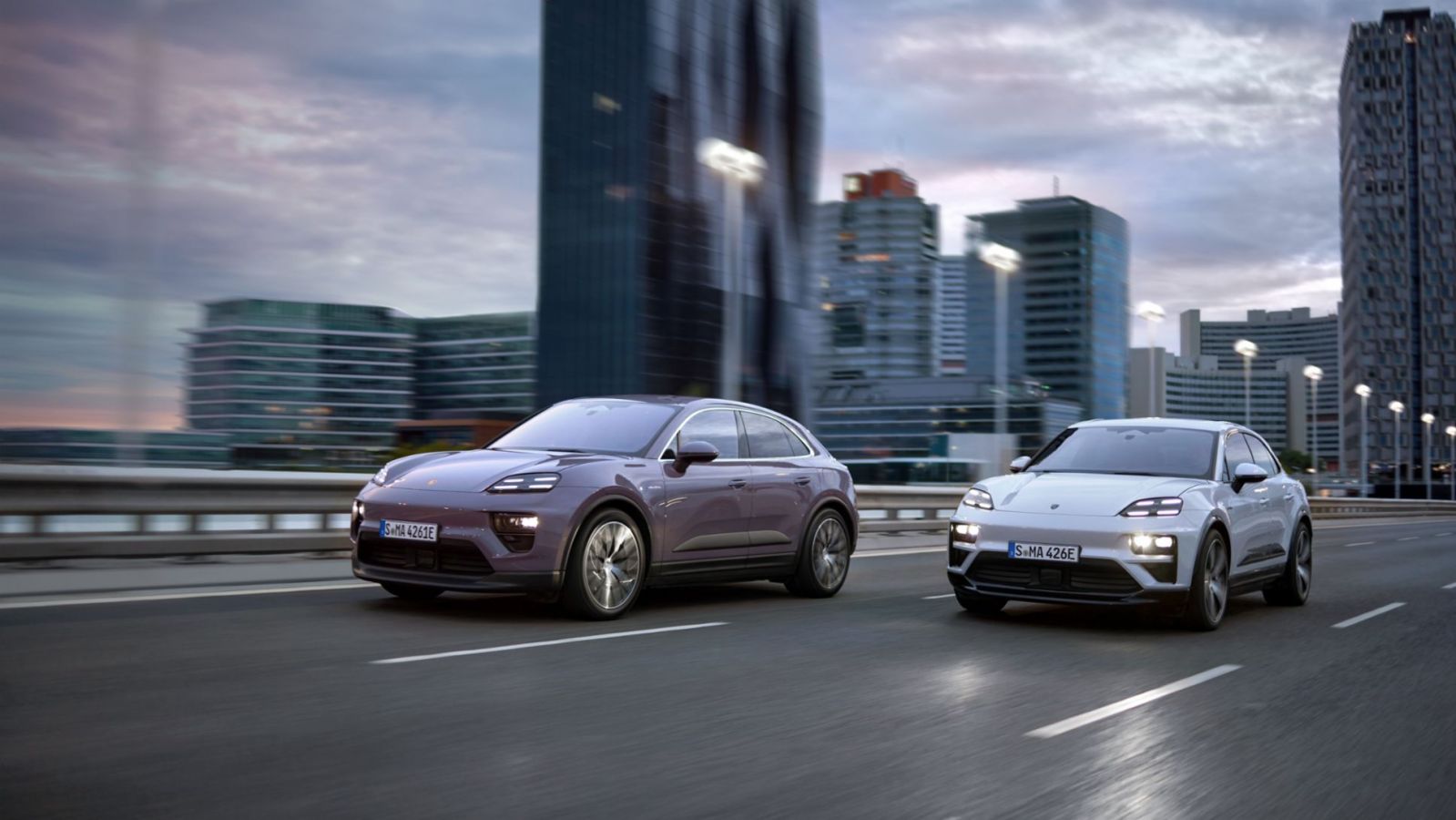
Porsche now builds three fully electric models — the Taycan, the electric Macan and the electric Cayenne — but continues to sell combustion-engined Macans in most markets outside the European Union.
Electric Macan deliveries reached 15,620 units in the first half, part of a total Macan line that fell 22% to 35,315 vehicles.
Taycan deliveries dropped 25% to 6,219. Only the 911 grew, climbing 19% to 30,534 deliveries on strong demand for GTS, Turbo and GT variants.
A Wider VW Group Overhaul
Porsche‘s restructuring forms one piece of a far larger cost program across parent Volkswagen Group.
Leiters’ predecessor, Oliver Blume, ended a dual leadership role that had drawn investor criticism and now leads the group exclusively.
Blume is pushing to double group-wide job reductions to as many as 100,000, measures he has described as necessary to remain competitive as more Chinese brands come to Europe.
Volkswagen had agreed with unions in late 2024 to cut 50,000 jobs in Germany by 2030, but Blume told staff in a July memo that a cost gap of about 20% versus rivals implied a further 50,000 positions on top of those already agreed.
Labor representatives blocked the plan at a supervisory board meeting earlier this month, and Lower Saxony, the group’s second-largest shareholder, has sided with unions against factory closures.
Blume has also warned that four of the group’s German factories, including one belonging to premium brand Audi, face closure after 2030.
Volkswagen brand chief Thomas Schäfer has confirmed that defense-sector partnerships rank among the active fixes for European overcapacity, casting outright plant closures as a last resort.
German Luxury Under Pressure
Mercedes-Benz and BMW are also cutting costs as all three German luxury carmakers navigate the shift to electric vehicles, absorb US tariffs and face intensifying competition from Chinese rivals.
BYD, Chery, SAIC and Leapmotor doubled their combined European market share through May from a year earlier, pressing into what had long been the German industry’s home turf.
Volkswagen‘s namesake brand wholesaled 593,000 vehicles in China during the first half, a 34.5% year-over-year collapse, in a market where foreign automakers’ combined share has fallen to 32% from 57% in 2020, according to AlixPartners.
Porsche said further details on its Strategy 2035 would come at a capital markets day in the autumn.