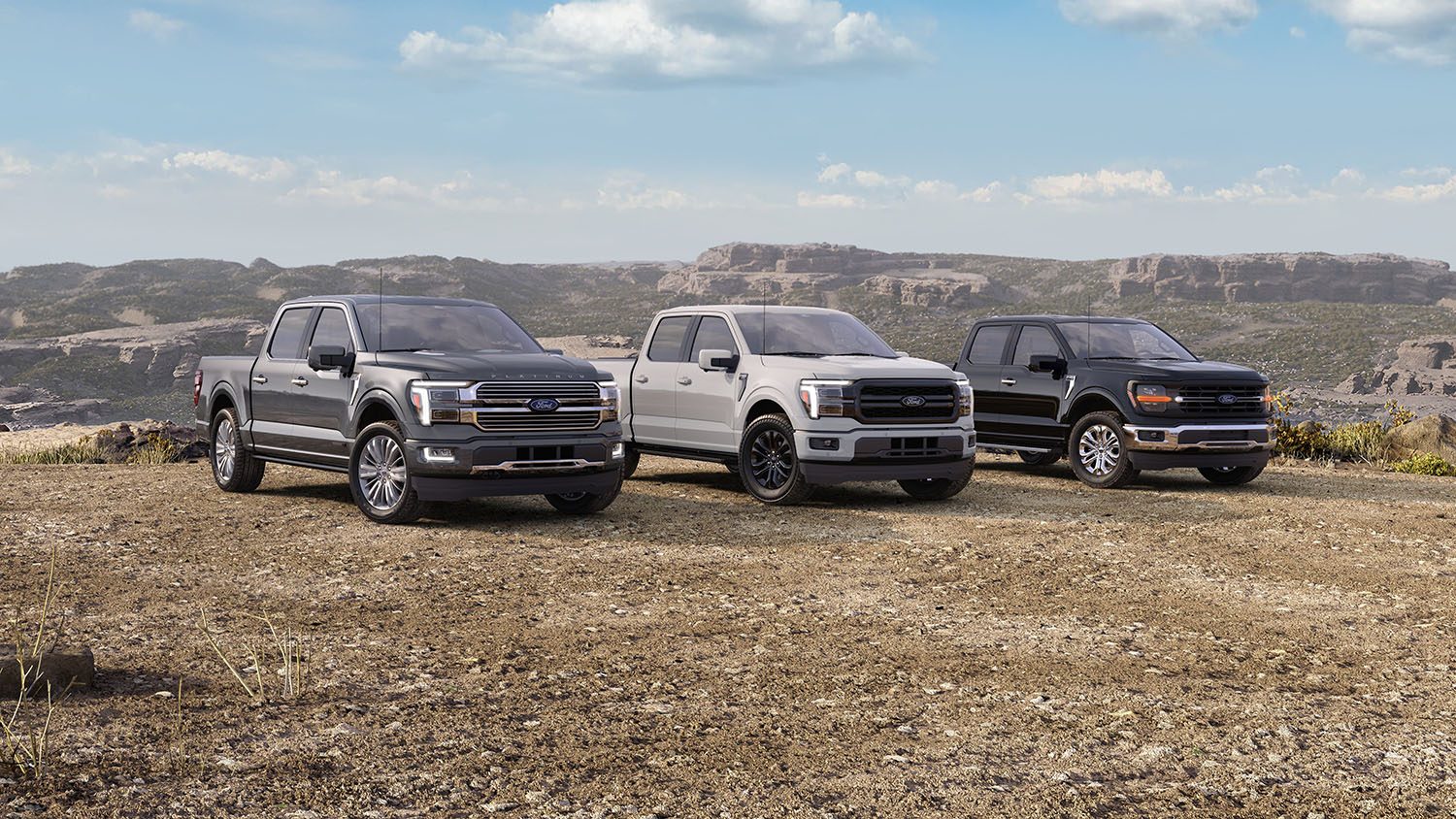

Ford said on Monday that it has entered the competition to build the US Army’s newest tactical truck, and will develop three prototypes based on its F-Series Super Duty pickup.
The Wall Street Journal, which reported the move, said the automaker has secured a contract with the Department of Defense for the prototype work.
The company said it is excited to work on the project and looks forward to “delivering several incredibly capable vehicle prototypes that demonstrate the value Ford can provide” to the Army and to soldiers, without characterising the arrangement as a contract or naming the programme.
The vehicle is intended to serve as a troop carrier that doubles as a mobile power source, a role The Wall Street Journaldescribed as a “stealthy power bank on wheels.”
Entering the competition is Ford‘s most substantial military vehicle pursuit in decades and the first concrete step in a defence push the company began signalling in April.
Shortly after WSJ‘s report, Ford shares were edging higher at $14.46.
The disclosure comes a day before Ford reports second-quarter results, scheduled for Tuesday at 4:05 p.m. ET with a management call at 5:00 p.m. ET.
What Ford Has Committed To
Neither Ford nor the Department of Defense has published a contract value, an award date or a programme designation, and the company has not said whether the work is funded or conducted at its own expense.
The company holds no major military contract at present, supplying engines and components to defence contractors rather than complete platforms.
Chief executive Jim Farley opened the subject on the first-quarter earnings call on April 29, telling analysts the company was in “early discussions with the US government on some defense related needs.”
Ford followed on May 18 with a blog post confirming that several governments in North America and Europe had approached the company beginning the previous year.
The argument set out in that post is a cost-and-speed one.
Purpose-built military hardware “takes years to develop and costs billions,” the company wrote, while commercial off-the-shelf vehicles give governments equivalent capability far faster.
Pro Power Onboard, the integrated generator system that turns a pickup into a mobile power supply, was named as a capability traditional military vehicles cannot match.
The Programme
The Army opened a Commercial Solutions Opening in late March for the Infantry Squad Vehicle–Heavy, a platform intended to replace the Humvee while serving as both troop carrier and mobile power supply.
A subsequent solicitation issued through Army Contracting Command–Detroit Arsenal under notice W912CH-26-S-C005 set a requirement for 606 vehicles.
Procurement documents describe a platform carrying a six-soldier squad and supplying up to 60 kilowatts of exportable power for communications, drones, electronic warfare and command systems, deployed with Mobile Brigade Combat Teams.
The power requirement is the element that opens the competition to commercial pickups, and the reason Ford has led its pitch with onboard generation rather than with payload or protection.
Army Secretary Dan Driscoll has named both Ford and General Motors as manufacturers the Pentagon wants to engage, citing their production scale against stockpile depletion driven by the war in Iran and continued support for Ukraine.
Ford has been building toward the opportunity on the product side as well, launching a Ranger Super Duty aimed explicitly at European defence procurement in May.
European governments and converters “are increasingly looking for off-the-shelf vehicles that deliver the extreme capabilities required by the military,” product chief Jim Baumbick said at the time.
General Motors Is Years Ahead
General Motors unveiled its own ISV-Heavy in 2024, built on the heavy-duty version of the Chevrolet Silverado, and military officials have been field testing that vehicle in recent months.
The gap between the two companies is measured in years rather than months.
GM Defense has operated since 2017 and already supplies the standard Infantry Squad Vehicle, derived from the Colorado ZR2, with roughly 1,200 units ordered by the Army against procurement objectives running to 10,000 more.
Chief executive Mary Barra told analysts on GM‘s second-quarter call last week that the defence unit expects to win more than $1 billion in contracts, on 2026 revenue of about $700 million, with positive earnings before interest and tax and annual revenue growth above 30.0%.
GM Defense also supplies armoured Suburban Shield vehicles to the US State Department’s Diplomatic Security Service, holds a contract with the Qatar Armed Forces, and has held talks with Lockheed Martin over weapons components.
Smaller entrants are circling the same opening, with Slate Auto in early talks with US defence procurement officials over low-cost, market-ready vehicles.
Electrified Army
Exportable power is the capability the Army is buying, and that capability comes from the electrified side of both companies’ engineering.
Pro Power Onboard reaches its highest output on hybrid and battery-electric variants, and the quieter running and lower thermal signature of electrified drivetrains are precisely the attributes that make a vehicle suitable for silent watch.
The complication for Ford is that its highest-output configuration is no longer available.
The company discontinued the F-150 Lightning late last year as part of an EV restructuring that carried a $19.5 billion impairment, removing the variant that offered the largest onboard generation capacity in the lineup.
How Ford intends to reach military-grade power export from a Super Duty base has not been disclosed.
Financially, defence work answers a problem the company has been describing for two years.
Ford‘s Model e unit lost $4.8 billion in 2025 and is guided to lose $4.0 billion to $4.5 billion this year, with profitability pushed out to 2029, while the commercial Ford Pro division is guided to $6.5 billion to $7.5 billion of EBIT.
Government fleet revenue is less cyclical than retail vehicle sales, and the defence pitch is built entirely on Ford Pro assets rather than on the consumer business.
The company’s next affordable EV, a $30,000 midsize electric pickup on the Universal EV platform, arrives in 2027 and shares the onboard-power engineering the military programme depends on.
What Comes Next
Prototype contracts do not guarantee production awards, and the Army has not indicated when it will select a platform for the 606-vehicle requirement.
Ford also has no defence subsidiary comparable to GM Defense, no track record delivering to Army specifications in the modern era, and no disclosed revenue target for the segment.
The company named Matt VanKuiken chief government affairs officer effective August 3, a hire that lands as the defence work moves from conversation to contract.
Farley faces analysts on Tuesday having entered a competition his closest competitor joined two years ago with field-tested hardware and a billion-dollar forecast behind it.
Whether Ford attaches a number of its own to the opportunity is the question the call is likely to turn on.