
A few days after Lucid revealed that Nuro had received a permit to test driverless Gravity robotaxis in California, the AV tech company announced that it secured a second key state permit for deployment.
Nuro announced on Friday that it has secured a California Public Utilities Commission (CPUC) Drivered Pilot Permit, allowing it to conduct pilot testing of autonomous passenger service with a safety driver, while carrying passengers on public roads.
The permit builds on another key milestone — Nuro’s California Department of Motor Vehicles (DMV) Driverless Testing Permit, which the company has held for six years now, has been extended to also cover Lucid Gravity vehicles.
That extension was first disclosed by Lucid‘s outgoing interim CEO Marc Winterhoff during the company’s first-quarter earnings call earlier this week — and later confirmed by the California DMV.
Nuro’s existing driverless permit previously covered only the low-speed autonomous delivery vehicles the startup operated before pivoting to licensing its technology to ride-hailing partners.
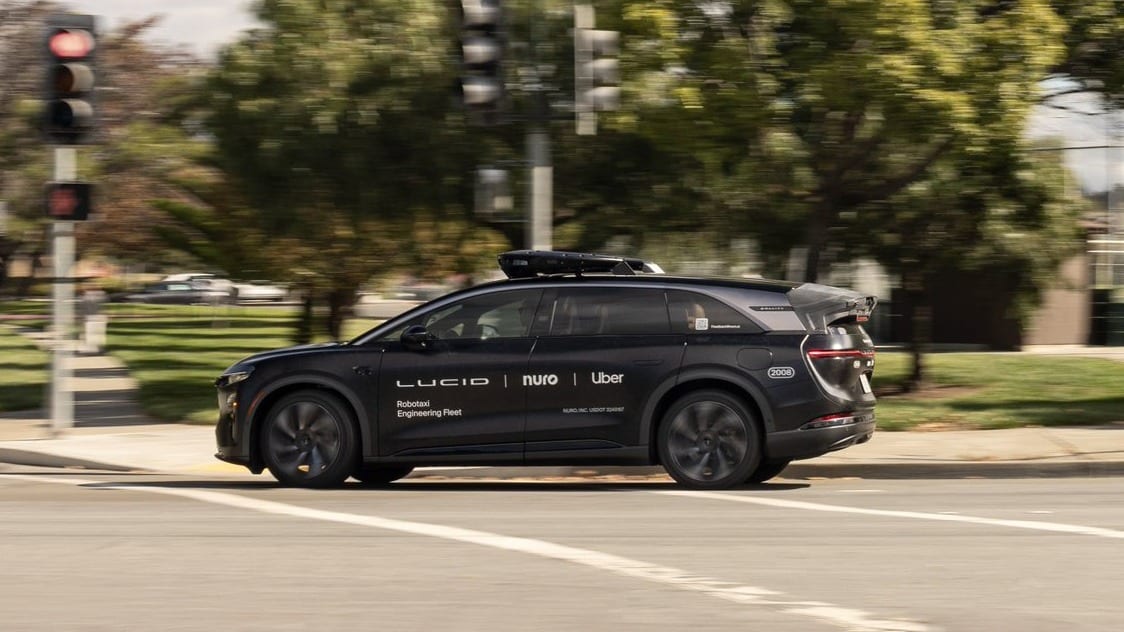
The SUVs are equipped with Nuro’s autonomous driving tech and will be integrated in Uber‘s ride-hailing fleet.
Uber has been steadily expanding its commitment to the Lucid-Nuro robotaxi program.
The ride-hailing company increased its purchase commitment to at least 35,000 vehicles last month — up from the original 20,000 Gravity SUVs agreed under the July 2025 deal — while investing an additional $200 million in Lucid, raising its total stake to $500 million.
What the Permits Allow
The two permits allow for the company to test driverless vehicles and, separately, to carry passengers during pilot operations.
Neither of the permits authorizes paid rides, and the CPUC Drivered Pilot Permit does not allow for driverless passenger operations.
It remains unclear whether driverless operations of the vehicles would still include someone inside the vehicle, in the co-pilot seat, for instance.
Speaking with TechCrunch earlier this week — and despite the DMV permit — Nuro spokesperson David Salguero reaffirmed the company’s timeline for driverless testing, saying it remains on schedule to begin later this year.
The commercial service is expected to launch in the San Francisco Bay Area in late 2026, the same target Lucid‘s management and Nuro have maintained since the partnership was announced.
Uber has also formed a dedicated Autonomous Vehicle Services unit to support the program’s infrastructure, including fast-charging hubs at autonomous depots and a real-time fleet management system.
For now, Nuro and Uber are testing the Lucid vehicles in autonomous mode with a human safety operator in the driver’s seat.
Fleet Size and Testing Expansion
Nuro operates a fleet of “nearly 100 robotaxi engineering vehicles” — which Lucid‘s management revealed earlier this week are actually 75 Gravity SUVs.
The AV tech company first disclosed the “nearly 100” figure in March.
During Lucid‘s debut Investor Day the same month, then-interim CEO Winterhoff said all engineering test vehicles for the program had been delivered.
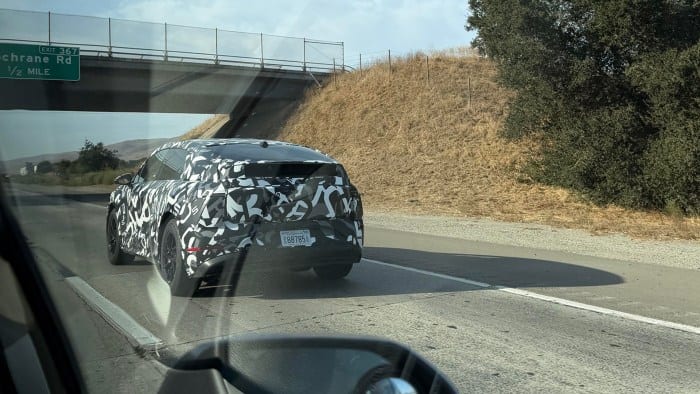
Autonomous on-road testing has been underway in the Bay Area since December, with vehicles also spotted in Houston — though neither Lucid nor Nuro has publicly confirmed the Texas city as a testing or deployment location.
Last month, that testing was expanded to allow Uber employees to request an autonomous ride in a Lucid robotaxi through the Uber app.
The employee ride program began in the San Francisco Bay Area and includes a safety driver on board.
Nuro described the rides as a way to evaluate the full rider experience — from requesting a ride in the app to pickup, the in-vehicle experience, and drop-off — ahead of commercial launch.