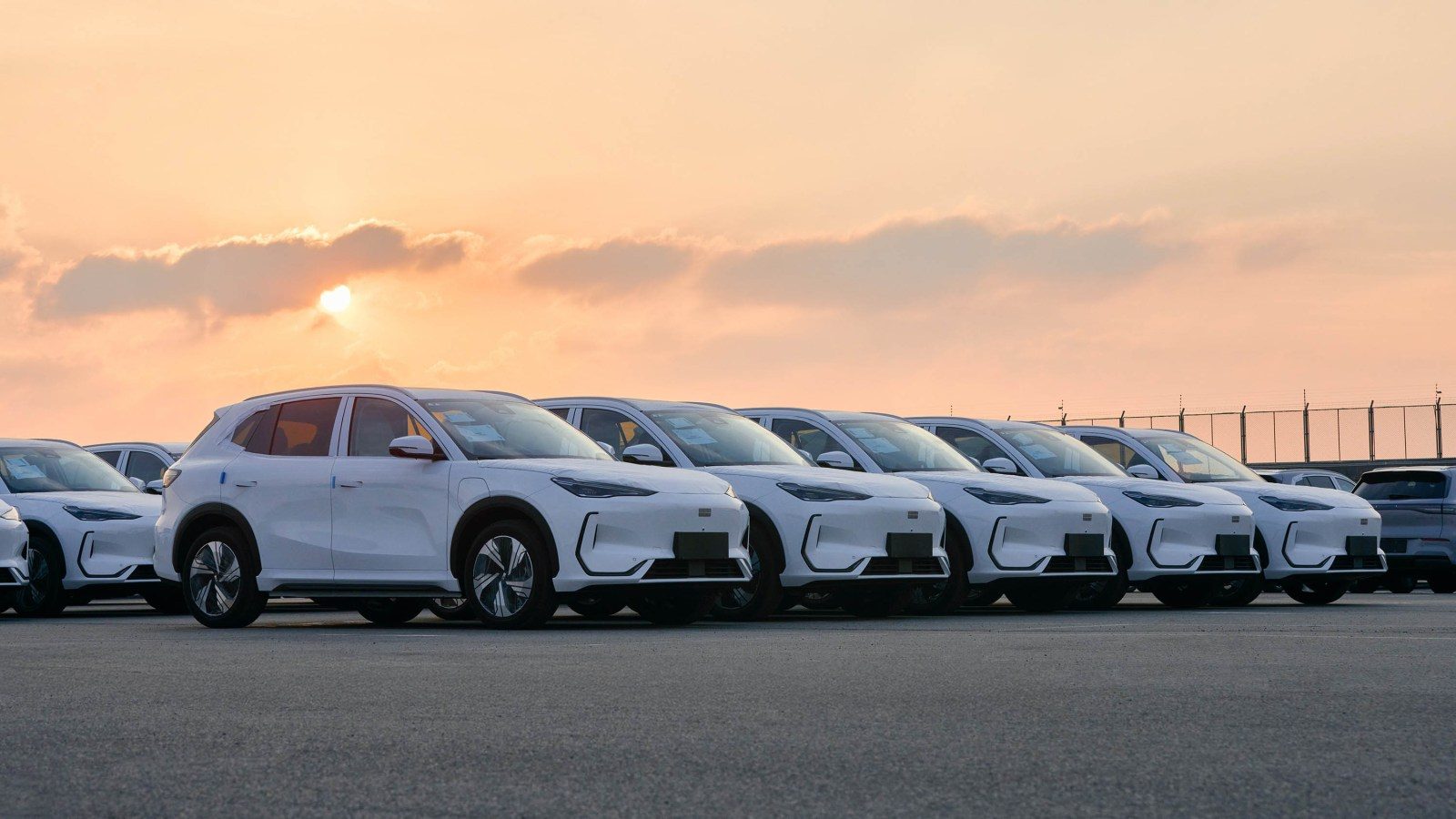

U.S. Senator Elissa Slotkin urged President Donald Trump on Tuesday not to invite Chinese automakers to build cars in the United States, two days before Chinese President Xi Jinping’s White House visit.
“This is quite literally an attempt by Chinese companies to get their foot in the door of the American market,” the Michigan Democrat wrote on X. “We should not give an inch.”
Later on Tuesday she posted a second message on Chinese support for Iran, pressing Trump on two fronts ahead of the summit.
Trump hosts Xi at the White House on Thursday for talks and a state dinner, the second meeting between the two leaders this year after their Beijing summit in May.
Plants as a First Step
In a video attached to the post, Slotkin said Trump had sent “lots of different signals” over the past year and a half on Chinese cars.
“Most recently, he’s saying no, he won’t let them sell cars here, but he would welcome them in to set up manufacturing plants in our states,” she said.
She gave three objections to Chinese-owned plants in the United States.
First, she said Chinese carmakers rely on a supply chain that “comes exclusively from China” rather than buying parts from American suppliers.
That overstates it for at least one carmaker. BYD says about half the procurement at its Thailand plant is sourced locally.
Second, she said data from the cars would “still” be sent back to Beijing rather than safeguarded in the United States.
Third, she called the plants “just step one.”
“What they really want is to be able to bring in their cars from China, assembled in China, and sell them in the United States,” she said. “They’re licking their chops to be able to do that.”
A Commerce Department rule finalized in January 2025 already bars connected vehicles from Chinese-controlled manufacturers even if they are built in the United States. Its software restrictions apply from the 2027 model year and its hardware restrictions from 2030.
BYD and the Car Market
Bloomberg reported that Chinese officials were considering BYD founder Wang Chuanfu for Xi’s business delegation, though the list was not final, a prospect that House China committee chairman John Moolenaar said on Friday meant BYD’s vehicles “have no place in the United States.”
Reuters reported that CATL and Gotion were also under consideration.
In Tuesday’s video, Slotkin said Xi would bring “the head of BYD” with him, and went further than the reports.
“You don’t bring along the CEO of a big Chinese car company if you’re not going to talk about negotiating around allowing Chinese cars to come in the United States,” she said.
Neither government has confirmed Wang’s attendance.
On September 17, Slotkin wrote on X that Wang’s presence would signal such talks. “As always, watch what the President does, not what he says,” she wrote.
Chinese automakers “propped up by the Chinese government” would “undercut our manufacturers and suppliers, wreak havoc on our industry, and take our jobs,” she added.
She put the stakes at 1.2 million Michigan jobs tied directly or indirectly to the auto industry.
The Pentagon added BYD to its list of companies it says are linked to China’s military in June. BYD has denied the allegations.
The same week, six industry groups wrote to Trump urging him to keep Chinese carmakers out of the United States. They included the Alliance for Automotive Innovation and the American Automotive Policy Council, which represents Ford, General Motors and Stellantis.
The White House replied that it was working with U.S. automakers to restore the industry’s dominance while safeguarding national and economic security.
Slotkin responded on X that the statement contained “a lot of words” but no pledge to keep Chinese car companies from setting up in the United States.
Treasury Secretary Scott Bessent took aim at BYD’s subsidies earlier this month. Transportation Secretary Sean Duffy wrote to Ford on September 8 urging it to cut ties with CATL, Geely and BYD.
Satellite Images and a Deadly Strike
In her second post on Tuesday, Slotkin wrote that “Chinese companies are fueling Iran’s war machine by buying oil, providing targeting information, and selling weapons and components to the Iranian government.”
“We now know that some of that targeting information may have led to the death of three U.S. soldiers,” she wrote, adding that Trump “should hold a firm line and push back” at the summit.
The post builds on a letter Slotkin sent Trump on September 18.
That letter cited a Wall Street Journal report that Iran acquired high-resolution satellite images of Muwaffaq Salti Air Base in Jordan from Chinese companies, both before and after a July 17 missile strike there that killed three US soldiers and wounded four others.
US officials cited by the Journal did not accuse the Chinese government of direct involvement and did not name the companies. Chinese officials denied the allegations and asked for evidence, the newspaper reported.
In the letter, Slotkin said China buys about 90% of Iran’s oil exports, citing the Treasury Department. She also pointed to Chinese-made drone components, missile propellant chemicals and shoulder-fired missiles reaching Iran.
The State Department sanctioned Chinese satellite imagery companies in May for providing images that it said enabled Iranian strikes on U.S. forces.
“Your insistence on rolling out the red carpet for our adversaries and kicking our allies in the teeth is beyond me,” Slotkin wrote to Trump.
Asked on September 13 whether he would raise the Jordan strike with Xi, Trump said, “I think he’s behaved reasonably well.”
A senior administration official told CBS News in response to the letter that “Iran has been decimated.” The official said nothing any outside actor was doing had increased Iran’s ability to target Americans.
A Month-Long Dispute
The exchange began on September 9, when Slotkin said she was hearing rumors that Trump planned to let Chinese cars be sold in the United States as part of a wider deal with Xi. She named no source.
Trump called the claim a “total phony rumor” in a Fox News interview on September 11. In the same interview, he said he would accept Chinese carmakers opening U.S. plants if they hired American workers.
Slotkin’s Connected Vehicle Security Act, written with Republican Senator Bernie Moreno of Ohio, would ban vehicles, software and hardware linked to China and other adversaries from the U.S. market. It cleared the Senate Commerce Committee unanimously in July and awaits a vote by the full Senate.
A House companion was introduced in May by Moolenaar and Michigan Democrat Debbie Dingell. Major carmakers urged Congress this month to pass the ban before year-end.
The bill’s 15% Chinese-ownership threshold could also reach Mercedes-Benz, whose two largest individual shareholders are Chinese.
Slotkin’s second bill, written with Representative Haley Stevens, would bar Chinese-brand vehicles from entering from Canada and Mexico. Canada has admitted Chinese EVs under a 49,000-vehicle quota since March, a structure Carney said in June that Trump “likes”.
Slotkin sits on the Senate Armed Services Committee and the Senate Homeland Security and Governmental Affairs Committee. She is a former CIA analyst and Pentagon official.