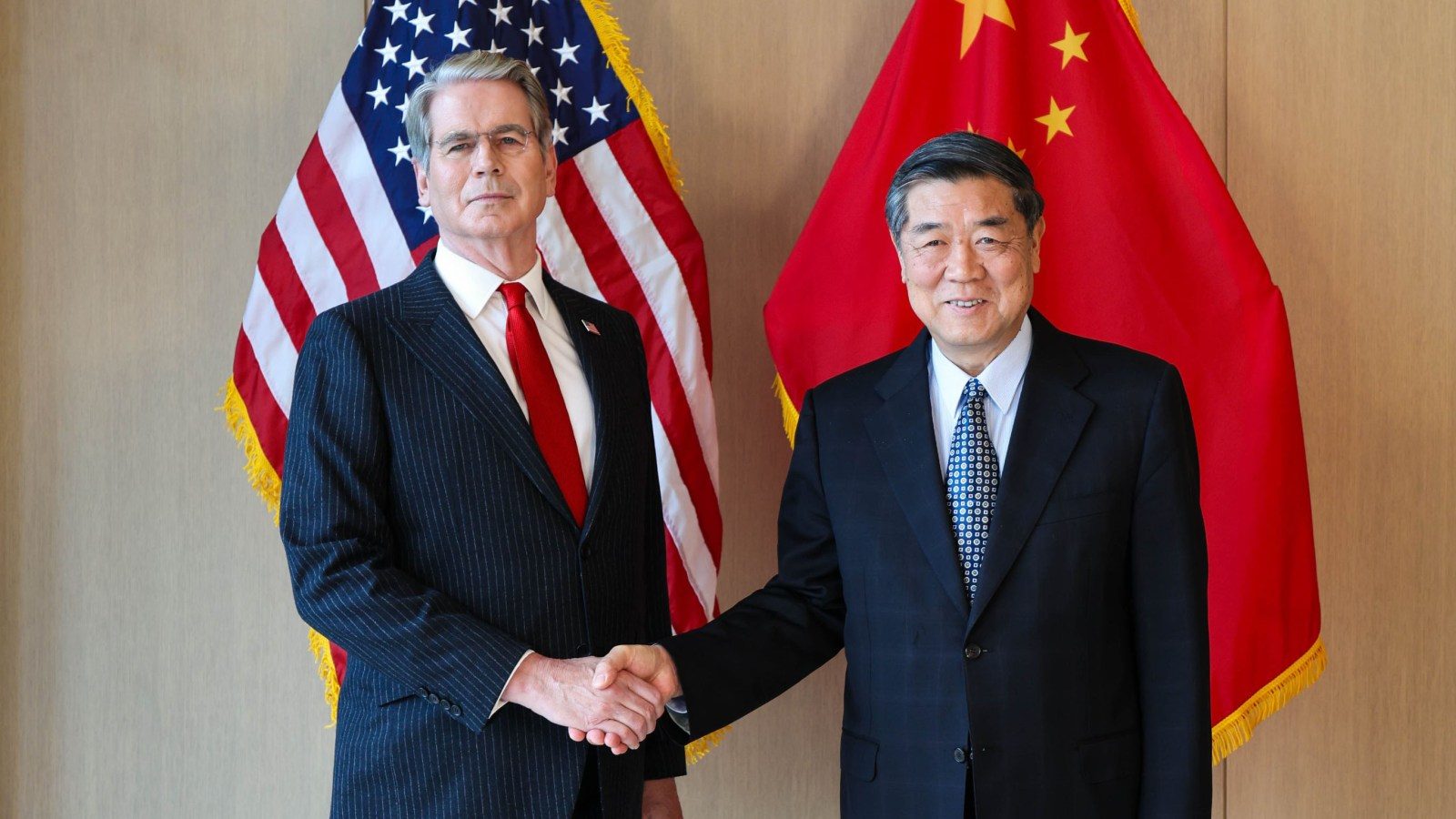

US-listed Chinese carmakers enter the week with their trade and their regulatory standing on the table in Washington, as Vice Premier He Lifeng opened economic talks with Treasury Secretary Scott Bessent in New York on Sunday, three days before Xi Jinping’s state visit.
“In New York City, Vice Premier He Lifeng and I are continuing our discussions on the U.S.-China economic and trade relationship ahead of @POTUS’ historic summit with President Xi in Washington,” Bessent wrote on X during the session.
“These talks help lay the groundwork for President Trump to advance America’s economic interests and deliver results for the American people,” the Treasury Secretary added.
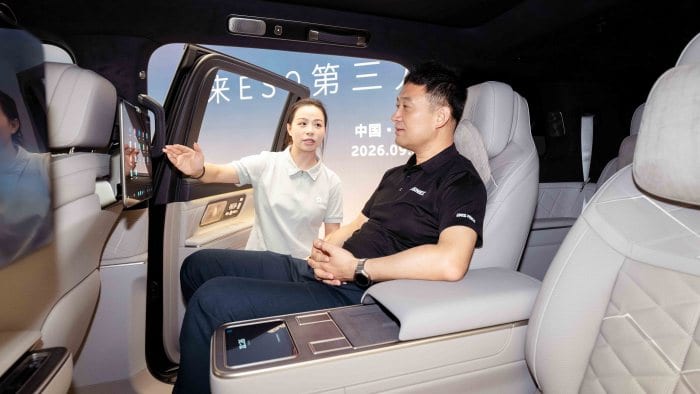
Nio, XPeng and Li Auto were down 28.2%, 47.6% and 28.3% for the year as of Friday’s close. Nio closed Friday at $3.66, XPeng at $10.62 and Li Auto at $12.14.
Zeekr, another Chinese carmaker, completed its merger with a subsidiary of parent company Geely Automobile Holdings and officially delisted from the New York Stock Exchange in December 2025.
None of the four companies have recently mentioned plans to enter the US market.
BYD has also faced scrutiny as it increases focus on sales outside China.
The chairman of the House Select Committee on the Chinese Communist Party John Moolenaar has recently said that BYD vehicles “have no place in the United States,” after reports that the carmaker’s founder may accompany Xi Jinping to Washington.
“The company’s vehicles are rolling data collection devices that endanger Americans and have no place in the United States,” Moolenaar said.
What Is Being Negotiated
China’s Vice Premier is in the United States from September 19 to 23, per China’s Commerce Ministry, and Sunday’s session at JPMorgan Chase’s headquarters, which also includes Trade Representative Jamieson Greer, was scheduled to run all day.
Bessent’s post gave no agenda and no outcome, and neither Treasury nor China’s commerce ministry had issued a readout by Sunday evening.
Reuters lists three item for Sunday’s meeting: the Busan trade truce that caps US tariffs on Chinese goods at about 20% and expires on November 10, Chinese rare-earth magnet flows that US officials said on Friday “have not been up to par,” and AI guardrails.
Beijing’s commerce ministry said on Thursday the two sides are still negotiating $30 billion of reciprocal tariff cuts each way on non-sensitive goods through the trade committee agreed at the Beijing summit in May.
The tariff that matters most for carmakers is the one being held back.
Bloomberg reported on Thursday, citing people familiar with the matter, that the administration will delay the results of its Section 301 investigation into industrial overcapacity until after the summit, a delay that “could preserve such a threat as leverage.”
The report is expected to recommend a 7.5% tariff on Chinese goods, according to the same people, though the Trade Representative’s office has published nothing.
The investigation’s premise, that China maintains “production capacity that exceeds its domestic needs,” is the same charge the American auto industry put to Trump in a letter on Thursday asking him to keep Chinese carmakers out.
None of it changes what Nio, XPeng or Li Auto can sell in the United States, which is nothing, because two separate measures already close the market.
The first is the tariff. Chinese-built electric vehicles have carried a 100% Section 301 duty since September 27, 2024, when the Biden administration raised it from 25%, on top of the standard 2.5% import duty. The truce under negotiation caps other Chinese goods at about 20% and does not touch that rate.
The second would bar the cars even at zero tariff.
A Commerce Department rule finalised on January 14, 2025 prohibits connected vehicles containing Chinese-developed software for their connectivity or automated-driving systems from being imported or sold in the United States from the 2027 model year, and extends the ban to the hardware from the 2030 model year.
The rule also bars manufacturers owned or controlled by China from selling connected vehicles in the United States at all, including cars built in American factories.
Every BYD, Xiaomi, Nio, XPeng and Li Auto runs its own software stack, and every one is a connected vehicle.
Congress is moving to put the rule in statute through the Connected Vehicle Security Act, which passed the Senate Commerce Committee unanimously in July with a January 1, 2027 effective date.
So the tariff keeps the cars out today, and the software rule keeps them out whatever happens to the tariff. What this week changes is the environment in which the shares trade, not what the companies can sell.
Pressure Reaches American Partners
The hostility to Chinese carmakers in Washington is no longer confined to imports.
On September 8, Transportation Secretary Sean Duffy wrote to Ford CEO Jim Farley saying the company’s dealings with CATL, Geely and BYD raised “profound concern,” and urged Ford to cut ties.
The letter singled out the Marshall, Michigan battery plant, where Ford builds lithium iron phosphate cells under a technology licence from CATL, a structure Ford chose precisely to avoid a joint venture, and said the department was “deeply alarmed” by the reliance on a company on the Pentagon’s list.
That letter came from the executive branch, in the same fortnight that Trump told Fox News he would welcome Chinese carmakers building in America.
For the three listed Chinese carmakers, the Ford letter matters less for what it says about Ford than for what it says about the standard.
CATL was designated in January 2025 and is Nio’s principal cell supplier and battery partner.
The Listing Question
Nio is the only Chinese carmaker with shares on a US exchange that also sits on the Pentagon’s list of Chinese military companies, updated on June 8 to add BYD, Nio, CALB and EVE Energy among 65 new entries.
CATL has been on the list since January 2025 while BYD trades over the counter.
The designation carries no trading restriction by itself.
But Representative John Moolenaar and Senator Rick Scott wrote to Securities and Exchange Commission Chairman Paul Atkins on July 16 asking that exchanges append a warning flag to the tickers of designated companies, naming Nio alongside Alibaba, Baidu and LiDAR maker Hesai, and asking the commission to consider the same treatment for BYD and Tencent.
The letter requested a rulemaking within 60 days. That window closed last Monday, and the commission has not responded publicly.
Moolenaar has spent the week calling BYD a “Pentagon-designated Chinese military company” whose cars “have no place in the United States,” in response to reports that BYD’s founder may be in Xi’s delegation. If the same standard is applied to the list’s only NYSE-listed carmaker, Nio is the name.
The Shareholder Question
The buyers of these shares are a parallel exposure. Nio, XPeng and Li Auto are among the most actively traded Chinese names on US exchanges, with a meaningful share of demand historically coming from mainland retail investors using offshore brokers.
In May, Beijing’s securities regulator moved against those brokers, confiscating profits from three, including Futu and Tiger Brokers, that served mainland clients without a licence and announcing a two-year plan to end illegal cross-border trading.
Futu and Tiger fell more than a third that day, May 22.
Reuters reported on Friday that Treasury is drafting rules that would loosen restrictions on US investment in Chinese pharmaceuticals, and that the rules are unlikely to be unveiled before the summit. Nothing similar has been reported for autos.
The Delegation
Reuters reported on Thursday that seven companies are under consideration to travel with Xi: BYD, CATL, Gotion, Xiaomi, Hisense, Wanxiang and Bank of China.
Bloomberg reported the BYD name on Wednesday and the South China Morning Post added Xiaomi on Thursday. Beijing has confirmed none of it.
Two of the seven, BYD and CATL, are the companies Duffy told Ford to drop.
Neither Nio, XPeng nor Li Auto appears on any reported list.
That is consistent with their standing in Washington and with the fact that none has a US sales plan.
The Calendar
The state dinner is Thursday with Xi leaving Friday.
Trump will meet Xi at Joint Base Andrews on Wednesday, per senior administration officials briefing the AP, and the guest list includes Elon Musk, Tim Cook, Jensen Huang, Sam Altman and Jamie Dimon.
The Section 301 tariff decision follows the visit. The Busan truce expires November 10.
And on October 1, one week after the summit, Nio, XPeng and Li Auto publish September deliveries and the third-quarter total.