Canadian Prime Minister Mark Carney was caught on a hot microphone defending his country’s Chinese EV import deal directly to US President Donald Trump during the G7 leaders’ summit in Évian-les-Bains on Tuesday.
Video footage from the summit showed Carney leaning in to speak with a seated Trump ahead of a working luncheon.
A microphone in the room faintly captured the exchange, with Carney heard telling Trump the quota covers “less than three per cent of our market, 49,000 cars.”
Carney made a horizontal hand gesture to emphasize the limit, saying there is “a cap, we capped, a hard line,” before adding, “I thought you’d actually like that.”
Trump reportedly nodded and responded, “That’s good. I like that.”
The informal exchange marks the first publicly visible conversation between the two leaders on the EV deal since Canada announced it in January.
No formal bilateral meeting between Carney and Trump has been scheduled at the summit, though sources told CBC News that Canada has requested one.
Canada-US Trade Minister Dominic LeBlanc played down the significance of the exchange.
“This shouldn’t surprise anybody that the prime minister took this opportunity to discuss what is a well-known circumstance,” LeBlanc told reporters at the summit.
Prior to speaking to media, LeBlanc met with US Trade Representative Jamieson Greer, with Canada’s chief negotiator Janice Charette also in attendance.
LeBlanc described the meeting as positive, saying Canada has “made progress” on resolving issues Greer had raised.
On Wednesday morning, Prime Minister Mark Carney confirmed that he’s talked with US President Donald Trump after the exchange.
“He likes the structure, actually,” Carney told reporters at the Group of Seven leaders’ summit in Évian-les-Bains, France. “We had a follow-up conversation.”
Canada’s China EV Deal
The deal Carney referenced was announced on January 16, during the Canadian PM’s visit to Beijing.
Under the agreement, Canada replaced its 100% surtax on Chinese-made electric vehicles — imposed in October 2024 — with a most-favoured-nation tariff rate of 6.1% for up to 49,000 vehicles per year.
The quota took effect on March 1, 2026, administered through shipment-specific import permits issued by Global Affairs Canada.
The 49,000-unit figure was chosen to match pre-tariff import volumes from the 2023–2024 period and represents roughly 3% of the Canadian new vehicle market.
Canada split the quota into two six-month allocation windows of 24,500 units each, distributed on a first-come, first-served basis.
Ottawa has said the quota could rise to 70,000 vehicles annually by 2031, with at least half of imports required to carry a price below C$35,000 (approximately $25,000) within five years.
In exchange, Beijing agreed to lower tariffs on key Canadian agricultural and seafood exports, most notably slashing levies on canola seed.
The deal also included a provision requiring Chinese automakers to establish joint ventures for vehicle or battery production in Canada within three years.
The arrangement created an immediate opening for brands already manufacturing in China.
Tesla, which had stopped shipping Shanghai-built Model Y vehicles to Canada after the 2024 surtax was introduced, is positioned to resume those exports.
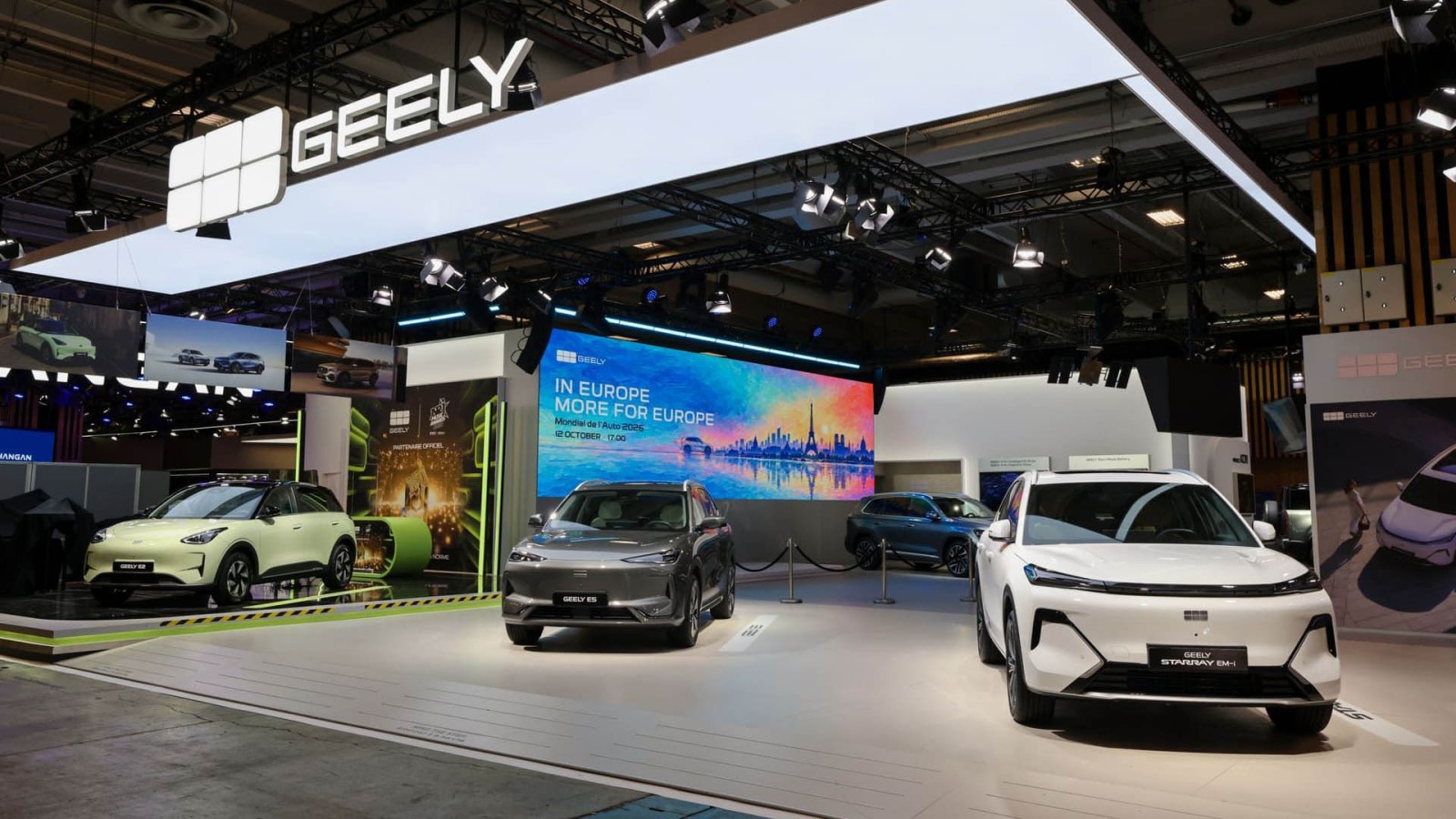
Polestar and Volvo, both owned by Geely and producing vehicles in Chinese plants, are also eligible.
Chinese automakers BYD and Chery have signalled plans to enter the Canadian market by late 2026, though some have since scaled back their ambitions as the quota’s cap limits potential profitability.
Chinese-built EVs imported under the quota are not eligible for Canada’s $5,000 federal EVAP rebate, a significant competitive disadvantage against domestically assembled or free-trade-partner vehicles.
Canada sold just 1,370 domestically made EVs last year, underscoring the limited domestic production base that the deal’s critics say the policy further undermines.
US and Industry Reaction
The backlash from North American automakers has been sharp.
Ford, General Motors, and Stellantis — through the Canadian Vehicle Manufacturers Association — issued a joint statement saying the entry of Chinese EVs “undermines” the domestic auto industry and exposes Canadians to “cyber risks.”
Brian Kingston, president and CEO of the association, said China “does not adhere to many of the rules-based trade and investment principles that have been fundamental to the success of the auto industry and the Canadian economy.”
US officials have been equally critical.
Transportation Secretary Sean Duffy said in February that Canada would “regret” the decision, and Trump himself threatened 100% tariffs on all Canadian goods if Ottawa pursued deeper trade ties with Beijing.
The US maintains its own 100% tariff on Chinese EVs and has warned that Canada risks becoming a backdoor for Chinese vehicles to reach the broader North American market.
USMCA Renewal Looms
The hot mic exchange comes less than two weeks before a critical deadline for North American trade.
The Canada-United States-Mexico Agreement — known as CUSMA in Canada and USMCA in the United States — enters its first mandatory joint review under Article 34.7 on July 1.
The review does not mark the expiration of the agreement.
CUSMA entered into force on July 1, 2020, and runs until 2036.
The July 1 date is a trigger point at which the three parties must confirm in writing whether they wish to extend the pact for an additional 16 years, to 2042.
If all three governments agree, the agreement resets and the next review is scheduled for 2032.
If any party declines, the deal enters a cycle of annual reviews for up to 10 years, after which it would expire in 2036 unless renewed at any point during that window.
A straightforward renewal appears unlikely.
US Trade Representative Greer has said repeatedly that the Trump administration wants significant changes to the agreement, particularly on automotive rules of origin, access to Canada’s supply-managed dairy sector, and what Washington views as excessive auto imports from Mexico.
Greer told audiences in April that Trump “has been clear that he is dissatisfied with a lot of the outcomes of USMCA.”
Last week, Carney revealed the US has communicated it does not want changes so extensive that the agreement would need to return to Congress for ratification.
“The US has been clear that they do not want to go to Congress to change the fundamental architecture,” the Canadian PM stated.
Canada has formally requested renewal.
LeBlanc travelled to Washington in early June with Charette to meet Greer, telling reporters that Canada is seeking to extend the deal while also pressing for relief from Trump-era tariffs, which Carney has characterised as a violation of the trade agreement.
Greer has pushed back on that framing, saying tariffs are “a new reality” Canada will need to accept.
The EV quota adds a new friction point to the already tense review process.
The US has signalled concern that Canada could serve as a conduit for Chinese vehicles and components into the North American market, potentially undermining the agreement’s rules of origin for automobiles.
Ford CEO Jim Farley has called Chinese EVs an “existential threat” to the North American auto industry, and the topic is expected to feature prominently in bilateral negotiations over the coming weeks.
Canada’s ambassador to France Nathalie Drouin sought to downplay any tension, telling reporters at the G7 that Carney and Trump “have never stopped talking to each other.”
The next formal review meeting of the Free Trade Commission is expected to take place on or around July 1.