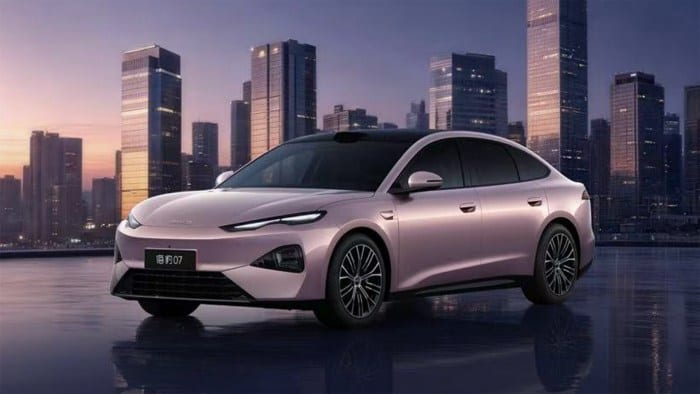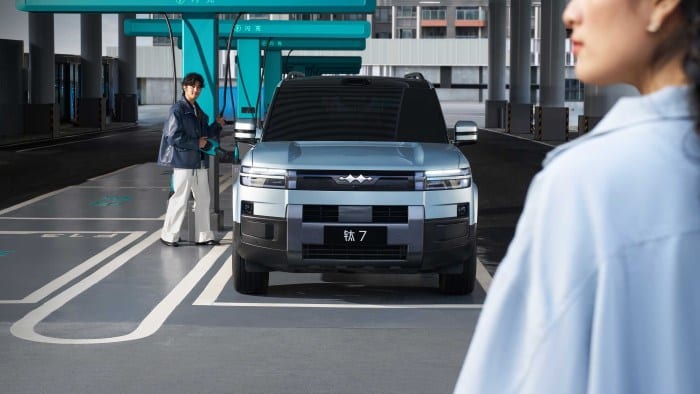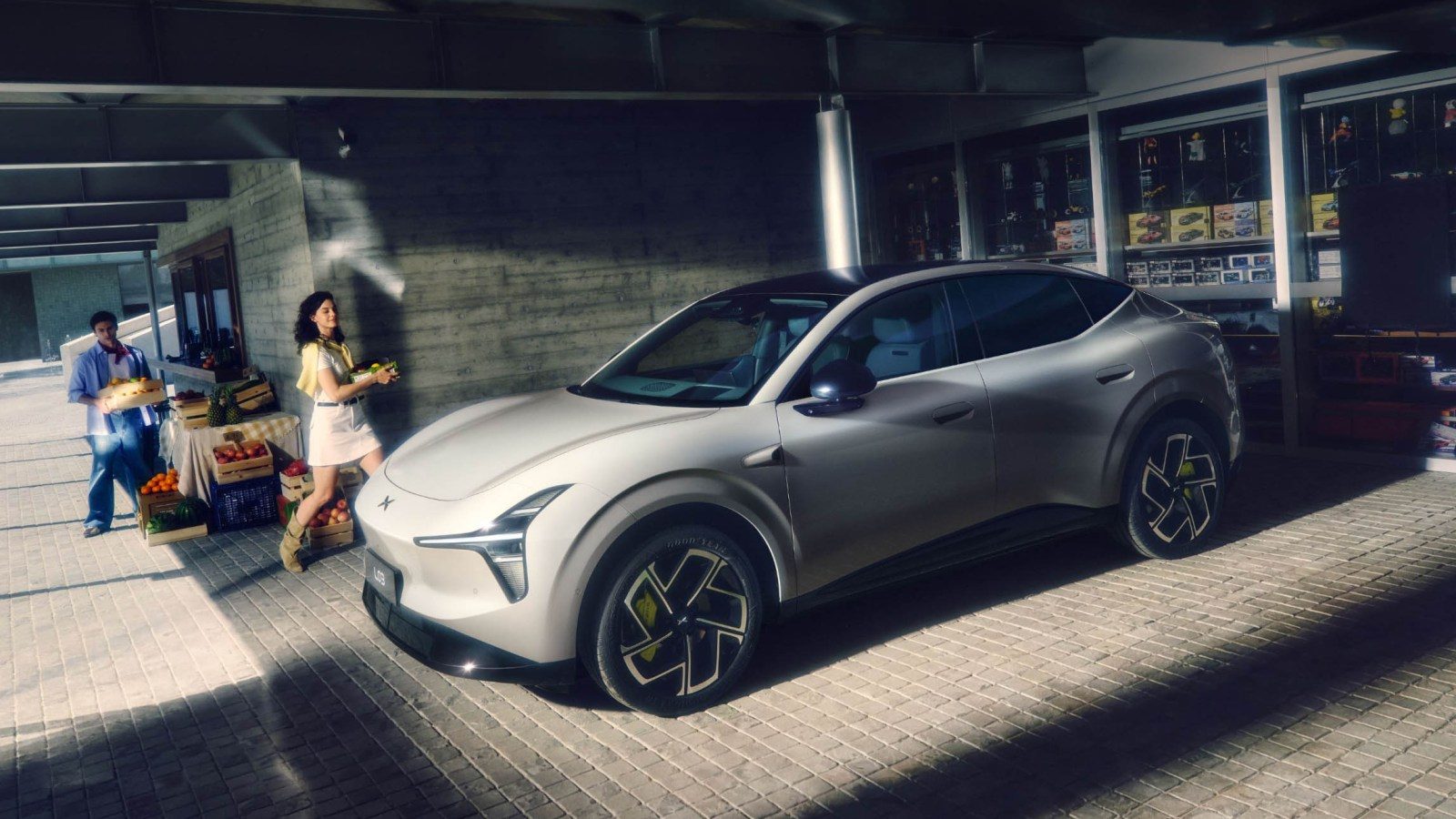

Senator Elissa Slotkin of Michigan said on Wednesday that she is hearing “rumors” that President Trump plans to allow Chinese cars to be sold in the United States as part of a broader agreement with China, ahead of Xi Jinping’s visit to Washington later this month, and used the claim to press the bill she and Senator Bernie Moreno have written to bar them.
“There’s an important moment of inflection coming in just a few weeks, when President Trump will roll out the red carpet for Chinese President Xi Jinping in Washington,” Slotkin wrote on X.
“We hear rumors that Trump is planning to allow Chinese cars to be sold in the U.S., as part of a larger deal he’s putting together,” the US senator wrote. “That would be a strategic mistake, and one that will irrevocably impact not just the 1.2 million Michigan jobs directly or indirectly tied to the auto industry, but the overall manufacturing capacity of the United States.”
She named no source.
The White House has announced no change to the 100% Section 301 tariff on Chinese-built electric vehicles or to the Commerce Department rule that bars Chinese-jurisdiction vehicle software from model year 2027.
Its last statement on the subject, before the May summit in Beijing, was that “any notion that we would ever compromise our national security is baseless and false.” Autos did not appear in accounts of that summit’s readout, which covered farm purchases, Boeing, fentanyl and Iran.
The Market’s Reaction
The US-listed Chinese EV makers spiked briefly around midday and then gave back the gains, with Nio and XPeng setting new 52-week lows and Li Auto closing near its own.
Nio’s American depositary shares jumped to $3.85, about 1.6% above Tuesday’s close of $3.79, in a burst on the 10-minute chart, then slid through the afternoon to $3.68, a new 52-week low, and closed at $3.70, down 2.4%.
XPeng’s spiked toward $10.82 and fell to $10.55, also a 52-week low, closing at $10.57, down 3.3%.
Li Auto’s rose to a high of $12.26, then fell to $11.90 and closed at $11.91, down 4.4%, near its 52-week low of $11.65.
The spike coincides with the window of Slotkin’s post, which went up at 12:16 p.m. Eastern.
The German Example
Slotkin opened the thread with Germany.
“In Germany, Chinese owned car companies only entered the market in 2021. Today, they own around 8% of the market. As a result, Volkswagen, is cutting 50,000 jobs. 50,000,” she wrote, calling it “a very real cautionary tale for Michigan.”
The figures need qualification.
MG, owned by SAIC, returned to Germany in 2021 and BYD and Nio followed in 2022, but Geely has owned Volvo since 2010, so “Chinese owned” car companies have sold in Germany for far longer than she says.
Chinese brands’ share of the German market in 2026 has been running in the mid-to-high single digits, with Chinese brands at about 6% across Europe in 2025, per Reuters, and higher in Britain, Italy and Spain than in Germany.
Volkswagen’s job reductions, 35,000 in Germany by 2030 under its December 2024 agreement with IG Metall, with further cuts announced since, were attributed by the company to overcapacity, German costs, the pace of the electric transition and the collapse of its sales in China, not to Chinese brands’ share of the German market.
The Senator’s causal “as a result” is her reading.
The Bill
“There is a way to handle this threat,” she wrote in a third post. “@berniemoreno and I have a bipartisan bill to ban Chinese cars from American markets.”
The Connected Vehicle Security Act, which she and the Ohio Republican introduced with a House companion from Representatives John Moolenaar and Debbie Dingell, would write into statute the Commerce Department’s January 2025 rule against connected vehicles from countries of concern and extend it to components and to Chinese companies operating in third countries such as Mexico.
The Senate Commerce Committee approved it on July 22.
The major carmakers, Ford among them, urged passage before year-end last week and asked that BYD and other Chinese manufacturers receive no waivers.
A reported ownership test in the bill, treating manufacturers more than 15% Chinese-owned as ineligible, would reach Geely’s Volvo, Polestar and Lotus, and should be confirmed from the text.
Slotkin made the same argument before the May summit, telling a Detroit forum “please don’t make a bad deal,” and has pursued the issue since 2024, when as a House member she introduced the first version of the bill.
In July 2025 her office said the Senate Armed Services Committee had included her provision barring Chinese connected vehicles from military bases in its version of the 2026 defence authorisation.
Whether it survived to enactment is not confirmed here. Her framing is data security: “Every vehicle on American roads is a rolling data collection device,” in Moolenaar’s words, and in hers, a “treasure trove of valuable intelligence” for Beijing.
Who She Is
Slotkin is a former CIA analyst who served three tours in Iraq and a Pentagon official who was Acting Assistant Secretary of Defense for International Security Affairs from January 2015 to January 2017, advising two defence secretaries, Chuck Hagel and Ash Carter.
She represented Michigan’s 8th district in the House from 2019 and the redrawn 7th from 2023, and was elected to the Senate in 2024.
The Record Against the Rumour
Trump’s clearest invitation this year to Chinese carmakers was at the Detroit Economic Club on January 13: “If they want to come in and build a plant and hire you and hire your friends and your neighbors, that’s great, I love that. Let China come in.”
That was an invitation to build in the United States with American workers, not to import.
Three days later, asked about Canada’s decision to admit Chinese EVs, he said “if you can get a deal with China, you should do that,” a shrug at the North American opening that his trade representative later called “problematic.”
In Milford, Michigan, in July he said Chinese cars face a 100% tariff and that to his knowledge there was not “one Chinese car in the country,” per reports of the remarks.
On US retail access, every public administration action since January has run the other way: the connected-vehicle rule retained, Polestar denied authorisation under it in June while Volvo was cleared.
Trade Representative Jamieson Greer has recently called Canada’s opening to Chinese EVs “problematic,” and Transportation Secretary Sean Duffy’s letter to Ford, released the day before Slotkin’s post, attacking the company’s CATL licence, its Geely venture in Spain and its BYD talks as “intertwining its future with Chinese state-backed enterprises.”
In May, 74 House Democrats and 52 House Republicans wrote to Trump urging him not to admit Chinese carmakers. Reuters noted that any Chinese plant in the US would take two to three years to reach production.
What the record shows is that the wall is against retail sale rather than against the vehicle: Chinese-built Zeekr shells already operate in the US as Waymo’s Ojai robotaxis, imported by the thousand with their Chinese electronics removed and the 100% tariff paid.
Xi’s visit, confirmed by the White House for September 24 in UN General Assembly week and restated by Trump on September 4, comes with a one-year tariff truce due to expire in November, which is why a broader package is conceivable.
Nothing on record puts autos in it.