
The National Highway Traffic Safety Administration (NHTSA) signed a cooperative agreement with SAE International to launch A2SCEND, a three-year, $5 million consortium whose data is intended to inform the first federal performance standard for automated driving systems.
NHTSA Administrator Jonathan Morrison disclosed the agreement on Thursday during remarks at the AI Horizons PGH Summit in Pittsburgh.
The regulator first announced the partnership with SAE Industry Technologies Consortia on July 30 at the SAE Automated Transportation Symposium in San Diego.
Formal execution of the cooperative agreement now sets the project in motion. A2SCEND — Advancing America’s Safety and Competitiveness for the Evolution of National Deployments — will bring together government and industry experts to develop measurable driving competencies for autonomous vehicles and repeatable methods to assess them.
Morrison identified ADS competency as the consortium’s top priority.
Federal law requires that competency requirements be “objective, practicable, and meet the need for motor vehicle safety,” he said, adding that they will require “metrics for each behavioral competency, as well as repeatable methods and means to assess them.”
NHTSA has already invited several AV companies, including firms based in Pittsburgh, to its Vehicle Research and Test Center in Ohio for hands-on testing discussions.
Neither the speech nor NHTSA’s July materials attach a completion date to the standard.
On a three-year data-gathering phase followed by rulemaking and comment, outside analysts have put an enforceable rule no earlier than 2030, by which point Waymo alone expects to be operating well beyond its current 4,000 vehicles.
Performance Metrics
Morrison’s speech outlined a broader regulatory pivot away from hardware-specific rules.
Current Federal Motor Vehicle Safety Standards were written under the assumption that every vehicle would have a human driver, and many still reference or require manual controls.
Morrison called the arrangement a tether between future technology and past regulation.
NHTSA has proposed amendments to five FMVSS standards to accommodate vehicles designed without human operators, with more amendments in the pipeline. The agency’s own count varies by document.
Its July release said nine standards had proposed updates or announced intentions, and its September announcement on Tesla referred to eight rulemakings in progress covering brake pedals, windshield wipers, lighting and rearview mirrors.
Morrison stressed the agency is not pursuing wholesale deregulation.
“Our approach is not to take a hatchet to current standards and give AVs free reign based on an assumption that they’ll be safe,” he said. “Instead, we’re using a scalpel to make necessary technical updates while still placing safety first.”
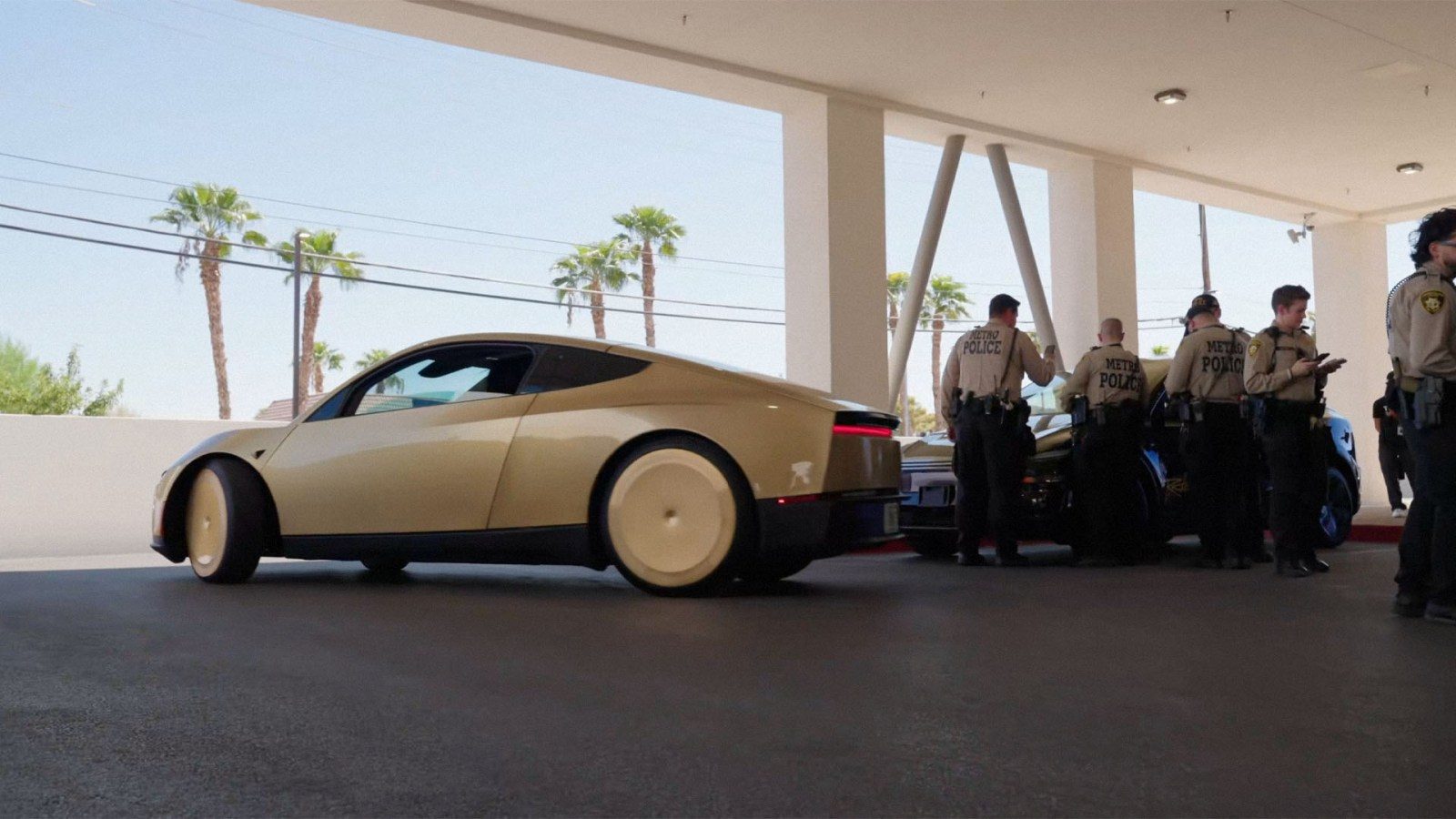
Purpose-built robotaxis that eliminate steering wheels, pedals and mirrors — such as Tesla’s Cybercab and Amazon-owned Zoox’s shuttle — would remain subject to critical safety requirements, but those requirements would centre on measurable performance rather than specific hardware.
t
NHTSA is also rewriting its voluntary AV guidance for the first time since the agency published AV 2.0 in 2017 during the first Trump administration.
Updated guidance will target the industry’s transition from test-centric operations to mid-scale driverless deployments, covering emergency responder interactions, safety management systems and remote assistance.
First Responder Friction
Emergency responder interactions remain a flashpoint.
NHTSA issued a call to action to AV developers on July 8 after documenting what Morrison described as a clear pattern of driverless vehicles interfering with police, fire crews and paramedics.
Documented incidents included AVs driving into active emergency scenes, blocking ambulances and ignoring flares, cones and hand signals. Morrison said the agency has since met with key developers and seen concrete steps in response, including at least one recall.
Tesla offered its own response on Friday, sharing video footage of police officers and firefighters practising emergency procedures on Cybercab prototypes.
Footage showed first responders drilling door access, frunk lifting and vehicle controls during simulated scenarios at training facilities.
“Train like you fight, fight like you train,” Tesla wrote. “First responder feedback is directly incorporated into the design & safe operation of Cybercab.”
Tesla’s training video arrives under heightened regulatory scrutiny.
NHTSA opened an Audit Query on September 3, the day Tesla began charging fares for Cybercab rides in Austin, and announced it the following day. It covers an estimated 1,000 vehicles and examines Tesla’s self-certification that the Cybercab complies with federal safety standards written for vehicles with manual controls, including how far that certification rested on determinations that certain standards do not apply.
The agency escalated on September 10 to a Special Order, a more forceful instrument, with Tesla’s response due by September 30. NHTSA has issued no defect finding and has not ordered the service to stop.
Austin firefighters raised concerns days after the vehicle entered commercial service on September 3, citing its touchscreen-based emergency controls as a potential weak point in real-world incidents.
Austin Fire Captain Matthew McElearney told NBC News he left Tesla’s training session with the touchscreen option but remained unconvinced it was a “silver bullet” for every scenario.
Deployments Accelerate
Regulatory action is accelerating alongside commercial expansion.
Tesla launched paid unsupervised Cybercab rides in Austin this month.
Tesla launched paid Cybercab rides in Austin this month**, to invited guests on September 3 and to the wider public the next day. It has run a driverless Model Y robotaxi service in the city since June 2025. S
eparately, NHTSA’s engineering analysis of Full Self-Driving covers about 3.2 million Tesla vehicles.
Zoox received NHTSA’s first-ever commercial exemption for a purpose-built robotaxi on July 30, permitting deployment of up to 2,500 vehicles annually for two years. Tesla took the opposite route, certifying the Cybercab itself rather than seeking an exemption, which is the gap the audit exists to test.
Waymo continues to operate the largest autonomous fleet in the country, with more than 500,000 paid rides a week across 15 US cities and expansion under way in Europe and Asia.
The House Energy and Commerce subcommittee reviewed the Self Drive Act of 2026 earlier this year, a bill that would raise the annual AV deployment exemption cap from 2,500 to 90,000 vehicles per automaker and establish a federal framework permitting vehicles without traditional steering wheels.
Morrison indicated NHTSA’s ADS performance rulemaking aims to replace what he described as a burgeoning patchwork of inconsistent state and local requirements with a single national AV competency standard.
Morrison characterized the agency’s posture as one of “deliberative urgency — moving ahead with purpose but at a pace that never puts safety second.”