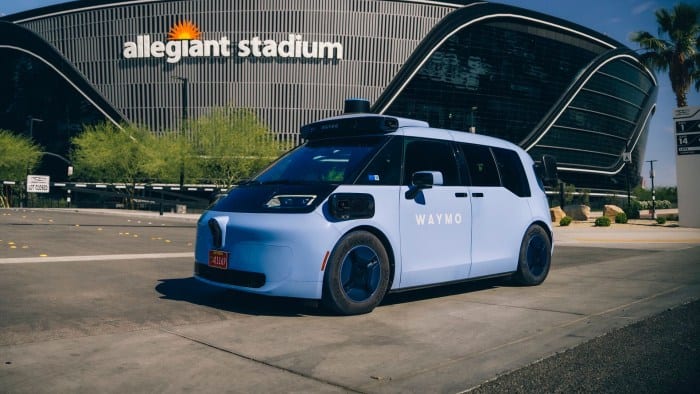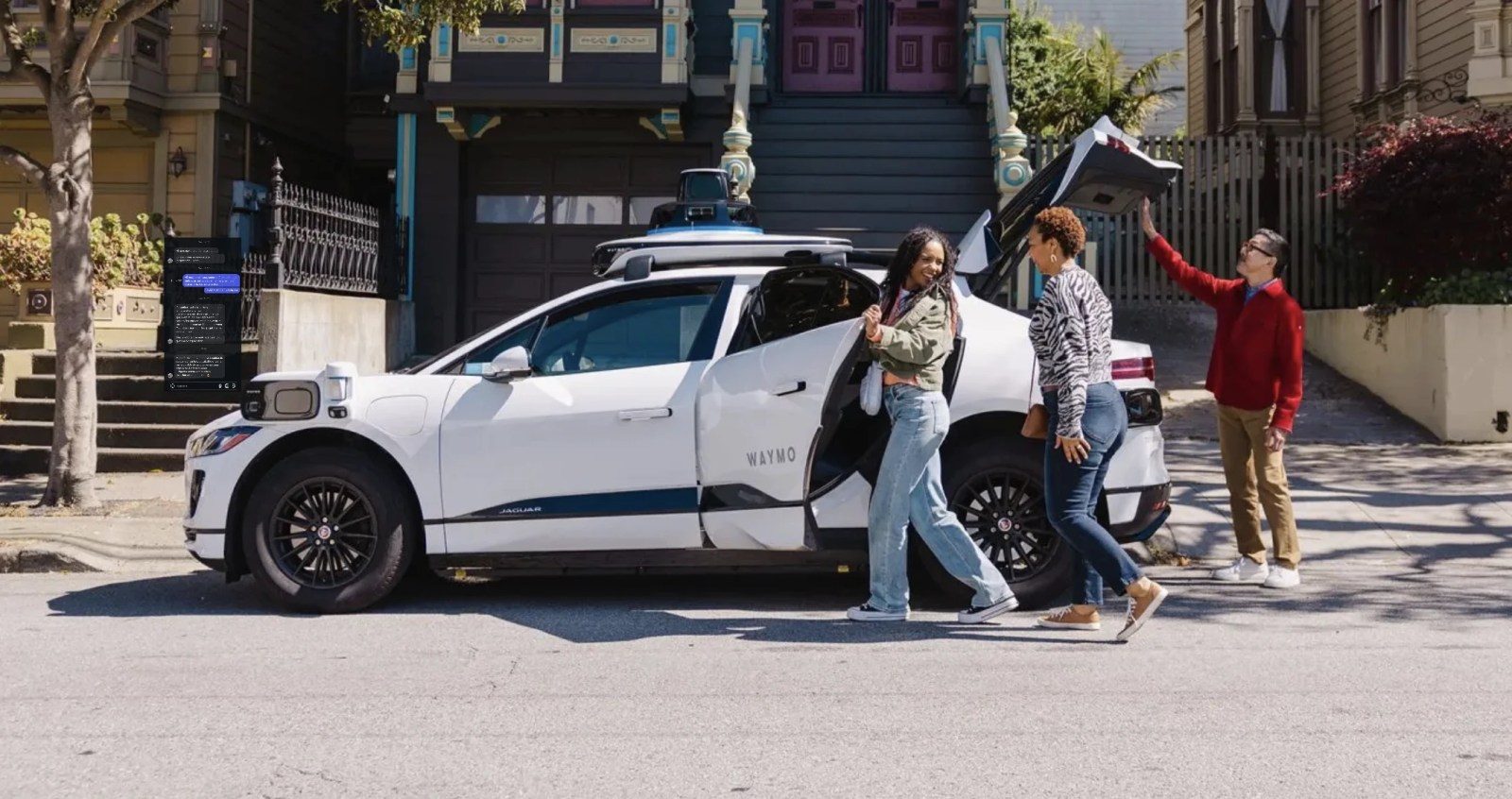

A Houston rider’s complaint that Waymo‘s service is “already declining” drew detailed accounts of the same problem from riders in Los Angeles and Dallas and shorter echoes from Phoenix and elsewhere on Sunday.
Waymo customers reported robotaxis that stop a block or more from the requested location, in spots they consider less safe, while the app counts down the time left to board.
Waymo spent 2026 opening service faster than in any prior year, moving from invited rides in Dallas, Houston, San Antonio and Orlando in February to 14 cities with fully autonomous public trips, including Denver, San Diego and Tampa.
Weekly volume, last put by the company at more than 500,000 paid rides, is on a stated path to one million by year-end. With increased rides and customer base, the Alphabet unit
A social media post, published on the r/waymo subreddit on Sunday by a user identifying as a former “evangelist” for the service, garnered dozens of comments by Monday morning discussing a reported decline in the quality of the service.
Several other riders corroborate the pickup complaint.
“The Waymo decided to pick us up in a left turn lane 300 [feet] down the street then kept notifying me that I had two minutes to get into the car before charges would start,” the poster wrote of a recent trip with friends from a restaurant with what he described as ample curb space. “Now when I try to get a ride, it tries to get me to walk 2 to 3 minutes around the corner or around the block to another location which doesn’t make any sense.”
The poster said Waymo’s support team told him the vehicle “tries to pick the safest spot,” and that he believed the pickups were instead “optimized for fleet utilization versus optimize for safety.”
Waymo has not commented on the thread, and it publishes no data on how far riders walk to its cars.
Its help pages describe the mechanism the Houston rider ran into: the cars “choose pickup and dropoff spots they’re able to best navigate to, and these may be different from what you’re used to with a human driver.”
The app warns if the walk will exceed three minutes, riders can pick from alternative spots or switch on a “minimize walking time” setting at the cost of a longer ride, and once the car arrives it “will usually wait 5 minutes” but “may need to leave quickly” from a busy spot, with a no-show fee possible if the countdown runs out.
The two-minute warning the Houston rider describes is therefore consistent with a pickup the system judged busy, and the complaint is in effect that the countdown starts on a spot the rider still has to reach.
Waymo told the San Francisco Chronicle in June that “pick-up and drop-off is a complex challenge.”
Other Complaints
A Los Angeles rider who said she had used the service for months after a spine injury wrote that “some months ago it stopped picking me up where I lived and insisted I walk to a main street,” adding that she had stopped using Waymo as a result.
Another commenter, who did not name a city, said his mother, in her 90s and using a walker, “cannot chase down Waymos if the pick up spot is not very close to where she called it,” and that the family no longer relied on the service for her.
A Dallas rider said the cars had “stopped picking me up at my actual location and instead picked me up about four blocks away,” then circled the block repeatedly; a Phoenix user wrote that he had been “feeling similar,” and a San Diego commenter offered a reason rather than a complaint, writing that the cars “started doing it for safety and avoiding bike lanes” while praising the new Ojai vehicle there.
“You gotta play ‘Chase The Waymo’ when it approaches,” another wrote. “The app knows my GPS location perfectly, the car is just choosing to disobey it.”
Not every reply agreed: a Los Angeles rider said they had experienced no such decline, others who did not name a city said they had noticed none over hundreds of trips, one argued that pickup spots are dictated by city rules on which streets the cars may use, and another said that reporting a bad spot to support gets the car redirected.
The Curb Problem
Where Waymo stops has been a source of friction since the San Francisco launch, from the opposite direction to the one the Houston rider describes.
Cyclists and the San Francisco Bicycle Coalition have documented the cars pulling into protected bike lanes for pickups and drop-offs, a woman sued Waymo and Alphabet in 2025 after crashing into the open door of a robotaxi stopped in a bike lane, and Christopher White, the coalition’s executive director, said in April that the company had told advocates fully respecting bike lanes was “too high a bar” because customers expect curbside service, a characterisation Waymo did not respond to.
Electrek reported last week that Waymo vehicles had accumulated more than 8,300 parking citations in San Francisco, close to $1 million in fines, mostly for stopping where they should not, though not all of them at pickup.
The two complaints are mirror images of one curb problem: cyclists say the cars stop too close, in the lane; these riders say they stop too far, in a turn lane or four blocks away.
A shift away from busy curbs would be consistent with pressure from cities and cyclists, but Waymo has not said it has changed its pickup logic and has published nothing showing pickup distances rising with volume.
Pauses and Recalls
The Houston poster’s other complaint, that “if there’s a slight bit of rain” the service pauses and riders must “find another way back,” tracks a year in which weather has stopped Waymo repeatedly in Texas.
The company’s first pause in San Antonio, which it had opened in February, ran about three weeks from April 20 after an unoccupied robotaxi drove into a flooded road and was swept into Salado Creek, the second flood incident there in a fortnight and, at the time, Waymo’s longest service stoppage.
Waymo then paused all four Texas cities and Atlanta on May 22 ahead of forecast storms after a car was stranded in Atlanta floodwater.
The company filed a voluntary recall of 3,791 vehicles on April 30 to fix, by software, how the cars treat “untraversable flooded lanes” on higher-speed roads, as EV reported.
A second recall in June covered 3,871 cars after 13 drove past ramp-closure signs into freeway construction zones in Phoenix and the Bay Area; freeway rides were suspended in every market from late May and only began returning on July 29, starting in Phoenix.
San Francisco Case
A separate clip circulating on Monday adds the emergency-response question to the pickup one.
An X account named ‘No Safe Words’ posted a 23-second video, credited to an Instagram user, showing what it described as two fifth-generation Waymos and a sixth-generation Ojai stopped at a San Francisco intersection ahead of a fire truck with its lights on, then pulling away in front of it when the light changed.
The clip lands six months after the incident that put the question on the record: on March 1, a Waymo summoned by a rider stopped across West Sixth Street in Austin as an ambulance approached the scene of a mass shooting that killed three people, until a police officer entered the car and drove it into a garage.
Waymo said the car had begun a U-turn around a road blockage and “briefly yielded,” and Austin-Travis County EMS said the response was not affected.
At an Austin City Council joint committee meeting on April 29, public safety officials said as many as five Waymos had been in the response corridor that night, one inside the 1,000-foot geofence that emergency services set to keep autonomous vehicles away, the others stacked at Sixth and Guadalupe just outside it, according to Spectrum News.
Waymo’s first-responder guidance says its cars pull over when they detect emergency lights and sirens behind them.
The Scale
The thread lands as Waymo pushes toward the fastest expansion in its history.
The company began inviting its first public riders in Dallas, Houston, San Antonio and Orlando on February 24, its first simultaneous multi-city launch, with general availability promised later in the year.
It opened Nashville to invited riders in April with Lyft running the local fleet, began employee rides in Las Vegas in July, and welcomed its first public riders in Denver, San Diego and Tampa on September 1, bringing the count of cities with fully autonomous public service to 14 by its own tally, with Las Vegas and London among 18 markets listed as “up next”.
Munich was announced separately on August 25.
Waymo last put its volume at more than 500,000 paid rides a week, up from about 400,000 in February, is targeting one million by year-end, and said on August 26 it had passed 200 million fully autonomous miles.
Its two 2026 recalls covered 3,791 and 3,871 vehicles respectively.
Waymo’s own account of how it improves, published with that milestone, lists “feedback from riders and communities” alongside its automated systems as inputs to the data flywheel that retrains its models, and the September 1 launch post cites a record of 94% fewer serious-injury-or-worse crashes than human drivers; neither post addresses pickup or drop-off placement.
Alphabet does not report Waymo’s results separately.
Its Other Bets segment, which also includes Verily and other units, lost $7.51 billion in 2025, and Waymo raised $16 billion in February in a round led by Alphabet.