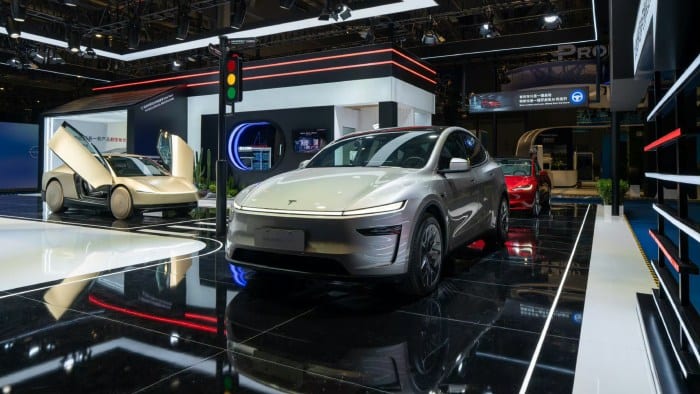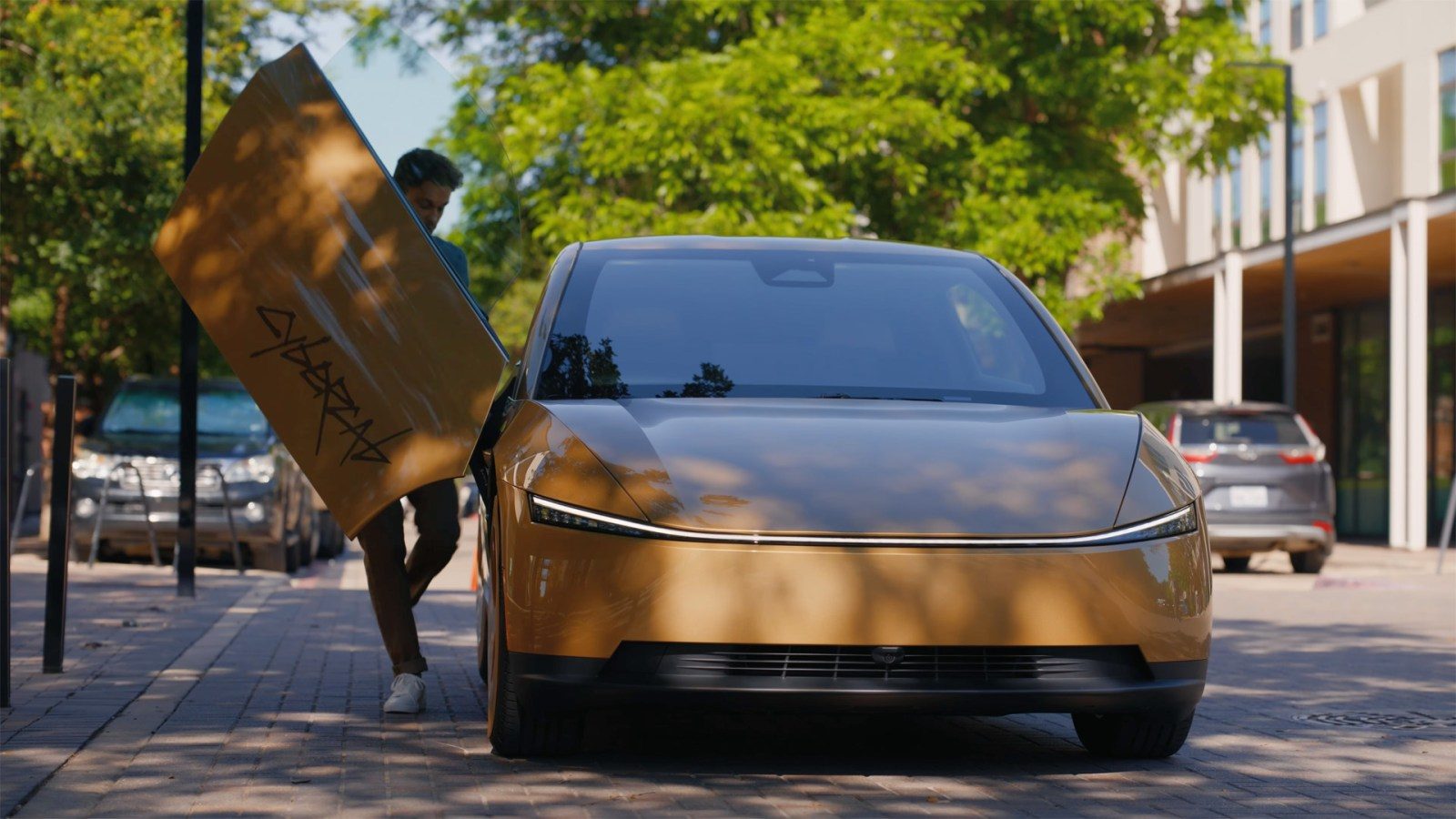

Tesla registered 28 more autonomous vehicles with the Texas Department of Motor Vehicles on late Monday, bringing its state robotaxi fleet to 476 and lifting the Cybercab count to 67.
That’s up 49% from the 45 Cybercabs on the registry when Tesla held the vehicle’s launch event on September 3.
The latest batch comprises 19 Model Y crossovers and nine Cybercabs, according to state records compiled by RobotaxiTracker and FSD Database, independent dashboards that query the registry.
Tesla’s total Texas fleet now stands at 409 Model Ys and 67 Cybercabs.
One vehicle has been deregistered since tracking began on June 11, according to RobotaxiTracker. Of the 476, 265 have been spotted in the past 30 days and 211 remain registered without a sighting, it said.
A registration doesn’t show whether a vehicle is carrying passengers. It lists the cars Tesla is authorised to run commercially, not how many are on the road at any hour.
Cybercab Push
Seven Cybercabs first appeared on the registry on August 31. The count reached 45 the same day after a bulk filing.
It rose to 49 by September 8, to 58 on September 18 and to 67 on Monday, with nine vehicles added in each of the last two batches.
All 67 are model year 2026 units built at Gigafactory Texas, according to their VINs.
Tesla plans to build the Cybercab at a rate of 125,000 a year. The Cybercab is the only vehicle in Tesla’s commercial fleet without a steering wheel, pedals or mirrors.
Riders hail a car through the Robotaxi app, and the vehicle drives itself under Tesla’s FSD software.
Public paid rides in Austin began on September 4, one day after an invite-only launch event at the company’s campus. Cybercab rides are offered only in Austin.
Model Y Fleet
Model Ys account for 409 of Tesla’s 476 Texas registrations and remain the workhorse of the broader robotaxi operation. Tesla runs driverless service in six US cities: Austin, Dallas and Houston in Texas, and Miami, Orlando and Tampa in Florida.
Tesla told JPMorgan in August that it is “intentionally holding back” Model Y additions as it prepares to scale the Cybercab.
“Tesla indicated it is intentionally holding back on adding Model Y units to the robotaxi fleet, expressing confidence in its ability to scale Cybercab in the near-term,” analyst Rajat Gupta wrote after a meeting with Tesla’s investor relations team in Fremont.
The registry shows the opposite trend so far. When the note was published on August 20, Tesla’s Texas list held 186 vehicles, all Model Ys. It now holds 409 Model Ys, 223 more.
Tesla added 285 vehicles to the Texas registry in the past 30 days, according to FSD Database, more than doubling the roster. The Cybercab share is rising: nine of the 28 most recent additions were Cybercabs, about 32%.
Charging Infrastructure
Tesla has been building dedicated charging depots to support the growing Austin fleet. Permit filings show two sites under development.
The larger facility, at 405 E. St. Elmo Road in south Austin, calls for 48 V4 Supercharger posts in a first phase and references up to 80 wireless chargers in a second phase, alongside a carwash and motorized gates.
A second site at 2323 Ridgepoint Drive in northeast Austin plans 24 V4 Supercharger posts with no wireless charging equipment.
Construction drawings for that facility name Tesla’s project folder “2323 Ridgepoint Dr – Robotaxi.”
Cybercabs currently charge through a concealed NACS port on the rear bumper and are plugged in manually at Supercharger stalls.
Wireless charging deployment timelines remain unannounced.
Texas Rivals
Tesla is not the largest operator on the Texas registry.
Waymo leads with 988 registered autonomous vehicles, 767 Jaguar I-PACEs and 221 Zeekr RTs, having added 297 in the past 30 days. Its last addition was on September 2.
Zoox holds five registrations.
Avride, a self-driving company that grew out of Yandex, has 344 Hyundai Ioniq 5s on the registry, unchanged since August 10.
Zoox has 44, including five of its own purpose-built robotaxis.
Across the six operators with vehicles on the list, the registry shows 1,921 autonomous vehicles, according to FSD Database.
Tesla received its Texas authorisation on May 14.
Regulatory Backdrop
The Cybercab’s deployment coincides with heightened federal scrutiny.
The National Highway Traffic Safety Administration opened Audit Query AQ25002 on September 3 — the day of Tesla’s launch event — to examine how the company self-certified a vehicle without a steering wheel, pedals or mirrors against federal safety standards that assume all three.
NHTSA escalated the review to a Special Order on September 10, requiring Tesla to show under oath how the Cybercab complies. Tesla must respond by September 30. Incomplete or untruthful answers carry penalties of up to $139 million, Electrek reported.
Separately, NHTSA finalised an agreement with SAE Industry Technologies Consortia last week to launch A2SCEND, a three-year, $5 million consortium meant to inform the first federal performance standard for autonomous vehicles.