
Oppenheimer analyst Colin Rusch reiterated a Perform rating on Tesla on Monday, praising “impressive innovations on vehicle manufacturing” for the Cybercab while flagging “likely further delays” on the Optimus humanoid robot ramp.
The note drew a sharp line between the two programmes at the centre of Tesla’s autonomy push — one showing tangible factory progress, the other still facing timeline uncertainty. Perform is Oppenheimer’s neutral rating.
Shares rose more than 3% in early trading, touching over $378, on a day when US stock futures were broadly higher and Morgan Stanley published a note on Tesla’s ties with SpaceX.
At press time the stock was trading 2.8% higher at $374.61, extending a recovery from about $330 in mid-August.
Tesla shares have staged a steady climb over the past six weeks.
From an August 10 close of about $331, the stock advanced to $368 by August 31, crossed $376 on September 3 and pulled back briefly before resuming its ascent.
As of press time, the stock was trading 2.8% higher at $374.61.
Physical AI Pivot
Rusch said Tesla “is executing well on expanding vertical integration and innovating key elements of the supply chain” as the company pivots away from a pure automaker identity.
The analyst’s framing reflects a growing Wall Street consensus that Tesla’s valuation hinges less on vehicle deliveries and more on autonomy, robotics and AI infrastructure.
The company has recast itself around what it calls Physical AI — the application of artificial intelligence to the physical world through autonomous vehicles, humanoid robots and energy systems.
Capital spending more than doubled from the first quarter to the second, and management guided full-year 2026 spending above $25 billion. Tesla’s Chief Financial Officer said the company was securing debt facilities that would give it capacity to borrow up to $30 billion.
Semiconductor Manufacturing
The note’s most pointed language concerned Tesla’s entrance into chipmaking, however.
Rusch wrote that the move is “bold, but critically important, as it works to derisk China’s potential ambition for geographic expansion while optimizing performance of its highest leverage component.”
Tesla is building Terafab, a chip fabrication complex in Texas, together with SpaceX and Intel, which joined the project in April. The companies put the committed first phase at about $16.8 billion in August.
The facility is meant to bring chip design, fabrication, memory production, advanced packaging and testing into one site, which the company says no other chip plant currently offers.
Tesla buys its chips today from suppliers including Samsung, TSMC and Micron.
Dojo’s Legacy
Rusch drew a direct line from Tesla’s earlier custom chip programme, Dojo, to the current effort. Tesla wound Dojo down in August 2025, and Musk later said the company would focus on its own inference chips.
The analyst was candid about Dojo’s limitations, writing that “Dojo did not meaningfully differentiate Tesla’s compute platform.”
He argued, however, that “the institutional knowledge established in that program will prove crucial as Tesla works to innovate chips in advance of peers across multiple form factors.”
In that reading, Dojo was an expensive apprenticeship that gave Tesla chip-design experience at a time when most carmakers still bought semiconductors off the shelf.
Analysts at other firms have taken a similar view.
Cybercab Draws Praise
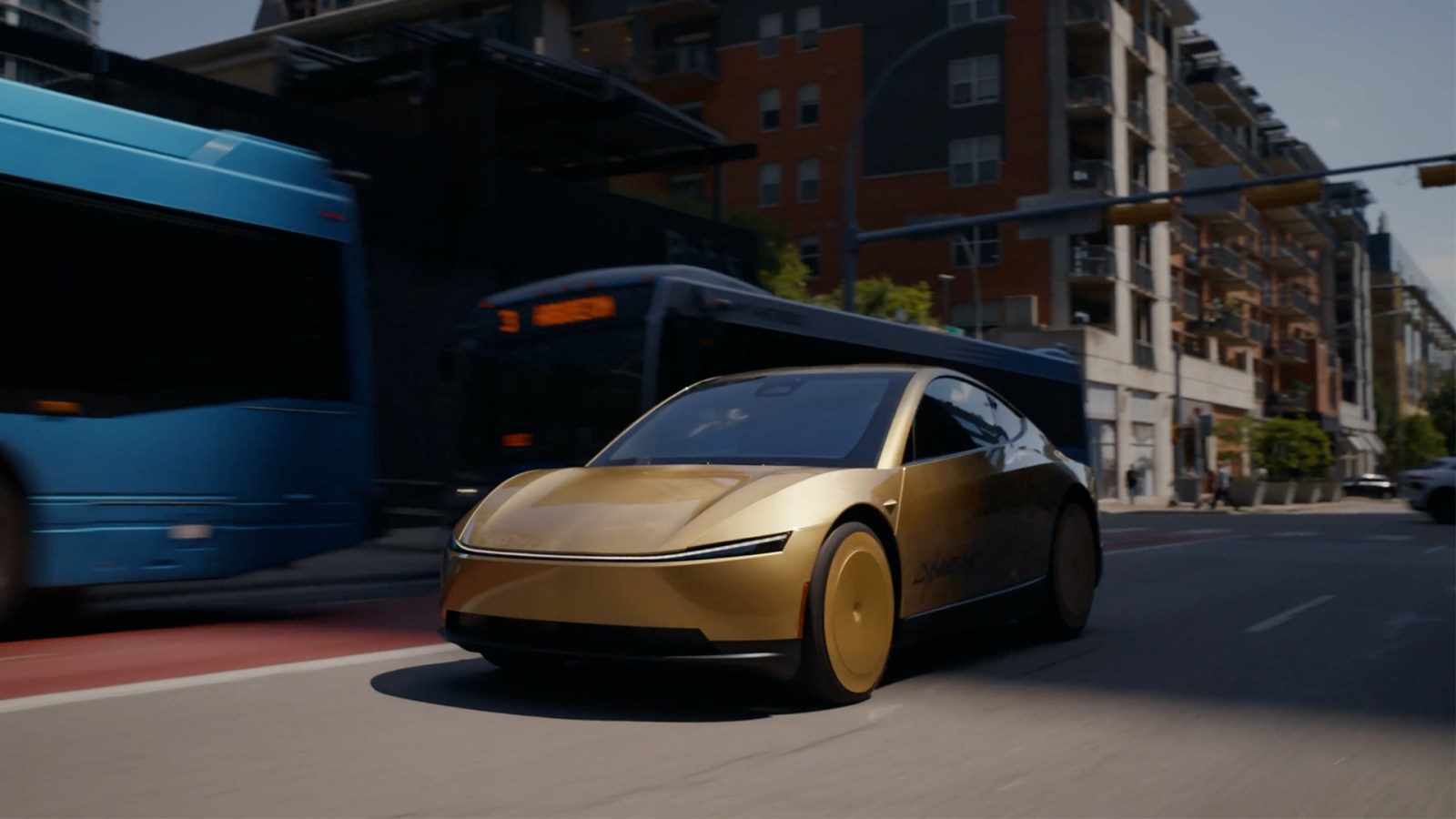
On Cybercab, Rusch noted “impressive innovations on vehicle manufacturing,” singling out the purpose-built autonomous two-seater as a bright spot in the company’s product pipeline.
The first production unit came off the line at Giga Texas in February, and formal production began in April.
The company is targeting cycle times of one vehicle every 10 seconds at full scale. Drone footage earlier this year showed the production line had shifted to steering-wheel-free builds.
Tesla launched paid Cybercab rides in Austin on September 4, he day after a brief, invitation-only launch event that Musk did not attend.
Ahead of the event, Morgan Stanley said Texas records showed about 45 Cybercabs registered for commercial use..
Texas DMV records show 49 Cybercabs registered under Tesla Robotaxi, LLC, alongside 269 Model Y vehicles in the state.
NHTSA opened an audit into how Tesla self-certified the steering-wheel-free vehicle on the same day public rides began, and shares fell 6.5% the following session.
Bank of America has estimated the Robotaxi programme accounts for about 45% of Tesla’s valuation, and Daniel Ives has called Cybercab production “the golden goose in unlocking TSLA’s AI valuation.”
Optimus to Face Delays
The contrast with Cybercab was sharpest on Optimus.
Rusch flagged “likely further delays on Optimus ramp” — language that mirrors Tesla’s own repeated timeline revisions for its humanoid robot programme.
On the first-quarter earnings call in April, Musk said limited Optimus production would begin at the Fremont plant in late July or August, after the Model S and Model X lines wound down.
Tesla’s July 22 shareholder letter moved that target to “later this year” without a date or unit count. Musk has warned the initial ramp will be slow, citing the robot’s roughly 10,000 unique parts and an entirely new production line.
The programme has faced setbacks. Musk said in 2025 that China’s rare-earth export restrictions had affected actuator supply, and programme leader Milan Kovac left in June 2025. Ashok Elluswamy, who leads Tesla’s Autopilot software, took over Optimus as well.
Tesla audited Optimus suppliers in China last week, according to a report that the suppliers declined to confirm.
Compute Capacity
Rusch noted “ongoing progress on expanding compute capacity.” Tesla said on-site AI training compute in Texas more than doubled in the first half, to more than 205 megawatts across its Cortex 1 and Cortex 2 clusters.
The spending burden showed in the second quarter. Free cash flow turned negative as capital spending more than doubled from the first quarter, and operating income fell 57% to $398 million, a margin of about 1.4% on record revenue of $28.2 billion.
Execution Risk
Oppenheimer’s Perform rating has been unchanged through multiple notes this year.
In the firm’s previous note, published July 23 and obtained by Price Target, Rusch struck a more cautious tone, calling the second-quarter results “uninspiring” and cutting earnings estimates.
He wrote then that management had reiterated 2026 capital spending of about $25 billion or more, including an incremental 150 megawatts of compute capacity.
Shares fell sharply on that day, sliding from the $340s to as low as $314 before closing at $319.
The analyst warned that Tesla “remains in the early stages of an expensive multi-year transition to scaled Physical AI operations across multiple form factors” and flagged “substantial execution risk and capital needs.”
The latest note marks a shift in emphasis. Where the July assessment focused on margin deterioration and spending risk, the September update gives more weight to the strategic logic behind Tesla’s investments, particularly in semiconductors, while leaving Optimus as the one area where his caution has not eased.