
Tesla and Sunrun said on Monday that their home battery fleets dispatched more than 580 megawatts of peak power to California’s grid on the evening of September 9, which they called the largest residential dispatch on record.
More than 140,000 home batteries were discharged over a three-hour window at the request of the California Energy Commission and state utilities during a period of extreme heat and elevated electricity demand.
Two statewide programs coordinated the response: the California Energy Commission’s Demand Side Grid Support program, known as DSGS, and the California Public Utilities Commission’s Emergency Load Reduction Program, known as ELRP.
DSGS activated automatically when California’s day-ahead locational marginal price exceeded $200 per megawatt-hour. Pacific Gas and Electric called the ELRP dispatch separately to coincide with the heat event.
Sunrun shares rose about 4% on Monday morning.
Tesla Powerwalls Supplied 517 MW
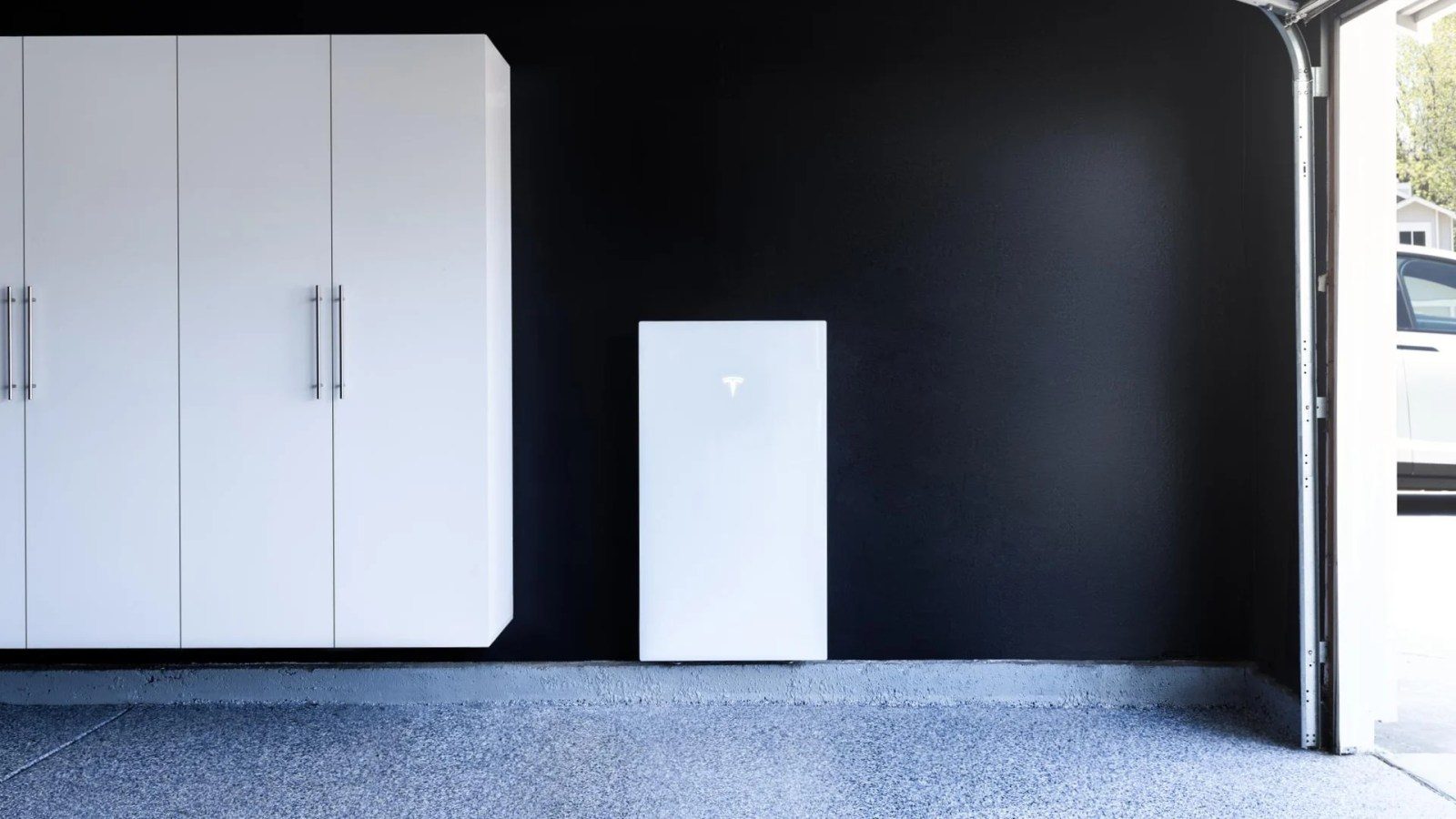
Tesla Powerwalls accounted for 517 MW of the total, with 110,000 units participating. Sunrun owns or operates 55% of them. It also dispatched more than 30,000 batteries from other manufacturers, contributing 63 MW.
On September 10, Southern California Edison requested a separate three-hour dispatch, and the two companies delivered more than 140 MW. They said that had both events fallen on the same night, they could have deliveredover 720 MW.
“Sunrun’s distributed home batteries are operating at a scale larger than many peaker power plants combined,” said Sunrun Chief Executive Officer Mary Powell.
How It Compares
The previous benchmark was a scheduled test on July 29, 2025, when more than 100,000 batteries delivered an average of 535 MW over two hours, according to The Brattle Group. PG&E called it “the largest test of its kind ever done in California — and maybe the world.”
This month’s event involved 40% more batteries over a longer window in a real grid event.
The companies gave peak rather than average output, however, so the two figures are not directly comparable. Per battery, peak output worked out to about 4.1 kilowatts, against an average of about 5.3 kW in last year’s test.
DSGS Program Scale
California’s DSGS program has expanded quickly since the California Energy Commission launched it in 2022. Residential and commercial customers are paid for discharging stored energy or cutting use during grid stress events.
About 130,000 homes with batteries and nearly 75,000 with smart thermostats and similar devices are enrolled, and the program has more than a gigawatt of combined capacity, according to Canary Media and Advanced Energy United.
Sunrun’s CalReady program, the largest home storage aggregation within DSGS, quadrupled to about 75,000 batteries and 56,000 customers ahead of the 2025 summer season, Sunrun said.
A Brattle Group report commissioned by Sunrun and Tesla estimated DSGS would deliver net system savings of $28 million to $206 million between 2025 and 2028, with benefits flowing to all grid-connected customers in California, not only participants.
The release cited only the top of that range. Brattle projected battery capacity in the program could grow from about 700 MW to 1.3 GW by 2028.
Ryan Hledik, Principal at The Brattle Group and co-author of the report, said the program can deliver reliable, utility-scale capacity at significantly lower cost than traditional solutions.
Funding for 2027 Is Unresolved
The record came days after California’s final budget left DSGS without guaranteed funding for next year. The release did not mention it.
Lawmakers zeroed out the program’s funding in 2025, and Governor Gavin Newsom’s January budget allocated nothing.
He proposed keeping it running through 2026 and then moving participants to ELRP, which is run by the utilities under the CPUC and used only as a last resort in grid emergencies.
Lawmakers negotiated a $27 million transfer this summer to keep DSGS paying participants through 2026, according to Advanced Energy United. The final budget bills in early September dropped a Senate Democratic proposal for $70 million to cover 2027, but also left out Newsom’s plan to shift the program to the CPUC.
“There is no guaranteed funding for the program for next year, at the very least it wasn’t outright gutted,” Brandon García, California Policy Director at Advanced Energy United, told Canary Media.
Tesla Energy Storage Deployment
The dispatch drew on the already-installed residential fleet. Tesla reports combined energy storage deployments, Megapack and Powerwall, in GWh each quarter, and has not broken out solar deployments separately since late 2023.
Quarterly figures have swung sharply. Tesla deployed 9.6 GWh in the second quarter of 2025, a then-record 12.5 GWh in the third and a record 14.2 GWh in the fourth. Full-year 2025 deployments reached 46.7 GWh, up 49% from 31.4 GWh in 2024.
Deployments fell 38% from the previous quarter to 8.8 GWh in the first quarter of 2026, down 15% from a year earlier, which management called lumpy because of project timing.
They rebounded 53% to 13.5 GWh in the second quarter, up 41% year on year and Tesla’s second-highest quarter. First-half deployments totalled 22.3 GWh.
Revenue from Energy Generation and Storage was about $3.84 billion in the fourth quarter of 2025, fell to $2.41 billion in the first quarter of 2026 and recovered to $3.14 billion in the second, a 13% year-on-year gain. The segment’s gross margin narrowed to 20.4% in the second quarter from 30.3% a year earlier.
Distributed Energy Push
The California dispatch record comes as Sunrun and Tesla deepen their partnership across multiple states.
In July 2025, the two companies launched a combined home energy plan in Texas — the ‘Tesla Electric + SunRun Flex’ offering — that bundles fixed electricity rates, solar sellback credits, Powerwall backup, and participation in Tesla’s Virtual Power Plant program.
In June, Sunrun, Tesla and Renew Home announced a framework to aggregate more than 16 GW of flexible capacity from home batteries, smart thermostats and other connected devices for data centers and utilities.
Monday’s release put it at 16.8 GW. The companies said more than 300 MW is available for immediate deployment in Virginia, with a target of 500 MW there by 2030.
The first public use of that framework is SHARE, a PG&E pilot announced on September 3 with Rewiring America and funded by Google, in Santa Clara and Alameda counties.
Sunrun, Tesla and Renew Home will enroll about 21,000 existing devices, and PG&E and Rewiring America expect the program to reach about 12 MW by 2028. It could begin supporting the grid as early as this fall.