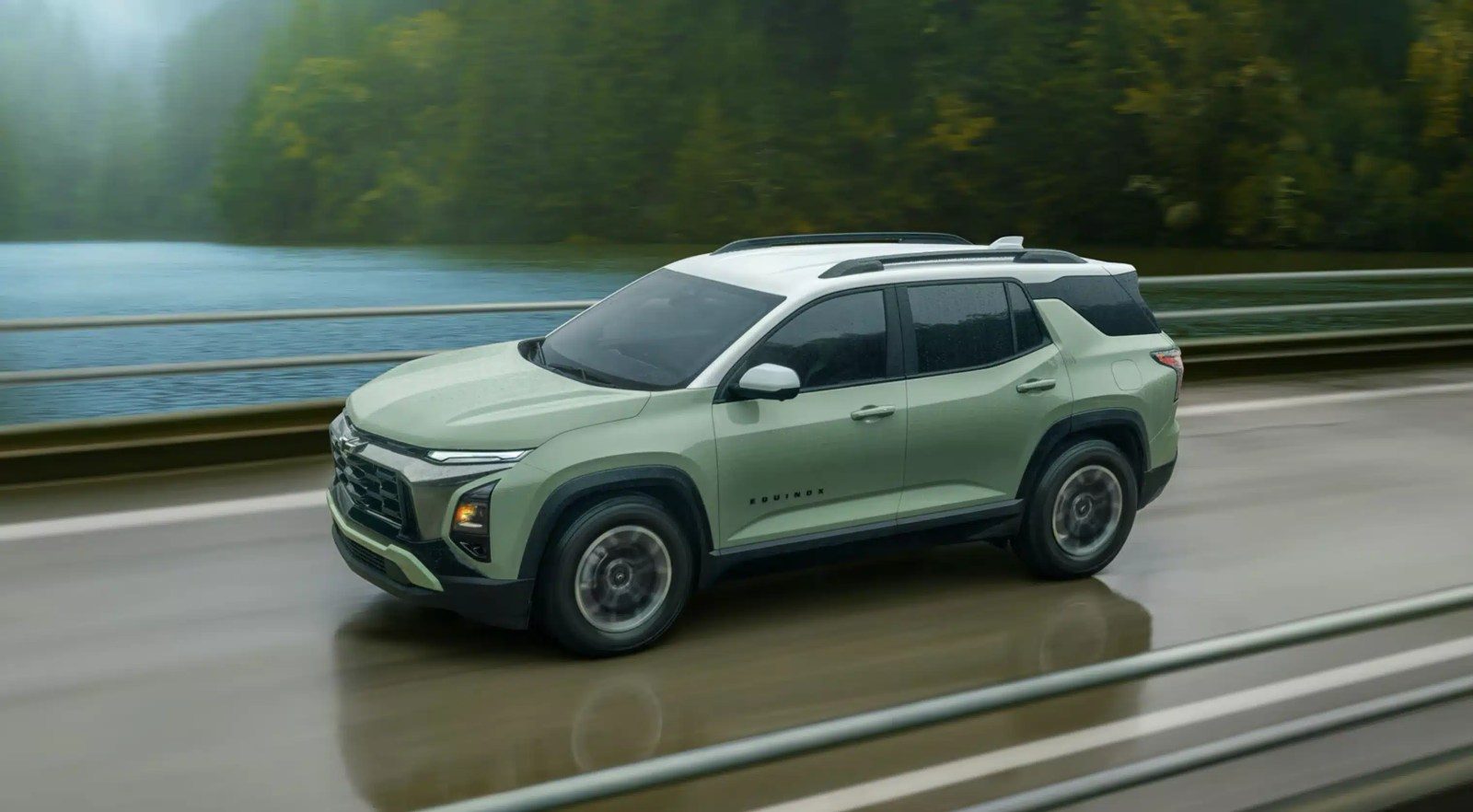

General Motors’ mainstream Chevrolet brand secured the most Canadian zero-emission vehicle rebates in August, ending Toyota’s six-month streak as the Electric Vehicle Affordability Program‘s (EVAP) top monthly claimant.
Chevrolet made 3,130 rebate claims in August, as the Bolt and Equinox EV took the top two spots among models, according to the latest monthly data from Transport Canada first reported by Automotive News.
Toyota fell to second with 2,323 claims but maintained its year-to-date lead at 17,918 — about 47% ahead of Chevrolet’s 12,170.
Kia placed third in August at 1,206, followed by Ford at 1,035 and Hyundai at 853.
Tesla ranked sixth with 754 claims — by far its strongest month since EVAP launched in February.
Almost two-fifths of its 1,945 claims for the year came in that single month, leaving it behind six brands year-to-date, including Nissan at 3,484.
Year-to-date, the company has accumulated just 1,945 claims, well behind all five brands above it.
August marked EVAP’s best monthly performance since the spring, when Transport Canada received a large wave of claims as the program got off the ground.
Claims across Canada totaled 10,956 in August, with Quebec capturing more than half at 5,876, followed by Ontario at 2,267 and British Columbia at 1,913.
How EVAP Eligibility Works
EVAP replaced the former Incentives for Zero-Emission Vehicles Program (iZEV) on February 16.
The program was backed by C$2.275 billion ($1.6 billion) in federal funding over five years. As of September 1, C$2.0 billion remained in the fund.
The program offers up to C$5,000 for battery-electric and fuel-cell vehicles and up to C$2,500 for plug-in hybrids. Amounts will decrease annually, dropping to C$4,000 for BEVs in 2027.
Eligible vehicles must have a final transaction value of C$50,000 or less, calculated by adding the base price, factory options, dealer accessories and administrative fees.
Freight, extended warranties, winter tires and insurance are excluded from the calculation.
Canadian-made vehicles are exempt from the price ceiling entirely — a carve-out designed to support domestic assembly.
The most consequential filter is country of origin.
Vehicles must be manufactured in Canada or in a country with a free-trade agreement with Canada. Vehicles built in China are not eligible.
FTA-partner countries include EU member states under CETA, South Korea, Japan, Mexico, the United Kingdom, Australia and — on paper — the United States under CUSMA.
Individuals are limited to one EVAP rebate over the five-year program period. Businesses can receive up to 10.
Five OEMs with Canadian Plants
Ontario is the only jurisdiction in North America where five major automakers build vehicles — General Motors, Ford, Honda, Stellantis and Toyota.
In 2024, these five assembled more than 1.31 million light-duty vehicles at Canadian plants, supported by about 700 parts suppliers.
Toyota runs three plants in Cambridge and Woodstock, producing the RAV4 and Lexus models.
Honda assembles the Civic and CR-V in Alliston but has put its Canadian EV plant on indefinite hold.
Stellantis builds the Chrysler Pacifica and Dodge Charger Daytona EV at Windsor Assembly — the only EV currently made in Canada — though the company has weighed selling its idled Brampton plant.
Ford is retooling its Oakville facility for Super Duty trucks after Ottawa granted C$464 million for the pivot following the scrapping of its EV production plan there.
Despite the five OEMs’ Canadian presence, Canada sold just 1,370 domestically made EVs in 2025, all from Stellantis.
Most EVs sold in Canada are imported from the US, Japan, South Korea and Europe.
The EVAP price-cap exemption for Canadian-built vehicles is meant to change that equation, allowing a domestically assembled EV priced above C$50,000 to still qualify for the full rebate.
Tesla’s Structural Disadvantage
Tesla’s low claims count reflects a sourcing problem rather than a demand one.
The company’s only EVAP-eligible model is the Model Y Rear-Wheel Drive, imported from Giga Berlin at C$49,990 — just C$10 below the transaction-value threshold.
It did not start there. The Model Y was absent from Transport Canada’s first eligibility list in February, because the cap applies to final transaction value rather than sticker price.
It qualified only in mid-March, after Tesla restructured its Canadian pricing, and now advertises at C$44,990 ($32,400) with the rebate applied.
The Model 3 is excluded.
Tesla shifted Canadian Model 3 supply from Fremont to Giga Shanghai in May, launching the Premium Rear-Wheel Drive on May 1 at C$39,490 ($28,400) under a trade arrangement allowing up to 49,000 Chinese-built EVs into Canada at a 6.1% tariff.
But because China has no FTA with Canada, the Shanghai-built sedan does not qualify for the C$5,000 federal rebate.
Quebec offers a partial offset — a C$2,000 provincial rebate under the Roulez Vert program.
The result is a competitive inversion. Rivals priced above the Model 3 can land below it once the federal rebate is applied, because the Shanghai-built sedan cannot claim it.
Under the former iZEV program, which lapsed at the start of 2025, Tesla was the longtime claims leader. It left that program under investigation. Four Tesla stores filed 8,653 claims worth C$43.2 million ($31.1 million) over the weekend of January 10 to 12, 2025, hours after Ottawa signalled the fund was nearly empty, accounting for 88.7% of claims in that window. Then Transport Minister Chrystia Freeland froze the payment and directed that Tesla be excluded from future iZEV incentives while US tariffs remained.
Transport Canada cleared the company of fraud that July and released the money. EVAP is a separate program, and the exclusion did not carry over.
EVAP’s origin rules have reshaped that dynamic.
Trade Agreements Under Strain
Canada’s FTA network determines which vehicles qualify. CETA covers EU-assembled models, enabling vehicles from Germany, Belgium and Slovakia to enter the program.
The Canada-Korea FTA covers Hyundai and Kia models built in South Korea. The CPTPP brings in Japan and Australia.
CUSMA remains in force, meaning US-assembled vehicles are technically EVAP-eligible on origin grounds. But the broader trade environment has deteriorated sharply.
Washington imposed a 25% tariff on Canadian-built vehicles in April 2025 and announced in August that auto tariffs on Canadian goods would rise to 50% on January 1, 2027.
Ottawa maintains a retaliatory 25% surtax on non-CUSMA-compliant US vehicles, with CUSMA-compliant models facing the 25% levy on their non-Canadian and non-Mexican content.
A remission framework allows the five automakers with Canadian plants to import a set number of CUSMA-compliant US-built vehicles free of counter-tariffs, contingent on maintaining domestic production and investment.
The CUSMA six-year joint review began on July 1 but the two sides failed to reach a deal.
The agreement now moves into an annual review cycle until its 2036 expiry.
Canada’s latest round of counter-tariffs, covering C$27.6 billion of American goods, took effect on September 8.
Canada’s January agreement with China to open a low-tariff quota for Chinese EVs has added a further layer of friction.