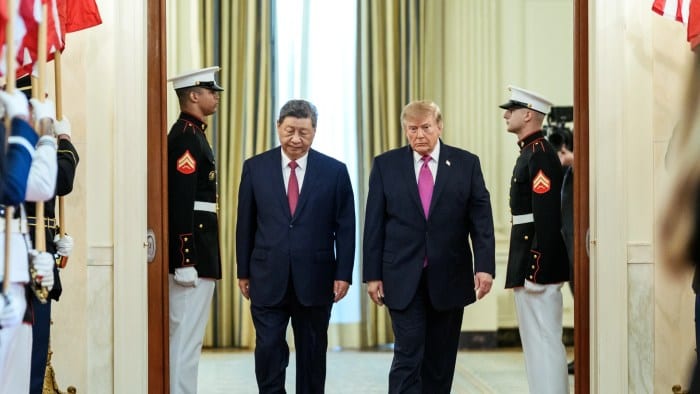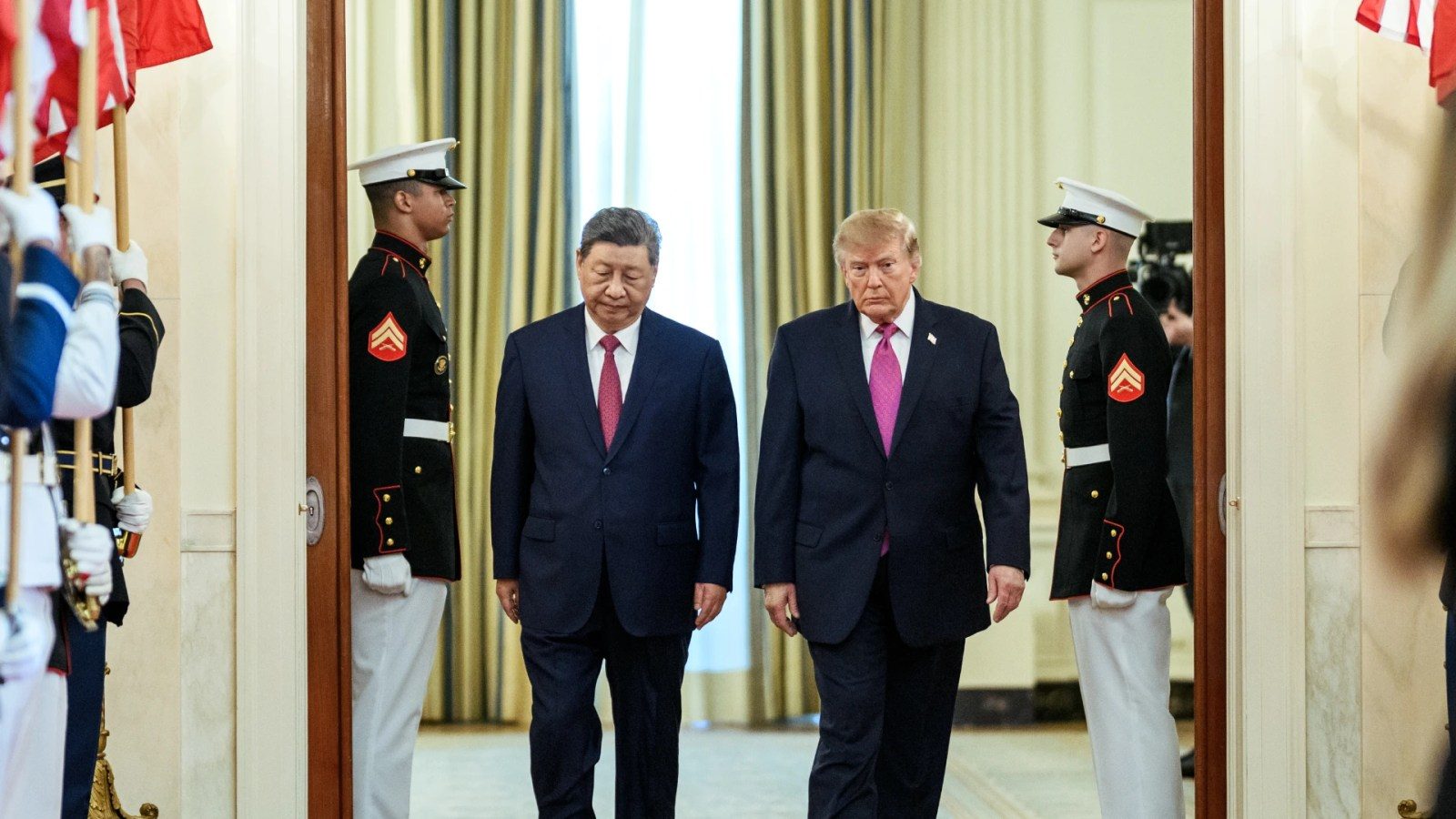

Senior executives from BYD and Xiaomi traveled to Washington for Chinese President Xi Jinping’s state visit, Nikkei Asia reported on Thursday, citing people familiar with the matter.
Leaders from both companies were in the US capital and had hoped to attend Thursday evening’s banquet hosted by President Donald Trump, according to the report.
Neither company appeared on the guest list distributed by the White House.
Musk, Fraser and Huang traveled with Trump to Beijing in May.
The report also noted that executives from both companies remained outside the summit itself.
Reciprocity Dispute
Beijing drew up a list of chief executives to accompany Xi and shared it with Washington for review, one person familiar with pre-summit preparations told Nikkei Asia.
US officials offered to let the Chinese executives join only the state dinner, the person said. Beijing dismissed the proposal as falling short of reciprocity.
No Chinese executives applied for visas in recent days as part of Xi’s delegation, according to two people familiar with the matter.
A separate source told the publication that prospects for a corporate entourage faded in the final days before the meeting, after both sides failed to agree in time on what the executives would do during the summit.
Xi last brought a business delegation to the US in 2015, according to Nikkei.
During Trump’s May 13–15 visit to Beijing, Musk, Apple’s Tim Cook and Huang met Chinese Premier Li Qiang, Nikkei Asia reported.
Some US officials also raised concerns about inviting executives whose companies are barred from defense contracts or face limits on access to American capital markets, two sources said.
Shortlist Under Review
Earlier reports had placed both carmakers on Beijing’s shortlist, including BYD founder Wang Chuanfu.
Bloomberg reported last week that officials including Xi’s chief of staff Cai Qi were reviewing a list of executives, which could change at the last minute.
Reuters, citing three people familiar with the discussions, named eight companies under consideration: BYD, battery makers CATL and Gotion, Xiaomi, consumer electronics group Hisense, parts supplier Wanxiang, Bank of China and food trader COFCO.
BYD and CATL both sit on the Pentagon’s list of Chinese military companies.
Pentagon officials added BYD in June, and the automaker denies supporting China’s military. CATL was added in January 2025.
House China committee chairman John Moolenaar said the prospect of BYD founder Wang Chuanfu joining the delegation meant BYD’s vehicles “have no place in the United States,” calling them “rolling data collection devices that endanger Americans.”
Industry and Congress Push Back
Six auto industry organisations wrote to Trump on September 17, urging him to keep “the door firmly shut” to Chinese automakers seeking to sell, import or build vehicles in the country.
Signatories represent General Motors, Toyota, Volkswagen, Ford, Hyundai, Stellantis and Tesla, among others. Copies went to Treasury Secretary Scott Bessent, Commerce Secretary Howard Lutnick and Trade Representative Jamieson Greer.
Michigan Senator Elissa Slotkin urged Trump this week not to invite Chinese carmakers to build in the US.
“We should not give an inch,” the Democrat wrote on X. “What they really want is to be able to bring in their cars from China, assembled in China, and sell them in the United States,” she said in a video attached to the post.
More than 70 House Democrats, led by Representatives Debbie Dingell and Ro Khanna, made a similar request in April.
Bessent singled out BYD in a September 2 speech at the Charlotte Economics Club, calling its model “the best $70,000 car that $35,000 can buy.” He offered no methodology for the figure.
BYD disclosed 12.47 billion yuan ($1.85 billion) in government subsidies related to daily operations in its 2025 annual report.
A February Rhodium Group study estimated BYD’s per-vehicle cost advantage over Tesla at about $4,700.
Direct grants translate into an advantage of about $292 per vehicle, Rhodium said, and subsidies overall account for roughly 5% of the gap.
Investment Slump
Major Chinese foreign direct investment in the US has fallen from a peak of $55 billion in 2016 to an estimated $4 billion in 2025, according to Rhodium Group figures cited by Nikkei Asia.
Such a drop amounts to a 92.7% decline.
American restrictions and Beijing’s own controls on outbound investment both weighed on capital flows, the report said. Some analysts cited by Nikkei Asia say changes under Trump’s One Big Beautiful Bill Act could offer a “politically safe” route for future Chinese investment.
Trump told Fox News on September 11 he would accept Chinese carmakers opening US plants if they hired American workers.
In the same interview, he called reports of a deal allowing Chinese car sales a “total phony rumor,” responding to claims Slotkin made on September 9 without naming a source.
Existing Barriers
Chinese-made EVs face US tariffs of more than 100%.
Duties combine a 100% Section 301 levy imposed under the Biden administration in 2024 and a 25% tariff on imported vehicles that Trump introduced in April 2025.
Chinese automakers do not sell passenger vehicles in the US.
A Commerce Department rule finalized in January 2025 bars connected vehicles from Chinese-controlled manufacturers, even when built domestically. Software restrictions apply from the 2027 model year and hardware restrictions from 2030.
US Trade Representative Jamieson Greer said in April the administration had no plans to alter those rules.
Slotkin’s Connected Vehicle Security Act, written with Republican Senator Bernie Moreno of Ohio, would ban vehicles, software and hardware linked to China and other adversaries from the US market.
Senate Commerce Committee members approved the bill unanimously in July, and it awaits a vote by the full Senate.