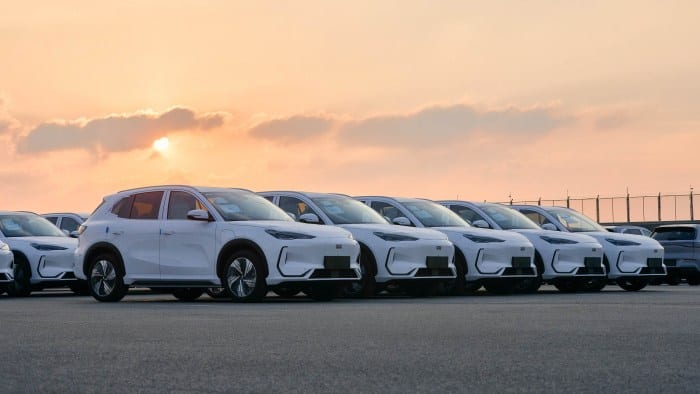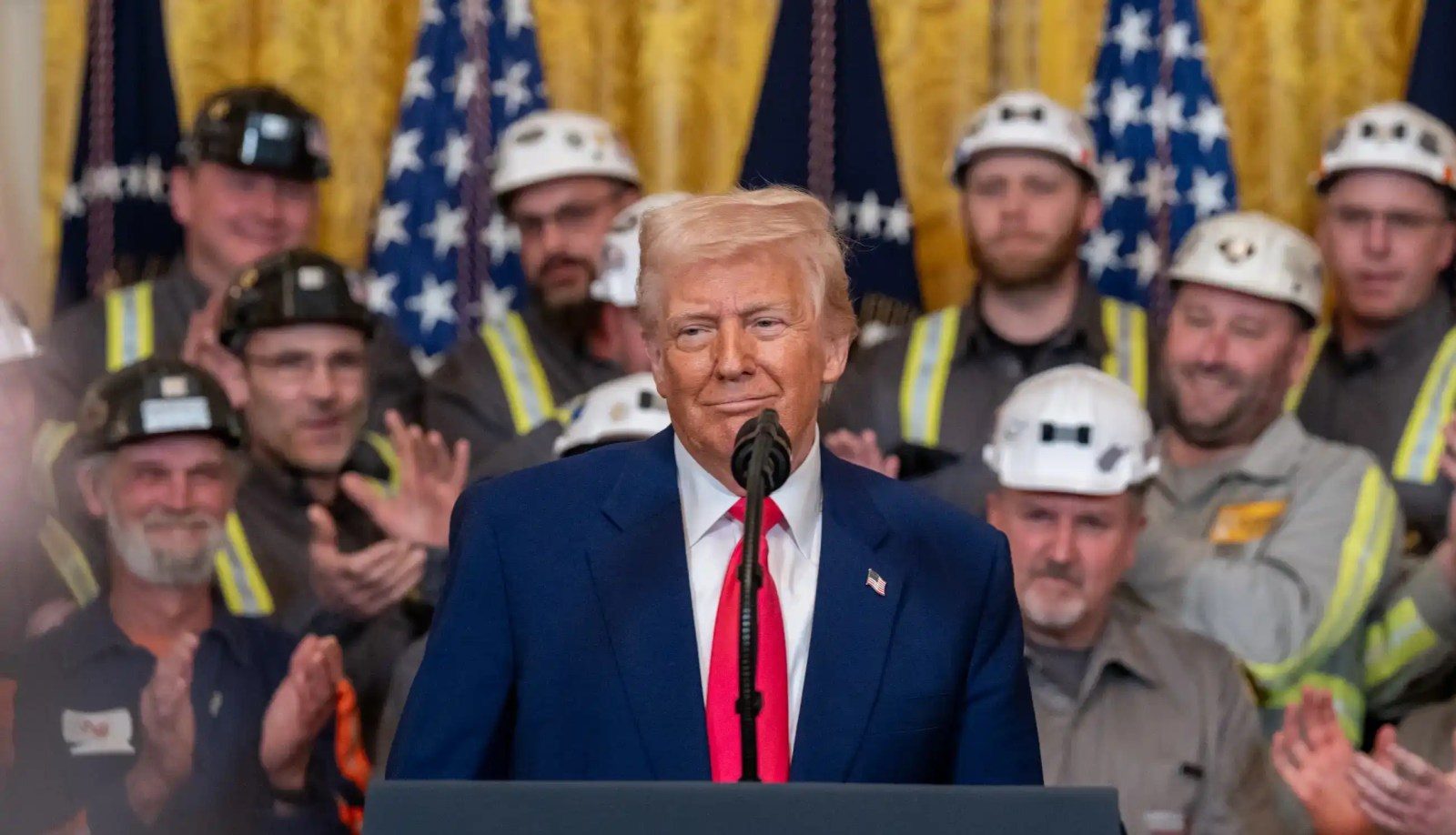

More than 70 Democrats in the US House of Representatives on Tuesday called on President Donald Trump not to permit Chinese automakers to build or sell vehicles in the United States.
The letter, led by Representatives Debbie Dingell and Ro Khanna, urges the administration to keep a ban in place that has the strong backing of US and foreign carmakers and other auto groups, Reuters reported.
The push follows a similar effort earlier this month by three Democratic senators — Tammy Baldwin, Elissa Slotkin and Chuck Schumer — who wrote to Trump warning that allowing Chinese automakers in would create an economic advantage that American manufacturers could not overcome.
They also flagged a national security risk that could not be reversed — a topic that the Democratic House Members further addressed in the new letter.
The senators also urged the administration to designate BYD and other Chinese automakers as military-connected entities.
The two letters came ahead of a planned summit between Trump and Chinese President Xi Jinping, planned for next month.
Pressure on Trump
Congressional pressure to block Chinese automakers from the US market has been building on both sides of the aisle.
Five major auto trade groups, representing General Motors, Ford, Toyota, Volkswagen, Hyundai and others, wrote to the White House late last year calling China a “clear and present threat” and urging the administration to block Chinese government-backed automakers and battery manufacturers from opening plants in the country.
The signals from the Trump administration have varied, however.
In January, during a speech at the Detroit Economic Club, Trump said he would welcome Chinese automakers building factories on American soil.
Weeks later, his administration forced out the Commerce Department official who led the development of the Biden-era connected vehicle ban — regulations that effectively prohibit Chinese passenger vehicles from being sold in the US on data security grounds.
US Trade Representative Jamieson Greer said earlier this month that the connected vehicle restrictions are working as intended and that the administration does not plan to soften them, however.
Speaking at a Stellantis plant in Michigan, Greer noted that the rules would likely apply even to Chinese automakers that set up production domestically.
Even so, he added that it would be difficult for these companies to establish new manufacturing in the US under the existing framework.
Earlier this year, Trump highlighted that the 100% tariff on Chinese car imports — originally quadrupled under President Biden — has kept Chinese automakers out and protected General Motors and Ford.
Canada Worries
The push has been shaped in part by Canada’s decision to move in the opposite direction.
In January, Prime Minister Mark Carney struck a deal with Beijing during a state visit — the first by a Canadian PM since 2017 — allowing up to 49,000 Chinese-built electric vehicles into Canada annually at a 6.1% tariff rate.
The arrangement replaced the 100% surtax Ottawa had imposed in late 2024, when Canada matched the tariff Biden had placed on Chinese EVs.
Greer called the agreement “problematic” within hours of its announcement and later suggested Ottawa would come to regret it.
US Ambassador to Canada Pete Hoekstra recently noted that Chinese vehicles entering Canada would not be allowed to cross into the United States, despite Greer having deflected the same question a few days later.
Within Canada, Ontario Premier Doug Ford called Chinese EVs “spy vehicles” and the agreement a “big, big problem” for the province’s auto sector.
Conservative leader Pierre Poilievre has pledged to scrap the quota and align Canada’s tariffs on Chinese goods with those of the US.
Carney’s own newly appointed trade adviser, former Conservative leader Erin O’Toole, has also publicly criticized the EV component of the deal.
O’Toole said he supported the broader trip to Beijing but that China is not a substitute for the United States as a trade partner and that Canada should remain aligned with Washington on its approach to Beijing.
Despite the backlash, Ottawa has continued to court Chinese automakers.
Industry Minister Mélanie Joly held meetings with BYD and Chery during Carney’s Beijing visit. Trade Minister Maninder Sidhu also met with XPeng and GAC.
BYD, Chery and Geely are all preparing to enter the Canadian market under the quota by year-end.
Chinese Advantages
The current restrictions function as a ban on Chinese passenger cars regardless of where they are assembled.
The Alliance for Automotive Innovation, the industry’s main lobbying group, has urged Congress to keep those rules in place, with several auto executives reinforcing the message.
Ford‘s CEO Jim Farley has said on multiple occasions that Chinese manufacturers represent the biggest competitive threat to the industry.
RJ Scaringe, founder and Chief Executive Officer of EV maker Rivian, has raised similar concerns while acknowledging the technological innovations of companies like BYD and Xiaomi.
Farley has also proposed that if Chinese carmakers want to build vehicles in America, they should be required to form joint ventures in which US automakers hold controlling stakes — an arrangement that mirrors what China required of Western manufacturers when they entered the Chinese market decades ago.
USMCA Review Ahead
The House Democrats’ letter adds to what has become a sustained bipartisan effort to prevent Chinese automakers from gaining a foothold in the US market — whether through direct imports, domestic production, or vehicles routed through Canada or Mexico.
Both the upcoming Trump-Xi summit and the USMCA joint review with Canada and Mexico — that begins on July 1 — are both expected to touch on automotive trade.
Automotive products represent roughly 22% of total trilateral trade under the agreement, the single largest category.
Components in a finished North American vehicle may cross the Canada-US border seven or more times during production.
Trade talks between Ottawa and Washington were suspended in October after Trump terminated negotiations over an anti-tariff advertisement run by the Ontario government during the World Series, according to CBC News.
They resumed for the first time on March 7 when Canada’s Trade Minister Dominic LeBlanc met Greer in Washington.
Greer recently told Congress he was not prepared to recommend renewal of the USMCA to the President without changes.