
Requiring EVs to use battery cells made in the European Union would add about €2,100 ($2,400) to the cost of a typical model, Brussels economic think tank Bruegel said in a report published on Tuesday.
The report argues that the bloc’s policy toward its car industry has become “an implicit pact” that shields established manufacturers from Chinese competition, with the bill falling on buyers and the public purse.
“Consumers and taxpayers will bear the costs of this pact through higher vehicle prices, demand subsidies, production subsidies and revenue foregone because of reduced competitive pressure on incumbents,” the authors wrote.
The policy brief was written by Deputy Director Simone Tagliapietra, Senior Fellow Ignacio García Bercero, Visiting Fellow Antoine Mathieu Collin, Affiliate Fellow Ben McWilliams and Research Analyst Benjamin Bjerkan-Wade.
It was supported by the European Climate Foundation. Bruegel said responsibility for its content lies with the authors.
How the €2,100 Is Built
The figure comes from a single calculation in the report.
A binding EU-origin requirement on battery cells would raise their cost from €50 ($57) to €85 ($98) per kilowatt-hour, the authors estimate, citing BloombergNEF‘s 2024 Electric Vehicle Outlook.
Applied to an average new battery-electric car pack of 60 kWh, the €35 difference comes to about €2,100 per vehicle.
The cell prices date from 2024. In its December 2025 battery price survey, BloombergNEF put average battery pack prices in Europe 56% above those in China, where they averaged $84/kWh.
The figure is an estimated cost increase for manufacturers. The report does not model how much of it would reach retail prices.
A low-carbon steel requirement would add a further €200 ($230) per car, according to the report, which cites the International Council on Clean Transportation.
Against that, the European Commission estimates that simplified vehicle approval rules would save manufacturers more than €700 million ($800 million) a year, or €61 ($70) for each of the 11.4 million vehicles built annually in the bloc.
The costs are cumulative and “fall disproportionately on entry-level segments, where price elasticity is greatest,” the authors wrote.
What the Rule Would Cover
The requirement at issue sits in the Industrial Accelerator Act, which the Commission proposed in March 2026 and which is still being negotiated.
It would not apply to every electric car sold in the bloc. The EU-origin conditions govern eligibility for public procurement and public support schemes, such as purchase subsidies and incentives for company cars.
To qualify, a vehicle would need final assembly in the EU and at least 70% of its non-battery components by value from the bloc. In public procurement, its battery would also need at least three main components of EU origin, including the cells.
Origin would be determined by where a product is made, so cells from Asian-owned plants in Europe could count toward the requirement, subject to the act’s conditions on foreign investment.
The proposal allows exemptions where compliance would raise costs beyond set thresholds, and its procurement rules would take effect from January 2029.
Campaign group Transport & Environment estimated in March that almost two-thirds of electric cars sold in the EU from 2027 would need European batteries under the rules on company-car incentives.
The act would also attach conditions to investments above €100 million ($115 million) from countries controlling more than 40% of the global market for a component. In electric cars and batteries, that means China.
‘Implicit Pact’
The authors argue the EU is trying to meet three goals at once: keeping a modified 2035 target for ending combustion-engine sales, shielding supply chains from China, and keeping cars affordable.
“The cheapest and fastest path to vehicle electrification runs through competitive global supply chains, while the most resilient path runs through domestic ones,” they wrote. “The automotive package attempts to do both at once, with the costs largely hidden from view.”
The benefits are concentrated among established carmakers and their first-tier suppliers, the report says, while the subsidy race favours countries with more fiscal room, notably Germany and France.
It points to the 2024 collapse of Swedish battery maker Northvolt as evidence that “even very large subsidies cannot substitute for a viable business case.”
France offers an early test.
Its consumer subsidy scheme, which in practice excludes Chinese carmakers, cut sales of ineligible electric models by 60% relative to eligible ones and may have reduced overall electric-car uptake by 0.9%, the report says, citing research by economist Clément Malgouyres.
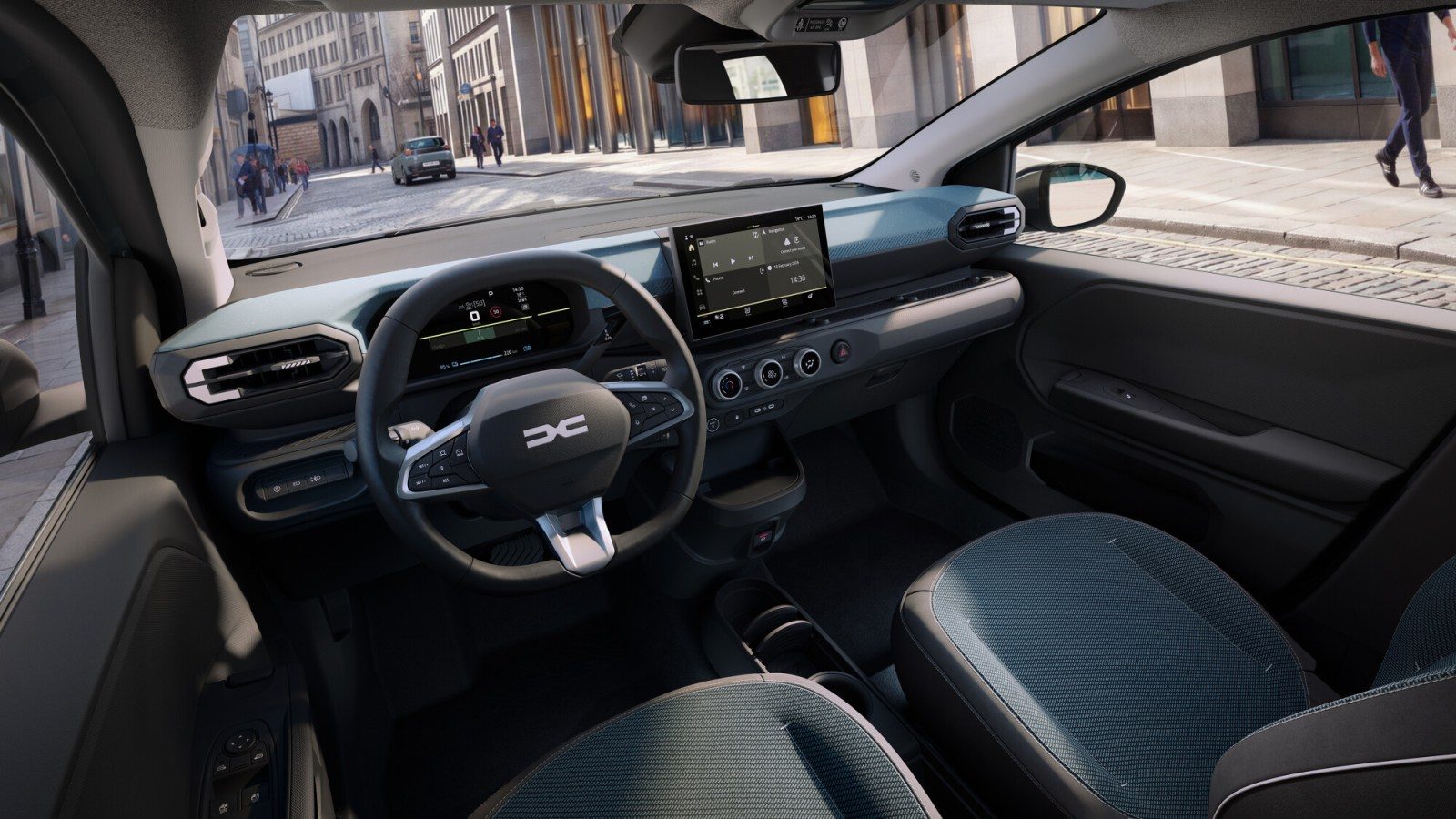
The scheme has already moved production decisions. Dacia shifted its Spring city car from China to Slovenia this month in part to regain access to French incentives.
“Regulatory unpredictability is itself a competitiveness cost,” the authors wrote.
Not Against All Protection
The report does not oppose every trade defence.
It calls for plug-in hybrids to receive the same protection as fully electric vehicles.
The EU’s anti-subsidy duties of up to 35.3% on Chinese battery-electric cars, imposed in October 2024, do not cover plug-in hybrids, and the authors say hybrid imports have grown substantially since.
Bruegel favours a strictly time-limited agreement with Beijing setting export quotas for both battery-electric cars and plug-in hybrids, with a snapback clause if China breaches it.
If negotiations fail, the EU should launch a safeguard investigation, the report says.
The authors acknowledge that a quantitative export restraint would be of questionable legality under World Trade Organization rules. They argue there is scope for an arrangement under the WTO’s Subsidies Agreement as an alternative to countervailing duties.
Brussels has asked Beijing to voluntarily cap Chinese hybrids at about 15% of the EU market, the Financial Times reported this month. China’s Commerce Ministry said it firmly opposes voluntary export restraints.
EU Trade Commissioner Maroš Šefčovič is due in Beijing on October 8 and 9.
Such rules “lack a transparent cost-benefit analysis and risk being used as a shield rather than a targeted remedy,” the authors wrote, recommending the EU rely on existing sustainability and resilience criteria instead.
A Rival Estimate
Transport & Environment reached a different figure in March.
The group said scaling up European production could narrow the cost gap between EU-made and Chinese battery cells from about 90% to about 30%, or $14 per kWh by 2030. That would add roughly €500 ($600) to an average electric car.
“Local content requirements are the only policy on the table to avoid another Northvolt,” said Julia Poliscanova, Senior Director for Vehicles and E-Mobility Supply Chains at T&E. “The cost of Made-in-EU rules is a sovereignty premium worth paying.”
The two estimates differ mainly on timing. Bruegel’s figure uses today’s cost gap, while T&E’s assumes the gap after European output has scaled up.
Industry Divided
Carmakers are split on the rules.
BMW CEO Milan Nedeljković called the “Made in Europe” plan “dangerous” in March, warning it would “lead to less innovation, lower growth — and finally to reduced prosperity in Europe.”
Volkswagen and Stellantis have backed a “Made in Europe” scheme. Volkswagen Group, Renault Group and Stellantis have proposed that a manufacturer’s entire fleet count as compliant if 70% of it qualifies, the report notes.
Suppliers’ association CLEPA published a Roland Berger study in July finding the 70% threshold “comfortably achievable” for both battery-electric cars and plug-in hybrids.
An Industry in Retreat
EU car production has fallen by about 2.6 million units, or 19%, since 2019, the report says. Europeans bought 2.2 million fewer new cars in 2025 than in 2019.
The sector still employs 14 million people across its value chain, or 6% of EU jobs.
More than €76 billion ($87.2 billion) has been invested in European battery and electric-car plants since 2017, with about €3 billion ($3.4 billion) a quarter still going in.
South Korean companies own 65% of the battery-cell capacity operating in Europe. Chinese companies own 55% of the capacity under construction.
Chinese investments listed in the report include CATL‘s €7.3 billion ($8.4 billion) cell plant in Hungary and CALB‘s €2 billion ($2.3 billion) plant in Portugal.
China-built electric cars passed 20% of EU EVsales in 2026, the report says, and more than half of them carry Western brands.
“The sectoral risk is not collapse but erosion of export markets, technological leadership and supplier networks,” the authors wrote. “For this, the EU needs an adjustment strategy rather than a shield against change.”