
XPeng has cut the number of internal product lines that oversee product definition and development to two from four, 36Kr reported on Monday, citing multiple industry sources.
XPeng had not publicly confirmed the change as of publication time. The consolidation comes as the Chinese carmaker’s R&D spending climbs and its deliveries trail last year’s, according to the report.
The F and I lines have been folded into the G line, leaving only the G and D lines, 36Kr said.
The Mona series stays under the D line, while every other product now falls under the G line.
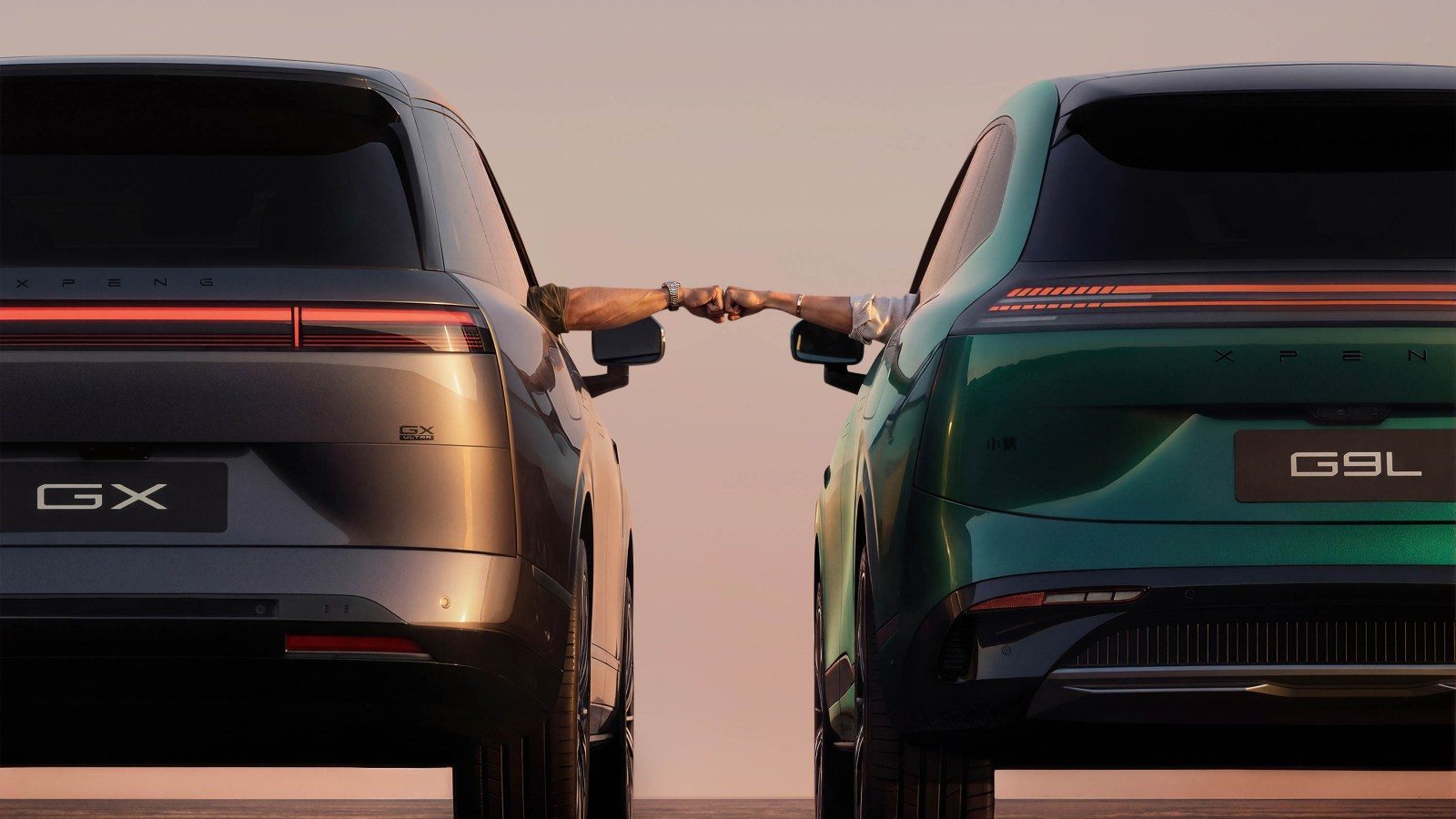
Before the change, the G line handled large SUVs including the GX and G9L.
The F line covered P-series sedans and other models, the D line ran the Mona series, and the I line managed products for overseas markets.
XPeng’s product lines are responsible for functions including product definition and research and development, according to the report.
The change reorganises internal management and R&D responsibilities and does not reduce XPeng’s lineup to two models.
Management Reshuffle
Personnel changes accompanied the restructuring.
Citing a person in the industry close to the company, 36Kr reported that the former head of the F line kept the same rank and now leads product definition for the G line.
The former head of the I line has been reassigned to oversee XPeng’s overseas affairs, excluding the sale of overseas models, the report said.
Merging the lines could help XPeng concentrate R&D resources more effectively and reduce costs, 36Kr said.
According to the report, the move could also limit internal competition and overlap in positioning and pricing among the company’s models.
Spending Pressure
R&D expenses reached 2.91 billion yuan ($434 million) in the second quarter, up 32.1% from 2.21 billion yuan ($329 million) a year earlier, according to XPeng’s second-quarter results published on August 24.
First-quarter R&D spending also stood at 2.91 billion yuan, up 46.8% from 1.98 billion yuan ($295 million).
XPeng attributed that increase mainly to development of new vehicle models and AI-related technologies.
Net loss attributable to ordinary shareholders came to 1.34 billion yuan ($200 million) in the second quarter, compared with 480 million yuan ($71.5 million) a year earlier and 1.78 billion yuan ($265 million) in the first quarter.
First-half figures show total revenue of 32.8 billion yuan ($4.88 billion), down 3.8% year on year.
Net loss attributable to shareholders reached 3.12 billion yuan ($465 million), widening 173.4%.
Gross profit rose 20.3% to 6.77 billion yuan ($1.01 billion) over the same period, lifting gross margin 4.1 percentage points to 20.6%.
Vehicle margin was 12.1% in the second quarter, flat from the first quarter but down from 14.3% a year earlier, a decline XPeng attributed to a product generation transition.
Second-quarter gross margin rose to 20.7% from 17.3%, while services and others margin reached 75.1%, up from 53.6%, driven by technical R&D services and parts and accessories sales, according to the company.
Crowded Lineup
XPeng has expanded its lineup rapidly this year.
The company launched fully electric and extended-range versions of the P7+ in the first quarter, alongside an extended-range G7 and a fully electric X9.
Both powertrains of the GX followed in May.
Refreshed versions of the G6, G9 and Mona M03 have also been released.
Deliveries have fallen this year despite the broader lineup.
XPeng delivered 243,111 vehicles in the first eight months of 2026, down 10.5% year on year, while August deliveries rose 3.7% to 39,107.
The G line already ran both flagship SUVs before the change.
XPeng delivered a record 7,338 GX units in August, up 2.8% from July, bringing cumulative deliveries since the May 20 launch to 21,501, the company said.
The GX had passed 25,000 deliveries in four months, Founder and Chief Executive Officer He Xiaopeng said at the G9L launch on September 17.
XPeng launched the G9L in China on September 17 and will hold its European premiere at the Paris Motor Show on October 12.
European versions of the G9L will include six- and seven-seat configurations not offered in China.
Production will run in Guangzhou and at Magna Steyr’s plant in Graz, Austria, where the G9 is already assembled.
On the D line, the Mona L03 became XPeng’s best-selling model in China in August, its first full month on sale, with 8,424 retail sales, according to China Passenger Car Association (CPCA) data.
Including 1,244 exports, the L03 accounted for 9,668 vehicles.
The Mona series accounted for more than a third of XPeng’s sales in the first eight months, according to 36Kr.
The Mona L05 SUV is due to launch in the fourth quarter.
He told analysts in August that he expects monthly deliveries to exceed 60,000 in the fourth quarter, a level 53.4% above August’s volume.
XPeng’s full-year target of 550,000 to 600,000 deliveries requires between about 76,700 and 89,200 vehicles a month over the final four months of the year.
Even if September deliveries reach the top of XPeng’s third-quarter guidance of 115,000 to 121,000, the fourth quarter would need about 87,700 vehicles a month to reach the lower end of the target, well above He’s 60,000 goal.
Overseas Momentum
Products previously run by the I line now sit under the G line as XPeng’s business abroad accelerates.
XPeng registered at least 4,619 vehicles across Europe in August, more than four times the 1,075 units recorded a year earlier, according to preliminary data compiled by EV from national registration authorities.
Exports reached about 49,400 vehicles and kits in the first eight months of 2026, surpassing the 45,008 units shipped in all of 2025, according to CPCA data.
Overseas deliveries exceeded 20,000 in the second quarter, up 81%, and overseas markets contributed more than a quarter of first-half revenue, He said in August.
XPeng’s US-listed shares fell to their lowest level since October 2024 on September 15.
Its robotics unit raised more than $900 million at a post-money valuation above $6.3 billion in August.
The stock closed at $10.12 on Friday, down 50.1% this year. XPeng is expected to report third-quarter results in November.